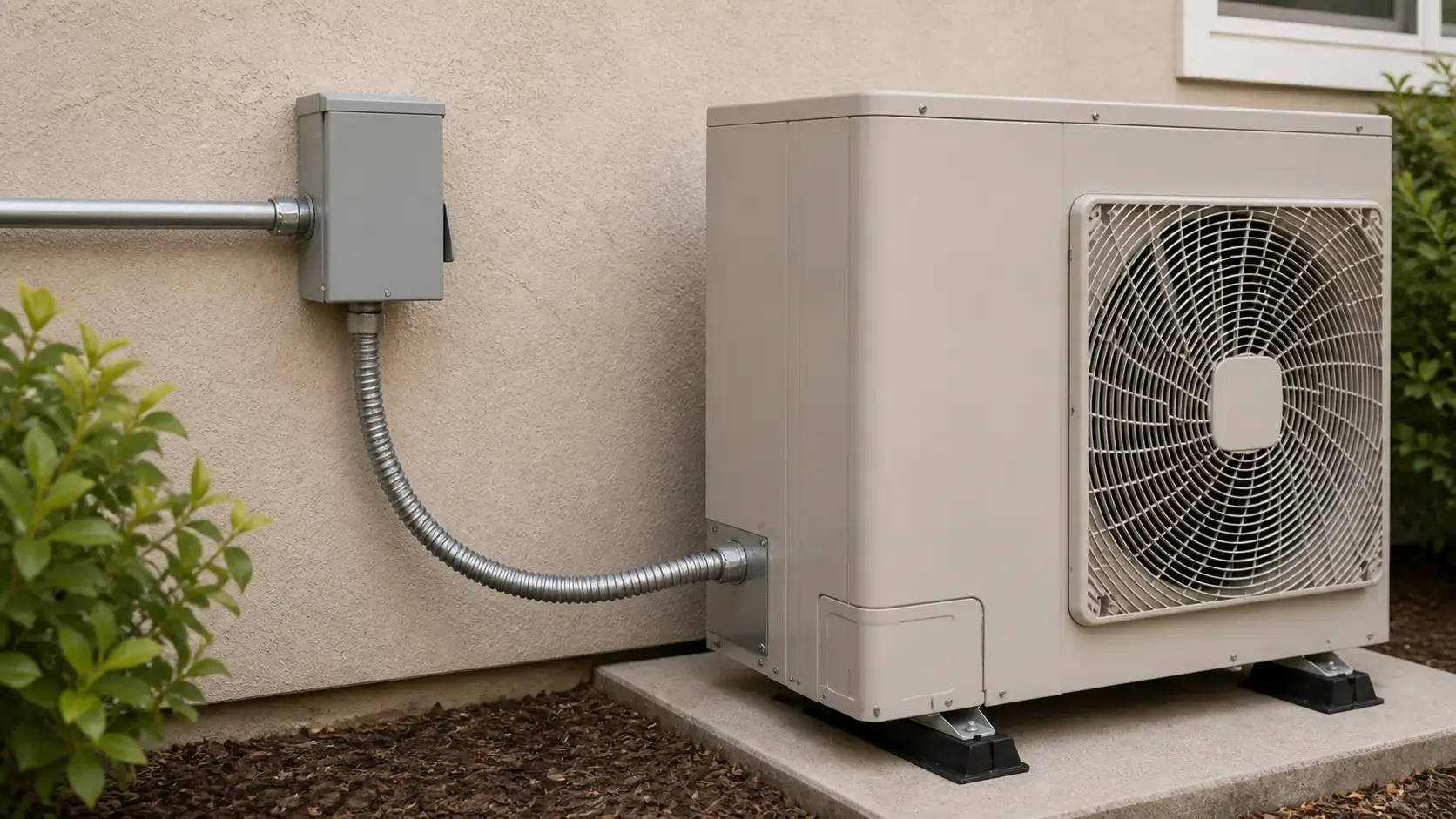
A temporary exception in the 2026 National Electrical Code for certain listed outdoor HVAC equipment is scheduled to expire on September 1, 2026. Where the 2026 NEC has been adopted without a different local amendment, Section 210.8(F) will then require applicable dwelling-unit outdoor outlets supplying listed HVAC equipment to have GFCI or permitted special-purpose GFCI protection.
What Changes on September 1
Section 210.8(F) covers specified outdoor outlets at dwelling units supplied by single-phase branch circuits rated 150 volts or less to ground and 60 amperes or less. In NEC terminology, an outlet is the point where current is taken to supply equipment; it is not limited to a receptacle. Hard-wired outdoor HVAC equipment can therefore fall within the rule.
The 2026 NEC carries an exception allowing listed HVAC equipment to operate without the GFCI or special-purpose GFCI protection otherwise required by this section. NFPA’s published code-development records state that the exception expires September 1, 2026. The same records show that proposals to extend it were not accepted during development of the 2026 edition.
Why the HVAC Exception Existed
The outdoor-outlet requirement was introduced after electrical-shock and fire concerns, but the HVAC industry reported compatibility problems between some equipment and conventional GFCI devices. Modern variable-speed compressors and inverter-based controls can produce high-frequency leakage currents that may interact with protective devices.
The delay gave standards groups, appliance manufacturers and GFCI manufacturers time to study unwanted tripping and develop additional test methods. It did not establish that HVAC equipment was free from shock risk, nor did it permanently remove outdoor HVAC outlets from GFCI requirements.
UL 943 Adds an HF-Rated GFCI Option
UL Standards & Engagement revised UL 943 in August 2025 to add Supplement SB, an optional high-frequency immunity test. UL Solutions explains that a Class A GFCI marked “HF” has been evaluated for compatibility with loads that produce modern high-frequency leakage currents, including equipment using variable-frequency drives and inverters.
The HF marking is a compatibility-related evaluation, not permission to ignore ground-fault protection. It also should not be assumed that every listed GFCI, HVAC unit or circuit combination has the HF rating. Buyers need configuration-specific certification and compatibility information.
Special-Purpose GFCIs Are a Separate Path
The 2026 NEC also recognizes special-purpose ground-fault circuit interrupters. UL Solutions says Section 210.8(F) includes a path for Class C SPGFCI protection for listed HVAC equipment at dwelling units. SPGFCIs use a layered protective approach that includes monitoring the equipment-grounding path and have different trip characteristics from Class A devices.
A Class C, D or E designation should not be treated as an interchangeable upgrade. Circuit voltage, grounding, equipment listing, installation instructions and the adopted code text determine whether a particular SPGFCI application is permitted.
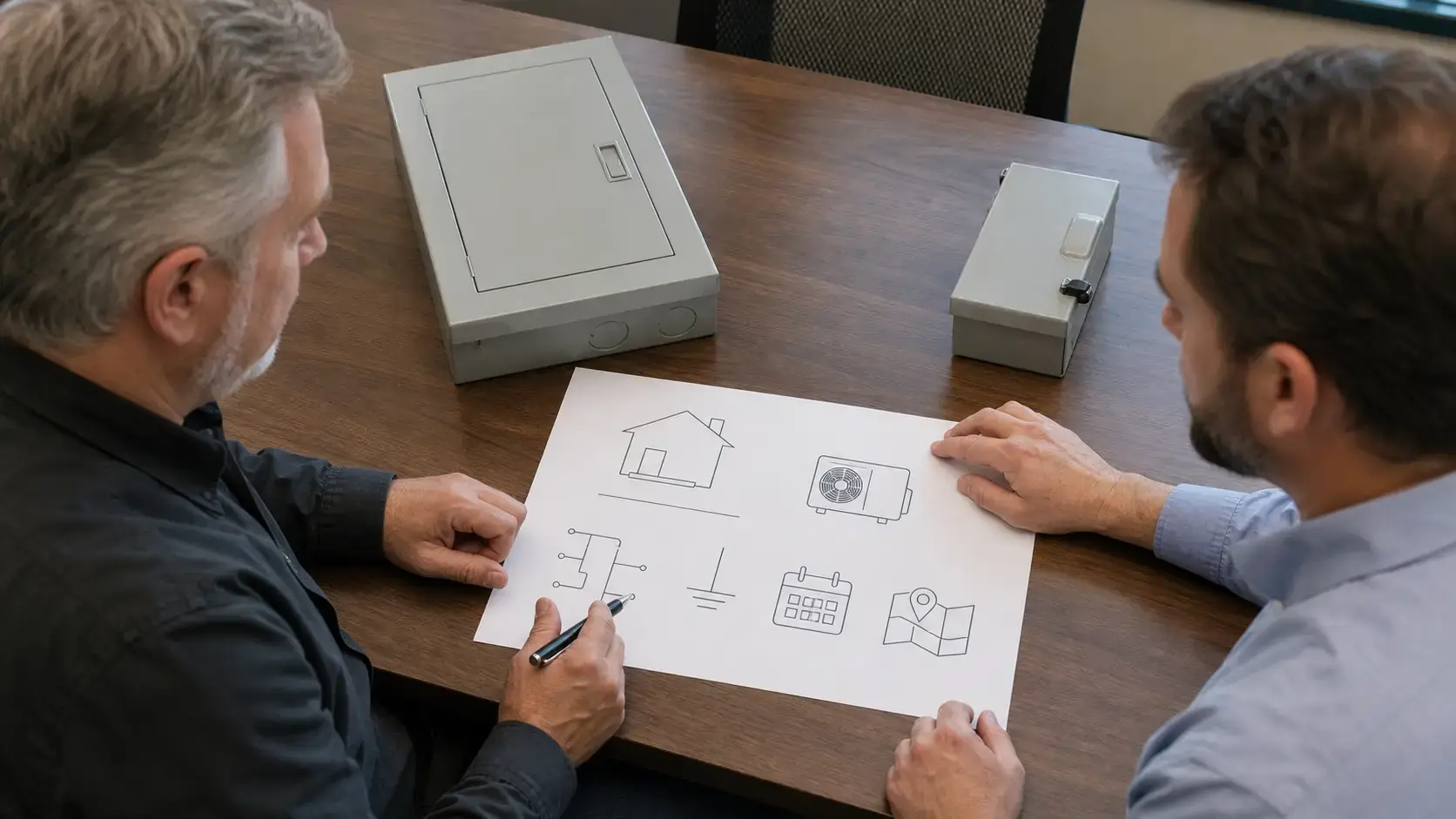
Seven Checks for Distributors, Contractors and Buyers
- Confirm the adopted code: identify the NEC edition and local amendments enforced by the authority having jurisdiction.
- Confirm the circuit scope: record phase, voltage to ground, ampere rating and whether the outdoor equipment is at a dwelling unit.
- Distinguish outlet from receptacle: do not assume hard-wired HVAC equipment is outside Section 210.8(F).
- Check the HVAC listing: obtain the manufacturer’s current installation instructions and permitted protective-device information for the exact model.
- Check the GFCI listing and marking: verify Class A, HF marking or SPGFCI class as applicable instead of relying on a generic product description.
- Coordinate the complete circuit: review disconnects, breakers, grounding, conductor routing and any integral protection with the authority having jurisdiction.
- Document compatibility: keep submittals, listing evidence and manufacturer guidance with the project record; do not solve repeated tripping by bypassing protection.
What This Means for GFCI and HVAC Suppliers
GFCI manufacturers may see more requests for devices with documented high-frequency immunity or permitted special-purpose classifications. HVAC manufacturers and distributors should expect buyers to ask whether specific outdoor units have been evaluated with the proposed protective device and whether installation literature has been updated for the 2026 NEC.
For importers and private-label suppliers, the practical issue is traceability. A general claim such as “NEC compatible” is not enough. Product files should identify the exact device class, listing category, markings, circuit limitations and installation conditions.
Local Adoption Still Controls Enforcement
The NEC is a model code. NFPA issued the 2026 edition with an effective date of September 9, 2025, but that does not make every provision immediately enforceable throughout the United States. States and local jurisdictions adopt editions on their own schedules and may add amendments.
September 1, 2026 is therefore a milestone inside the 2026 NEC, not a single nationwide enforcement date. Project teams should confirm the adopted edition and local interpretation with the authority having jurisdiction before changing specifications or installation practices.
Takeaway
The approaching expiration of the HVAC exception makes GFCI selection a system-compatibility and documentation question, not simply a checkbox. Buyers should match the adopted code, HVAC listing, circuit characteristics and protective-device certification—and should never respond to unwanted tripping by defeating required protection.
Sources
- NFPA — 2026 NEC Panel 2 public-comment responses for Section 210.8(F)
- NFPA Standards Council — August 2025 final minutes
- UL Solutions — Coordination between model codes and standards
- UL Solutions — High-frequency ground-fault circuit interrupters
- UL Solutions — Special-purpose ground-fault circuit interrupters