The European Union’s Packaging and Packaging Waste Regulation, Regulation (EU) 2025/40, will generally apply from August 12, 2026. For suppliers of switches, sockets, plugs, distribution accessories and other low-voltage electrical products, the immediate task is not to redesign every carton overnight. It is to identify every packaging layer placed on the EU market, confirm who carries each obligation, and make sure packaging data can be supported.
What Changes on August 12, 2026
The PPWR entered into force on February 11, 2025 and replaces the previous directive with a regulation that is directly applicable across EU member states. The European Commission says it covers all packaging and packaging waste regardless of material or origin. Its scope includes packaging imported from outside the EU.
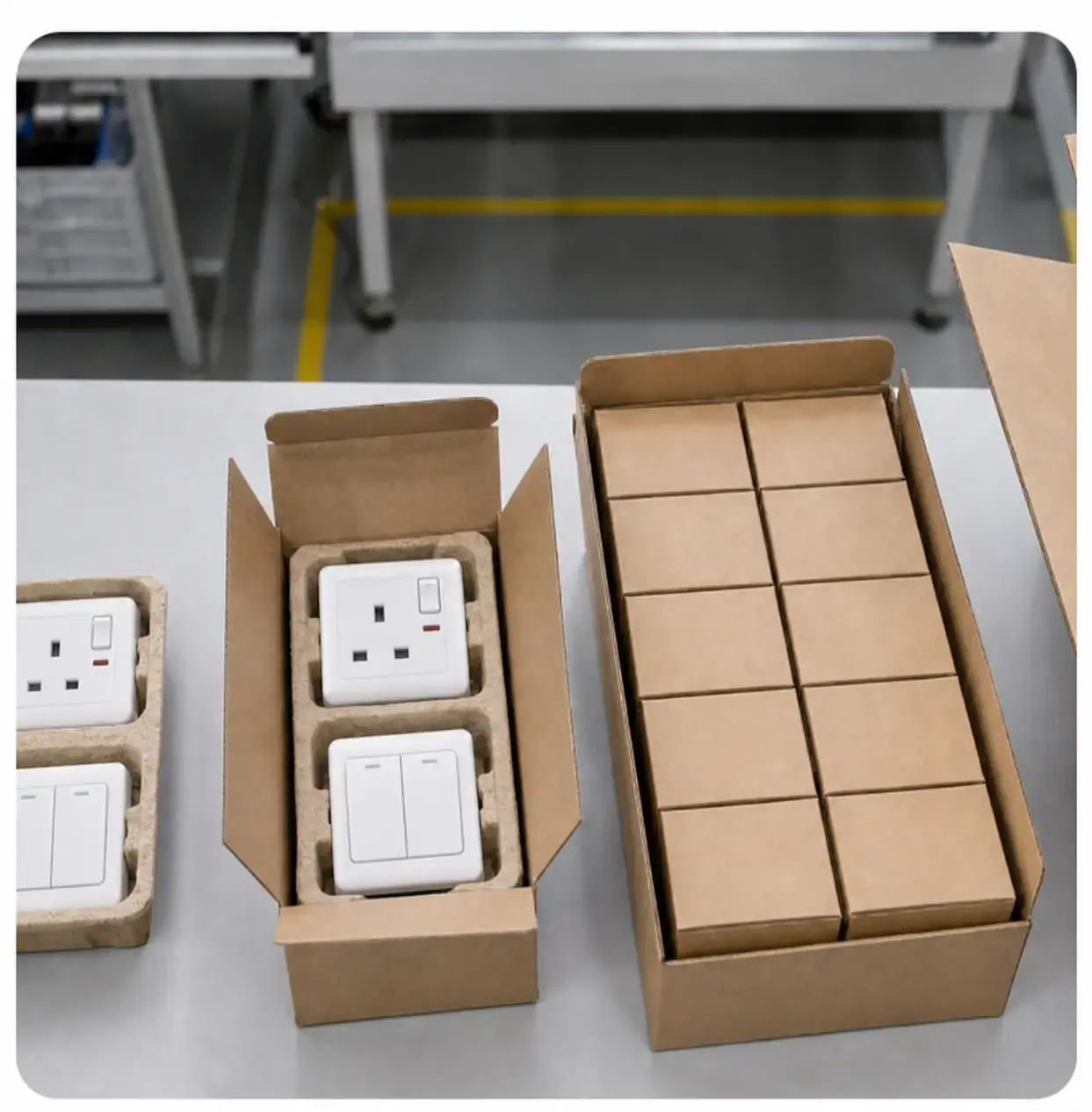
That matters for an electrical export order because packaging is broader than the printed retail box. Depending on how the product is supplied, it can include inner bags, protective sleeves, paper inserts, dividers, individual cartons, grouped cartons, transport cartons, film, straps and pallets. A buyer may therefore need information from the product factory, packaging converter and logistics provider rather than from one specification sheet.
August 12 is the general application date. It is not a single deadline for every design, recycled-content and labelling target in the regulation. The Commission describes a staged framework, including the objective that packaging placed on the EU market should be recyclable in an economically viable way by 2030. Buyers should map each requirement to its actual application date before changing artwork or material specifications.
Why Switch and Socket Packaging Needs a Layer-by-Layer Review
Wiring devices often move through several packaging configurations. A decorative wall switch may have a faceplate protection film and an individual box. Project sockets may ship in bulk trays. Plugs and adaptors may use hanging cards or blister-style packs for retail. The same item can therefore create different packaging records for project, distributor and retail channels.
A practical review should separate product material from packaging material. A plastic switch enclosure remains part of the electrical product. A disposable protective bag, tray or film used to contain or deliver it is packaging. The Commission’s 2026 FAQ describes packaging broadly as items used for containment, protection, handling, delivery or presentation, while excluding items that form an integral part of the product and are disposed of with it.
Do not assume that a supplier’s statement such as “paper packaging” is enough. Buyers may need the weight and material of each component, evidence for recyclability or recycled-content claims, and a clear record of which entity supplied the data. Unsupported environmental claims create a separate risk from the packaging design itself.
Five Checks to Add Before the Next EU RFQ
- List every packaging level. Record the sales unit, grouped pack and transport packaging, including inserts, bags, films, labels, tape, straps and pallets where applicable.
- Record material and weight. Ask for component-level data rather than one total carton weight. Keep the measurement method and revision date.
- Confirm the economic-operator chain. Establish the manufacturer, importer, distributor and any producer-responsibility role for each sales route. Do not assume the EU customer automatically carries every obligation.
- Control packaging versions. Link packaging bills of material, artwork and supplier declarations to the product SKU and destination market. Mixed old and new stock can make reporting unreliable.
- Verify dates before making claims. The PPWR includes phased measures. Confirm the relevant article, delegated or implementing measure, national arrangements and applicable date before printing a recycling label or changing a material specification.
Packaging Minimisation Does Not Remove the Protection Requirement
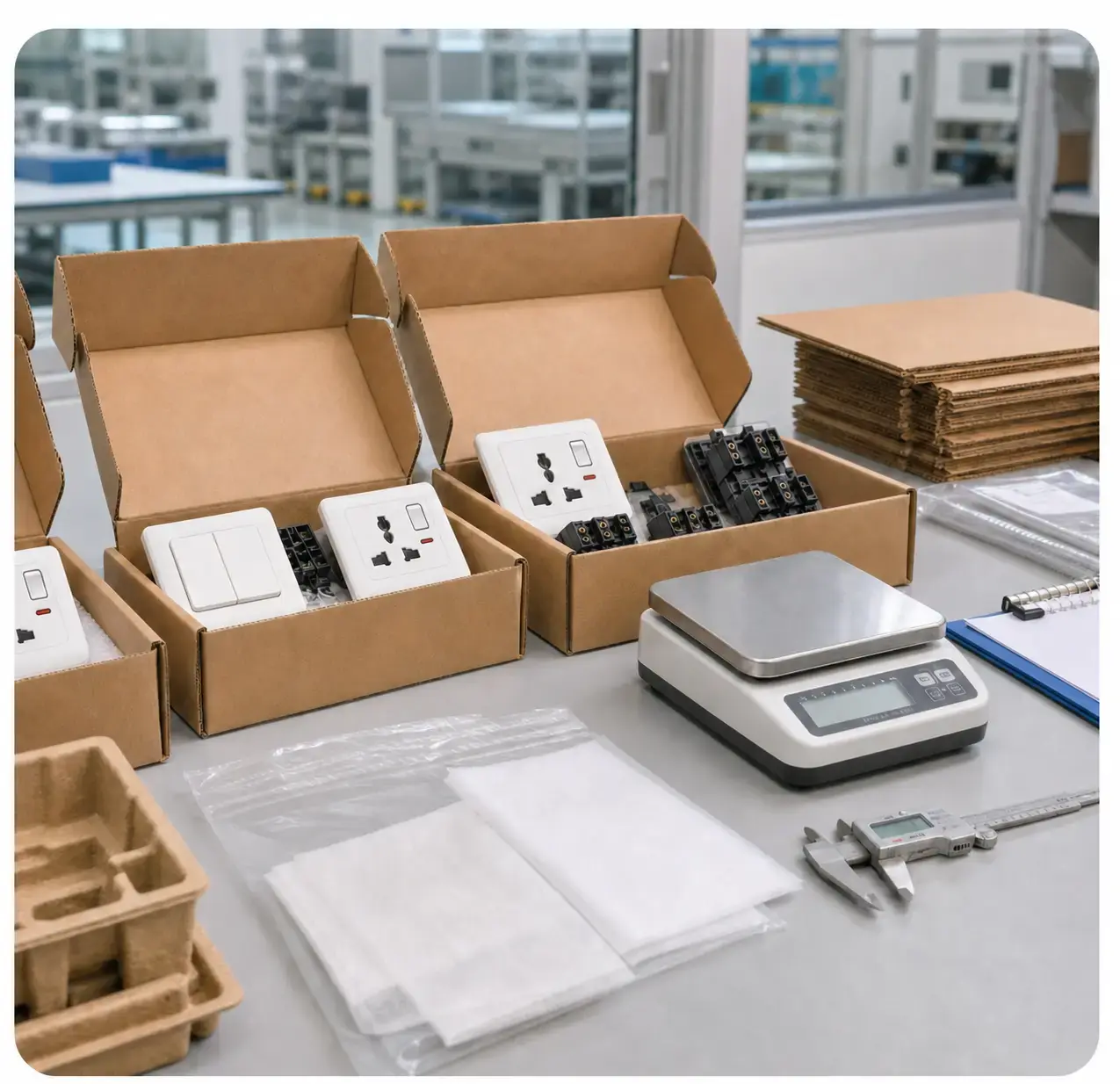
The regulation aims to reduce unnecessary packaging and empty space, but an electrical product still has to arrive without damaged terminals, scratched finishes, deformed clips or contaminated contact areas. The useful engineering question is not simply how to use less material. It is how to remove avoidable material while maintaining verified transport and storage performance.
For switches and sockets, that may mean reviewing oversized retail cartons, redundant inner bags, mixed-material windows, unnecessary laminates or excessive void fill. Any change should be checked against drop, vibration, compression, humidity and abrasion risks appropriate to the route. A thinner pack that increases product damage and replacement shipments is not a sound result.
What Buyers Should Request Now
For new EU quotations, add a packaging data request alongside the electrical specification. Ask for a packaging bill of materials, component weights, material identification, packaging drawings or photos, packaging supplier declarations, and the current destination-market labelling plan. If recycled content or recyclability is claimed, request the supporting method and evidence.
Existing products need a gap review, not a blanket declaration. Start with high-volume SKUs, retail packs, plastic-heavy formats and products sold through several EU channels. Keep open items visible where Commission implementing details or national producer-responsibility procedures still need confirmation.
Takeaway
The August 12, 2026 application date makes packaging data part of the electrical sourcing file. Before the next order, confirm the packaging layers, materials, weights, responsible economic operators and destination-specific requirements. Treat 2030 design targets and later labelling measures as scheduled milestones, not as obligations that all begin on the same day.