Hager has placed its flow R3 home energy-management system in its German August 2026 press materials, adding a stronger focus on AI-assisted control through its AI360 software. The system is designed to coordinate photovoltaic generation, battery storage, household loads and EV charging rather than manage each asset separately.
What Hager Is Adding to flow R3
Hager describes the energy manager as the central control and monitoring unit for household energy flows. Its AI360 software uses generation, consumption and electricity-price forecasts to prepare control decisions. Weather forecasts and dynamic tariffs can also be considered, according to the company.
The practical change is not a new wall switch or socket. It is a broader control layer for residential electrical systems. Hager is positioning flow R3 as a coordinated platform for installers who need to connect distributed generation, storage, heating loads and charging equipment within one project.
System Scope and Components
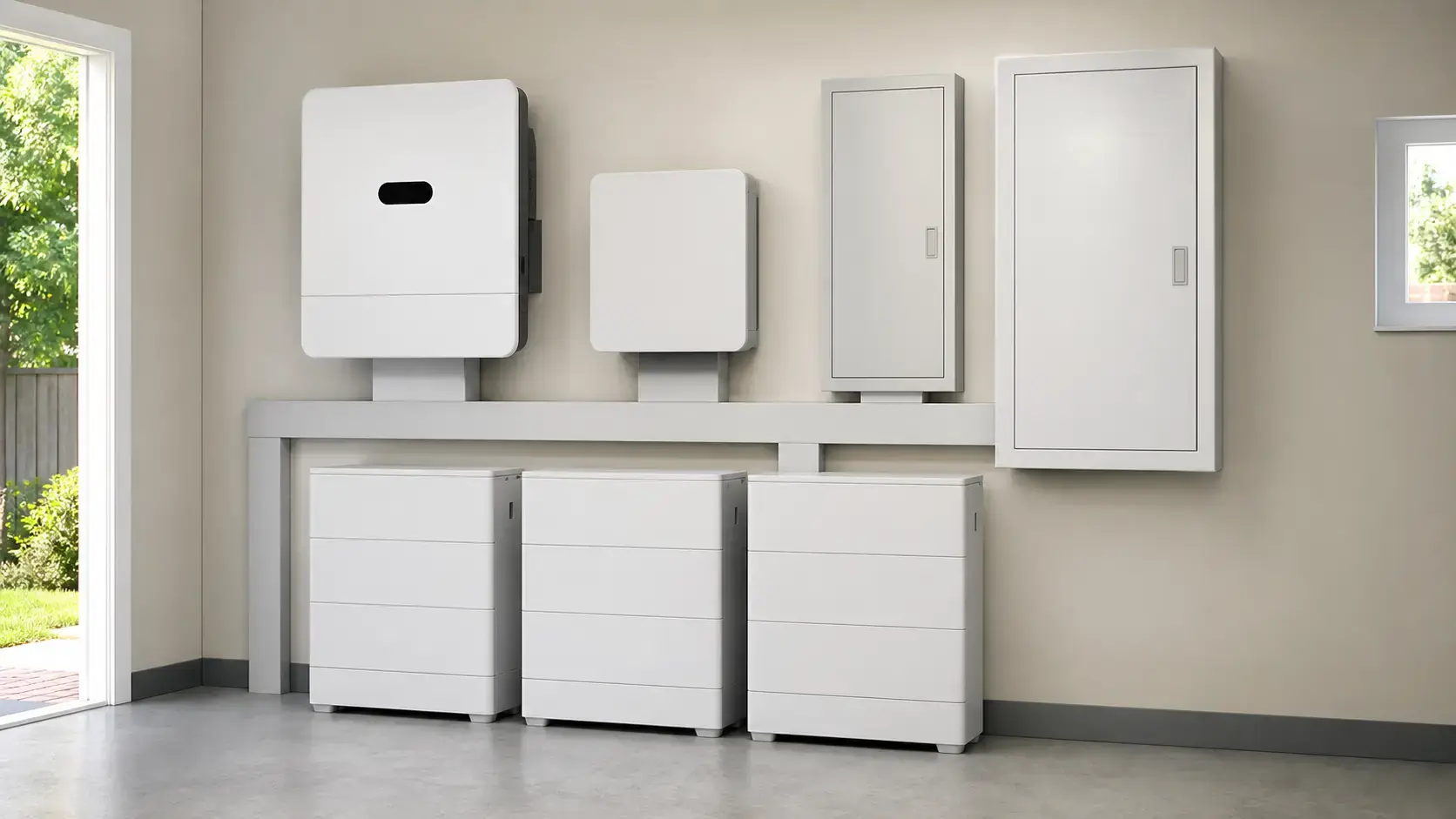
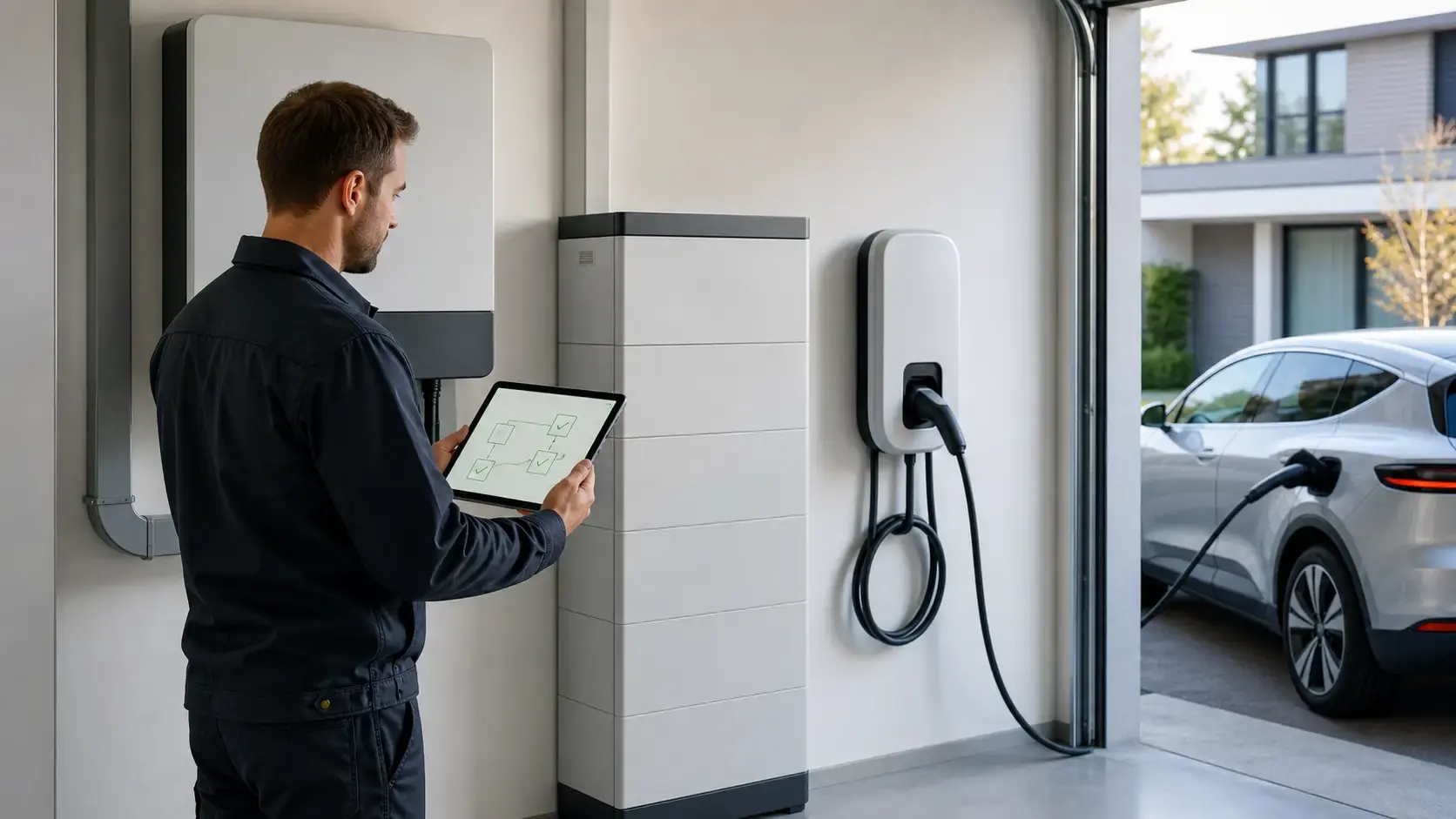
Hager's current German product information lists an energy-management controller, a hybrid inverter, modular battery storage and optional automatic transfer equipment for backup supply. The wider flow environment can also integrate Hager's witty plus EV charging equipment and selected controllable loads.
Not every component or function belongs in every installation. Battery capacity, inverter output, backup configuration, meter arrangement, EV charger compatibility and communication interfaces depend on the selected system package. Buyers should work from the exact bill of materials and current technical documents, not from the flow R3 family name alone.
Why the German Market Context Matters
Hager connects flow R3 with Germany's rules for controllable consumption devices under Section 14a of the Energy Industry Act. That context includes equipment such as EV chargers and heat pumps, but the applicable control arrangement still depends on the installation, network operator and current national requirements.
Export buyers should not assume that the same hardware package or software behavior automatically satisfies grid-control rules elsewhere. Metering architecture, communication protocols, tariff integration, backup operation and installer authorization can differ by country and utility.
What Distributors and Installers Should Verify
- Exact system generation: confirm that the quotation is for flow R3 and identify every controller, inverter, battery and accessory code.
- Software entitlement: verify which AI360 functions, forecasts, updates and app services are included at delivery.
- Compatible loads: document the approved EV chargers, heating devices, meters and third-party interfaces for the proposed configuration.
- Backup boundary: confirm whether an ATS box is included, which circuits may be supplied during an outage and what design limits apply.
- Grid and tariff inputs: check local meter data, dynamic-tariff availability and network-operator control requirements.
- Commissioning responsibility: define who configures the system, performs firmware updates and hands over access to the owner.
- Evidence pack: request current datasheets, declarations, installation instructions, compatible-device lists and warranty conditions.
What This Means for Low-Voltage Product Buyers
Residential energy projects are moving beyond the distribution board as a collection of independent devices. Controllers, protective devices, meters, inverters, storage and charging equipment increasingly need verified digital and electrical compatibility.
For wholesalers and project buyers, the RFQ should therefore capture both electrical ratings and system dependencies. A price for an inverter or battery alone does not establish whether the complete installation can deliver tariff optimization, backup supply or grid-responsive control.
Takeaway
Hager's August 2026 flow R3 messaging puts AI-assisted energy coordination at the center of its German residential offer. The useful buyer question is not simply whether the system uses AI. It is whether the quoted configuration has the right hardware, interfaces, software services and local grid documentation for the intended project.