A power track system is not just a movable socket. For commercial buyers, it is a power-distribution approach that changes how hotels, offices, showrooms, and flexible workspaces manage access, layout freedom, and visible electrical order in the same project.
This page is a commercial application handbook. It explains what power track systems actually solve, where they create measurable value, what technical questions buyers should confirm, and why they are increasingly used as a project-level upgrade rather than a simple accessory.
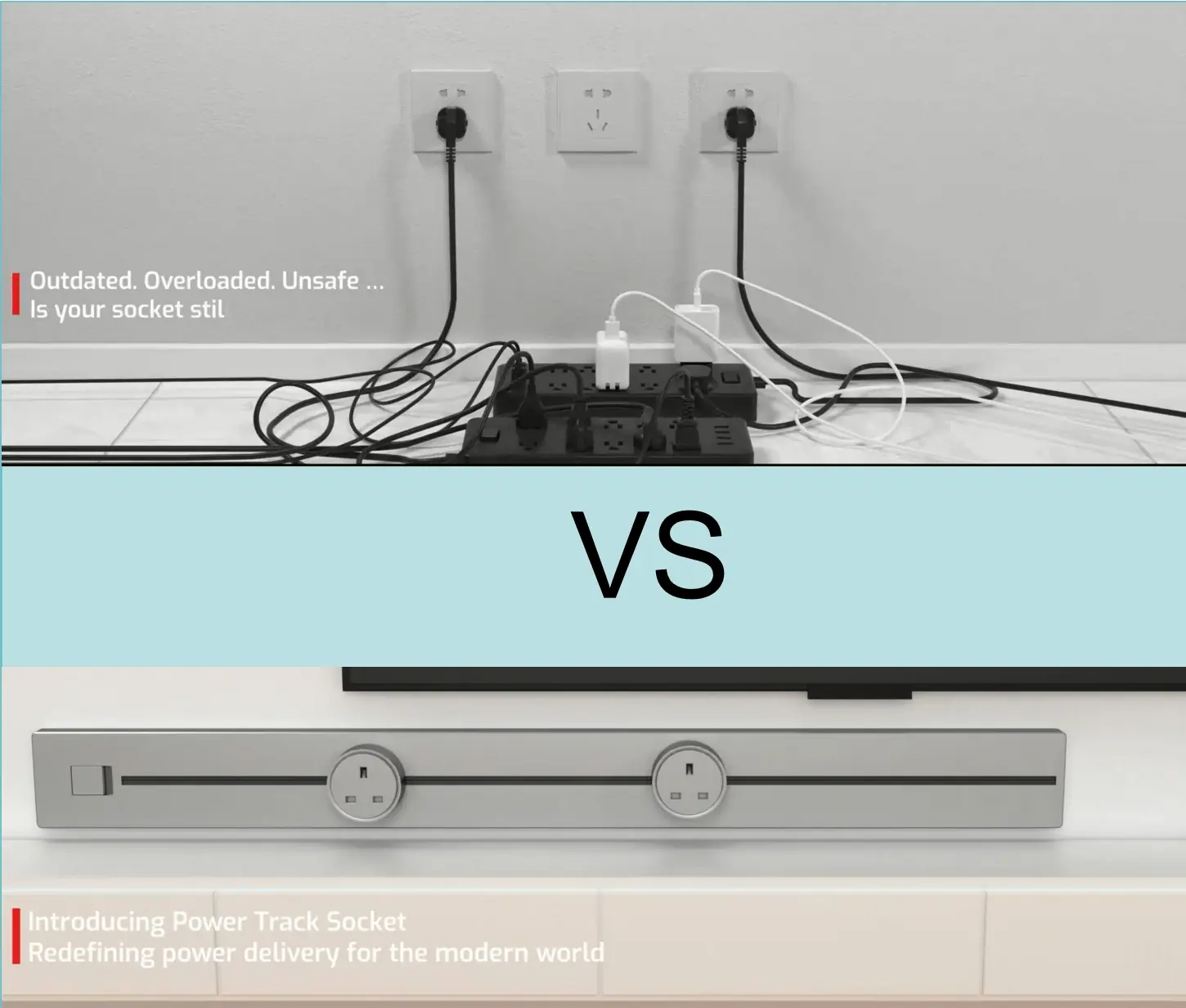
Based on project-side comparison of fixed outlets versus track-based power layouts, the real attraction is not only flexibility. It is the combination of layout freedom, cleaner visual presentation, easier future adjustment, and better user experience in spaces where electrical access affects both operation and perceived quality.
Contents
- What a Power Track System Actually Solves
- Why Traditional Wall Outlets Become a Commercial Space Bottleneck
- Where the Value Goes Beyond Flexibility Alone
- Technical Questions B2B Buyers Should Confirm Early
- How Power Track Systems Perform in Hotel, Office, and Showroom Projects
- How Buyers Should Evaluate a Power Track System Before Project Approval
- FAQ
What a Power Track System Actually Solves
Many commercial spaces still rely on fixed wall outlets and temporary extension solutions to support changing power needs. That arrangement usually works only until the space becomes more dynamic. Furniture moves, device density rises, guest expectations change, or the design team wants a cleaner visual result than scattered sockets and visible cable clutter can provide.
| Traditional power point logic | Power track system logic |
|---|---|
| Outlet quantity and position are fixed early | Power access can be redistributed along the track as layouts evolve |
| Later adjustment often means rewiring or adding extensions | Later adjustment often means changing adapter position or adding modules |
| Function and appearance are often separated | Power access becomes part of both space planning and visual order |
That is why a power track system should be judged as infrastructure, not as a decorative add-on. If you want the specific product configuration side first, our power track system product page shows the physical system more directly.
Why Traditional Wall Outlets Become a Commercial Space Bottleneck
In commercial projects, fixed outlets often create four recurring problems. First, they limit layout freedom because furniture and equipment must adapt to where power was placed earlier. Second, they weaken user experience when charging or device access is inconvenient. Third, they create visual clutter when extra extensions are used to compensate. Fourth, they make future modification more expensive than it should be.
- layout rigidity: outlet position starts dictating furniture and device placement
- user friction: guests, staff, or clients struggle to reach convenient power points
- visual compromise: extension strips and exposed cables reduce design quality
- poor future-proofing: new devices often trigger secondary installation work
These are not small inconveniences in hotels, premium offices, or branded commercial spaces. They affect usability, maintenance, and perceived project quality at the same time.
Where the Value Goes Beyond Flexibility Alone
Flexibility is usually the first selling point, but commercial buyers care about more than movement. A stronger power track program improves operational adaptability, keeps the visual environment cleaner, and reduces the cost of later space adjustment. That is where commercial value starts to become easier to justify.
- power access can move with the actual business use of the space
- cleaner cable and socket presentation improves design continuity
- future changes become easier without rebuilding fixed power points
- one system can support different adapter formats and charging needs
In that sense, the system is often less about “more sockets” and more about “better managed power access.” That distinction matters in premium projects where visible order and user convenience carry commercial value.
Technical Questions B2B Buyers Should Confirm Early
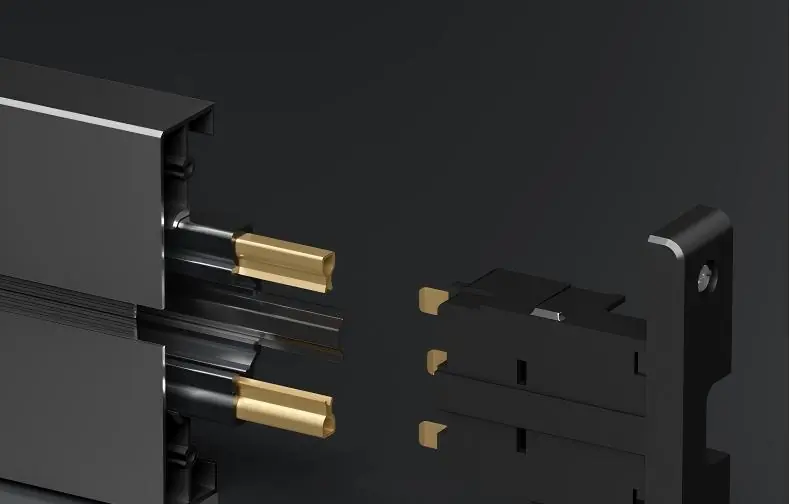
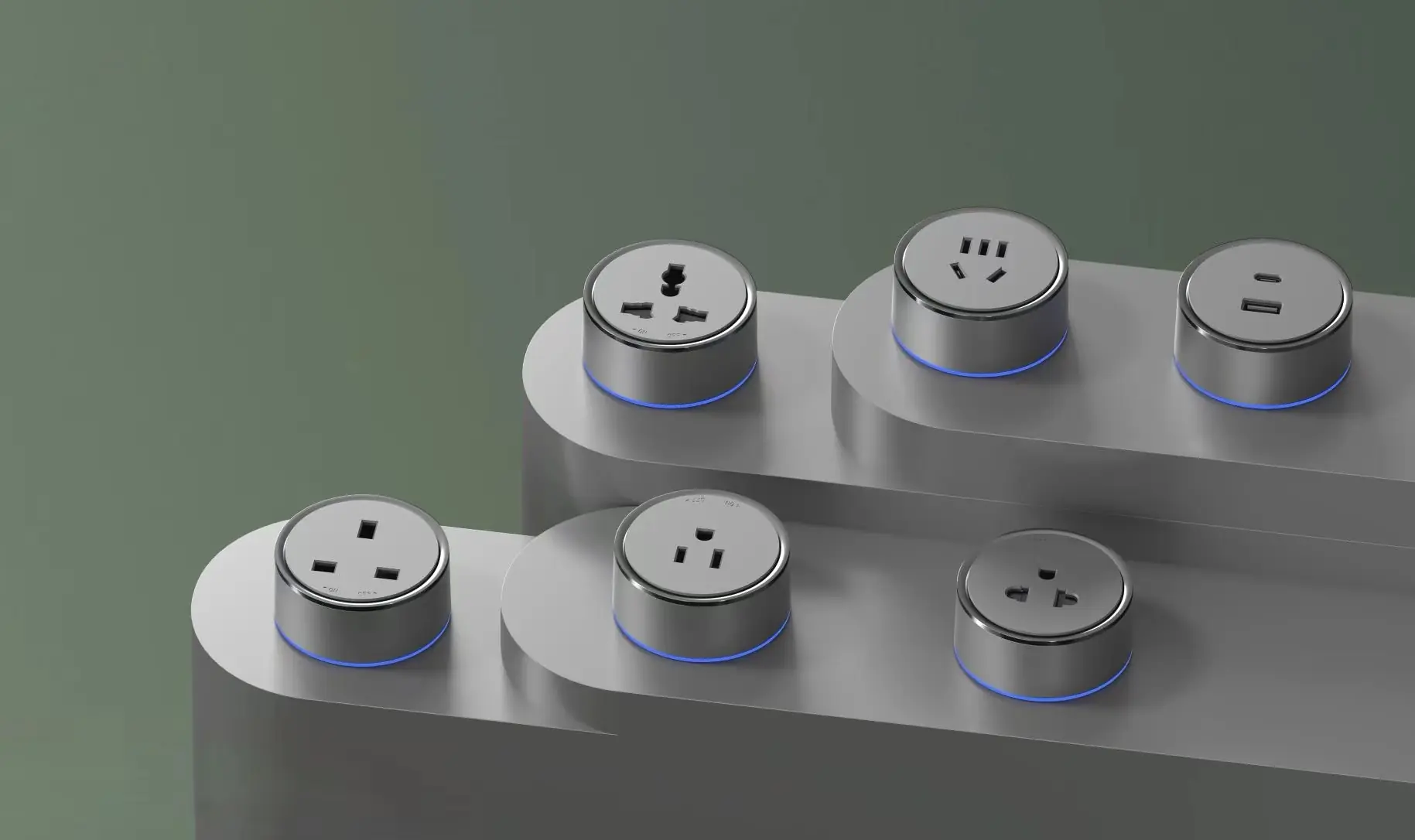
For B2B buyers, the design concept is only the beginning. The practical decision depends on how the system handles grounding, load, material stability, adapter safety, installation method, and the combination of standards or charging modules required by the project.
| Technical point | What buyers should confirm | Why it matters |
|---|---|---|
| Grounding and conductor design | How the track maintains safe and stable electrical connection | Safety credibility depends on structure, not on styling alone |
| Current rating and load logic | Whether the system fits real project demand and local use conditions | Commercial projects often need stronger margin than casual retail use |
| Track and housing materials | Use of fire-retardant plastics, metal body stability, and finish durability | Materials influence both safety and visible long-term quality |
| Adapter range | BS, Schuko, universal, USB, and market-specific module options | Compatibility affects both export fit and future project flexibility |
| Installation route | Surface-mounted or recessed layout and site coordination requirements | Installation method affects project cost, schedule, and maintenance |
Commercial buyers should therefore treat the system as both an electrical and a project-management decision. A visually attractive system with weak technical explanation is not enough.
How Power Track Systems Perform in Hotel, Office, and Showroom Projects
The value of power track systems becomes easier to see when judged by real commercial scenarios rather than by a generic product description.
High-End and Boutique Hotels
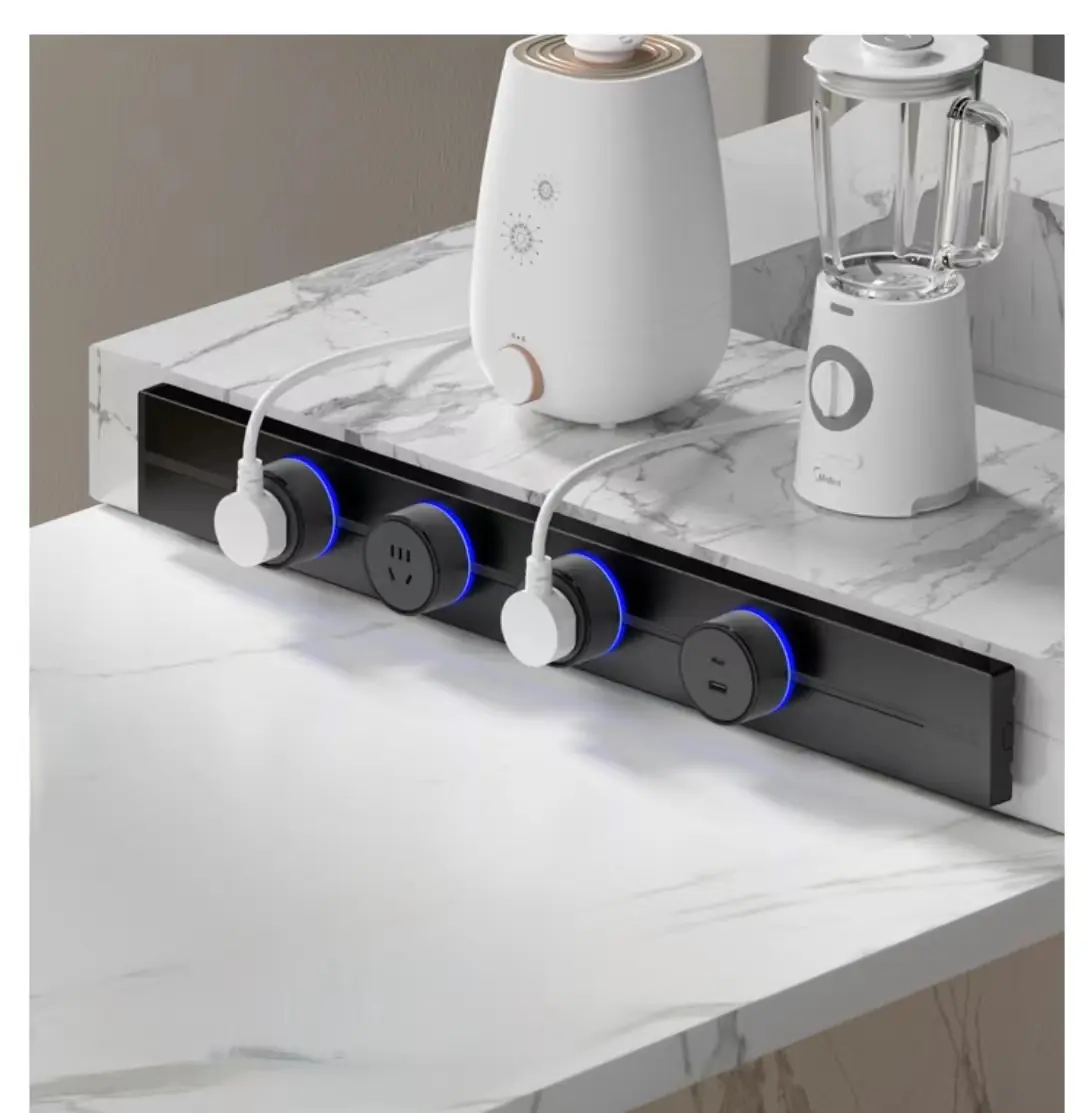
Hotels use them where guest convenience and visual presentation matter at the same time, such as desks, bedside areas, lounges, and premium room workspaces. The benefit is not just more access points. It is a cleaner, more flexible guest experience that reduces friction and helps the room feel more current.
Modern Offices and Conference Rooms
Offices and meeting spaces benefit when seating arrangements, device density, and shared work patterns change often. A power track system supports more adaptable working layouts while reducing dependence on scattered extensions and ad hoc charging workarounds.
Commercial Showrooms and Retail Spaces
Showrooms and display environments benefit because lighting, presentation equipment, and layout zones change more often than in static spaces. Power access that can move with the display concept reduces the need for repeated rewiring and helps keep the space visually controlled.
How Buyers Should Evaluate a Power Track System Before Project Approval
Before approving a power track system for a project, buyers should avoid treating it as a pure styling decision. The cleaner method is to evaluate it through the combined lens of electrical suitability, project adaptability, installation logic, and user-experience value.
- confirm load rating, grounding logic, and structural safety explanation
- check whether adapter formats match the target market and real device mix
- compare surface-mounted and recessed installation routes against project constraints
- judge whether the system reduces future modification cost, not only present inconvenience
- review whether visible design value is strong enough to justify the upgrade
That is the difference between buying a trend and approving a system. A serious commercial buyer should be able to explain why the track improves the project economically, operationally, and visually, not only why it looks modern.
If the project question is whether this category is only a short-term design trend or a longer-term commercial direction, our companion page on why power track systems are gaining long-term traction is the natural next step.
Review basis used in this page: project-side comparison of fixed outlets versus track-based power layouts, buyer-side evaluation of hotel, office, and showroom applications, and review of how flexibility, safety explanation, adapter compatibility, installation route, and future adjustment cost affect real commercial value. This page supports project evaluation. It does not replace market-specific electrical design, installation, or compliance advice.
FAQ
What is the real difference between a power track system and an extension socket?
An extension socket simply adds temporary access points. A power track system is a managed power-access framework designed to improve layout flexibility, visible order, and future adjustability in a more permanent commercial setting.
Is a power track system mainly about design, or does it create practical value too?
It creates practical value when the space needs flexible power access, cleaner cable management, easier future modification, and a more premium user experience. The design benefit is real, but it works best when tied to operational use.
Are power track systems suitable for hotels and offices?
Yes, especially where charging convenience, shared device use, layout change, and visual quality matter. They are often more justifiable in premium or flexible commercial spaces than in static environments.
What should buyers confirm before project approval?
They should confirm load and safety logic, adapter compatibility, installation route, material quality, and whether the system really reduces future cost and layout friction for the intended project.
Conclusion
A power track system is most valuable when it is judged as commercial infrastructure rather than as a flexible socket novelty. In projects where layout freedom, cleaner presentation, user convenience, and easier future adjustment matter, it can create real operational and design value. The better question is not whether it looks modern, but whether it improves how the space actually works.