Rittal is putting its VX25 Ri4Power platform in front of the Australian low-voltage switchgear market as a modular route to building IEC 61439 assemblies. The practical point is not simply a new cabinet. The offer combines an enclosure platform, busbar architecture, compartment options and planning software, so panel builders can treat mechanical layout, power distribution and documentation as one coordinated system.
For buyers, that changes the RFQ conversation. A familiar enclosure name or a stated current rating is not enough. The quotation still needs to identify the assembly design, busbar arrangement, installed switching devices, internal separation, short-circuit duty and the evidence package for the completed configuration.
What Rittal is offering
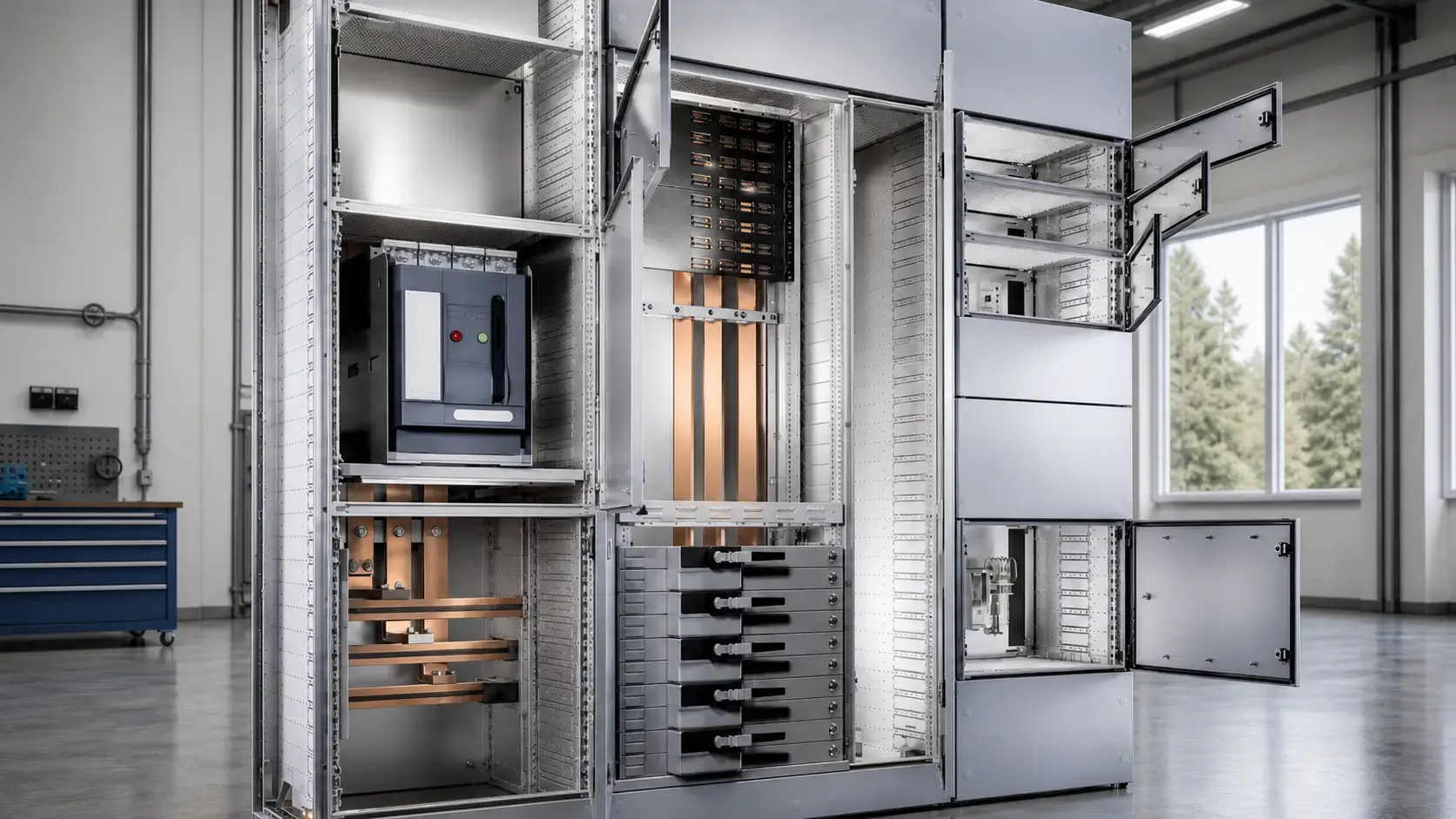
According to Rittal's product information, VX25 Ri4Power combines the VX25 enclosure with a modular switchgear and power-distribution system. Available section types include air circuit-breaker sections, outgoing sections, coupling sections, fuse-switch disconnector sections and cable chambers. The platform also provides options for internal separation and organised cable routing.
Rittal states that the system can be configured for busbar systems up to 6,300 A. That is a platform maximum, not a rating that automatically applies to every assembly. The usable rating depends on the selected busbars, enclosure arrangement, installed devices, temperature conditions and verified design.
The manufacturer also lists compatibility with air and moulded-case circuit breakers from several established brands. Compatibility should be read as configuration support within the system, not permission to substitute any breaker freely. The exact manufacturer, frame, mounting method, connection kit and operating clearances must match the verified arrangement.
Why IEC 61439 evidence still matters
Rittal describes VX25 Ri4Power as a tested and documented solution for assemblies built to IEC 61439. This can reduce engineering repetition, but the standard applies to the finished low-voltage switchgear and controlgear assembly. A system platform does not remove the assembly manufacturer's responsibility for the delivered board.
Changes that look small on a bill of materials can affect the evidence chain. A different breaker frame, an altered copper section, a relocated device, a new ventilation pattern or a revised compartment layout may change temperature rise, short-circuit withstand, clearances or protection against electric shock.
Buyers should therefore ask which parts of the design are covered by the system manufacturer's data and which checks remain with the assembly manufacturer. If the supplier has adapted a reference configuration, the quotation should make the deviations visible.
Digital planning is useful only when the output follows the order
Rittal's RiPower planning tool is presented as a way to configure sections, calculate copper busbars and produce parts lists, drawings, assembly instructions and design-verification documentation. That can shorten quotation and engineering work, particularly where several board variants share a common architecture.
The commercial risk appears when the configured output and the manufactured board drift apart. Revision control should connect the approved single-line diagram, configuration file, bill of materials, device schedule and final drawings. If a component is changed because of availability, the supplier should record the substitution and confirm whether the supporting verification remains valid.
What to put in an RFQ
- System and assembly identity: state the VX25 Ri4Power configuration, assembly manufacturer and applicable IEC 61439 part.
- Electrical duty: provide rated voltage, frequency, rated current, prospective short-circuit level, neutral arrangement and earthing system.
- Busbar details: request material, dimensions, location, rated current and short-circuit withstand data for the quoted arrangement.
- Device schedule: identify breaker or fuse-switch manufacturer, exact series, frame, poles, trip unit and mounting format.
- Internal separation: specify the required form and confirm how cable terminals, busbars and functional units are separated.
- Environmental conditions: include ambient temperature, altitude, indoor or outdoor location, ingress protection and ventilation assumptions.
- Evidence package: ask for design-verification references, routine-verification records, drawings, parts list and revision status.

What this means for panel builders and buyers
A modular platform can make repeatable switchboard families easier to quote and assemble. It can also help buyers compare offers when suppliers use the same documented building blocks. The benefit is strongest when the project specification is fixed early and the engineering output is carried through to production.
It does not make all quotations equivalent. Two boards using the same enclosure family may differ in busbar design, switching devices, separation, cooling assumptions and verification scope. Compare the configuration behind the product name, not the name alone.
Takeaway
Rittal's Australian push for VX25 Ri4Power highlights a broader move toward system-based low-voltage switchboard engineering. For procurement teams, the useful question is straightforward: does the supplier's documented configuration match the board that will actually be built? Put the ratings, device identities, environmental assumptions and verification deliverables into the RFQ before price comparison begins.