The UK's Office for Product Safety and Standards published a high-risk report on August 19, 2026 for a four-socket extension lead made by Donguan Keben Electrical Appliances Co., Ltd. The import was rejected at the border and destroyed after inspectors identified insecure internal wiring that could create electric-shock and fire hazards.
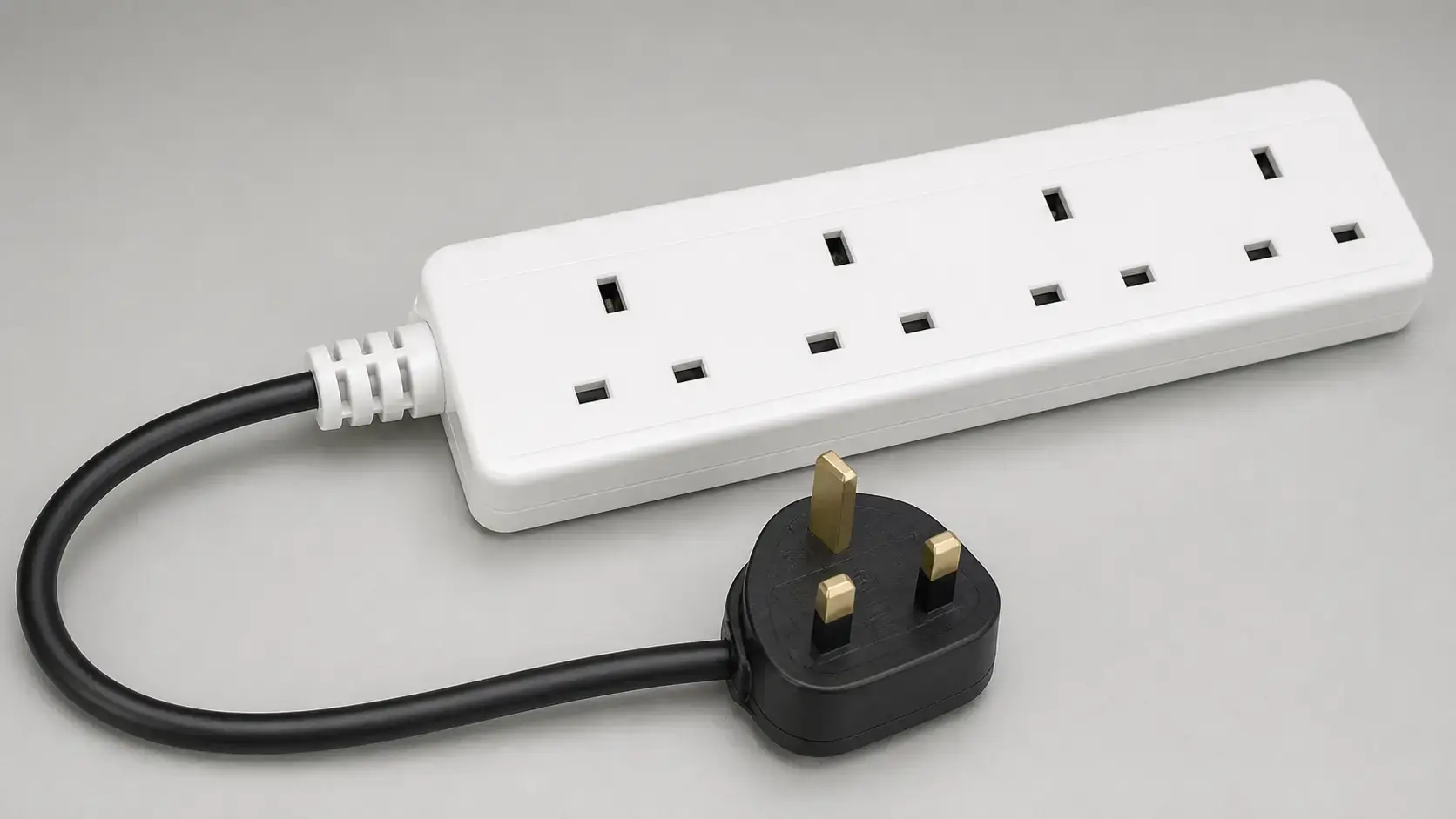
What the UK Safety Report Identified
The report covers model UK-103, described as a four-socket extension lead with a three-pin plug and a country of origin of China. OPSS classified the product as high risk. The notified corrective measures were rejection of the import and destruction of the product.
This was not announced as a consumer recall. The action took place at the border, which matters for buyers: market-surveillance controls can stop a shipment before retail distribution even when a product looks complete from the outside.
Why the Internal Connections Were a Safety Problem
OPSS reported poor-quality internal connections, including wires soldered directly together without strain relief. Over time, movement or pulling forces could allow a wire to detach and make accessible metal parts live, creating an electric-shock risk.
The same weak connections could also arc. Arcing can generate localized heat, damage insulation and lead to overheating or fire. The report also called for improvements to product marking and labelling.
The Compliance Boundary
According to OPSS, the extension lead did not meet the Electrical Equipment (Safety) Regulations 2016. Those regulations place duties on economic operators supplying relevant electrical equipment in Great Britain.
UK government guidance says importers must check that the manufacturer has completed the appropriate conformity assessment, prepared technical documentation, applied the relevant conformity marking and supplied a declaration of conformity. Importers also have traceability, instruction, monitoring and corrective-action duties.
A declaration or mark does not replace product construction checks. This case shows why the actual joint method, cable anchorage and production consistency still need evidence.
What Extension-Lead Buyers Should Check
- Exact product identity: record the model, plug type, socket count, cord specification, manufacturer and country of origin.
- Internal joint method: request drawings and controlled samples showing how conductors are terminated and insulated.
- Strain relief: verify that normal pulling, twisting and flexing loads are not transferred directly to soldered or current-carrying joints.
- Plug and cord construction: confirm dimensional and electrical evidence for the complete assembly, not only for separately purchased components.
- Temperature and load tests: obtain current reports for the exact production configuration and declared rating.
- Marking and instructions: check rating information, traceability, manufacturer and importer details, warnings and understandable English instructions.
- Production controls: define incoming-material checks, assembly inspections, end-of-line tests and batch-retention samples.
- Change control: require approval before factories change wire size, terminals, solder, cord anchorage, plastics or subcontractors.
What Importers Should Add to the RFQ
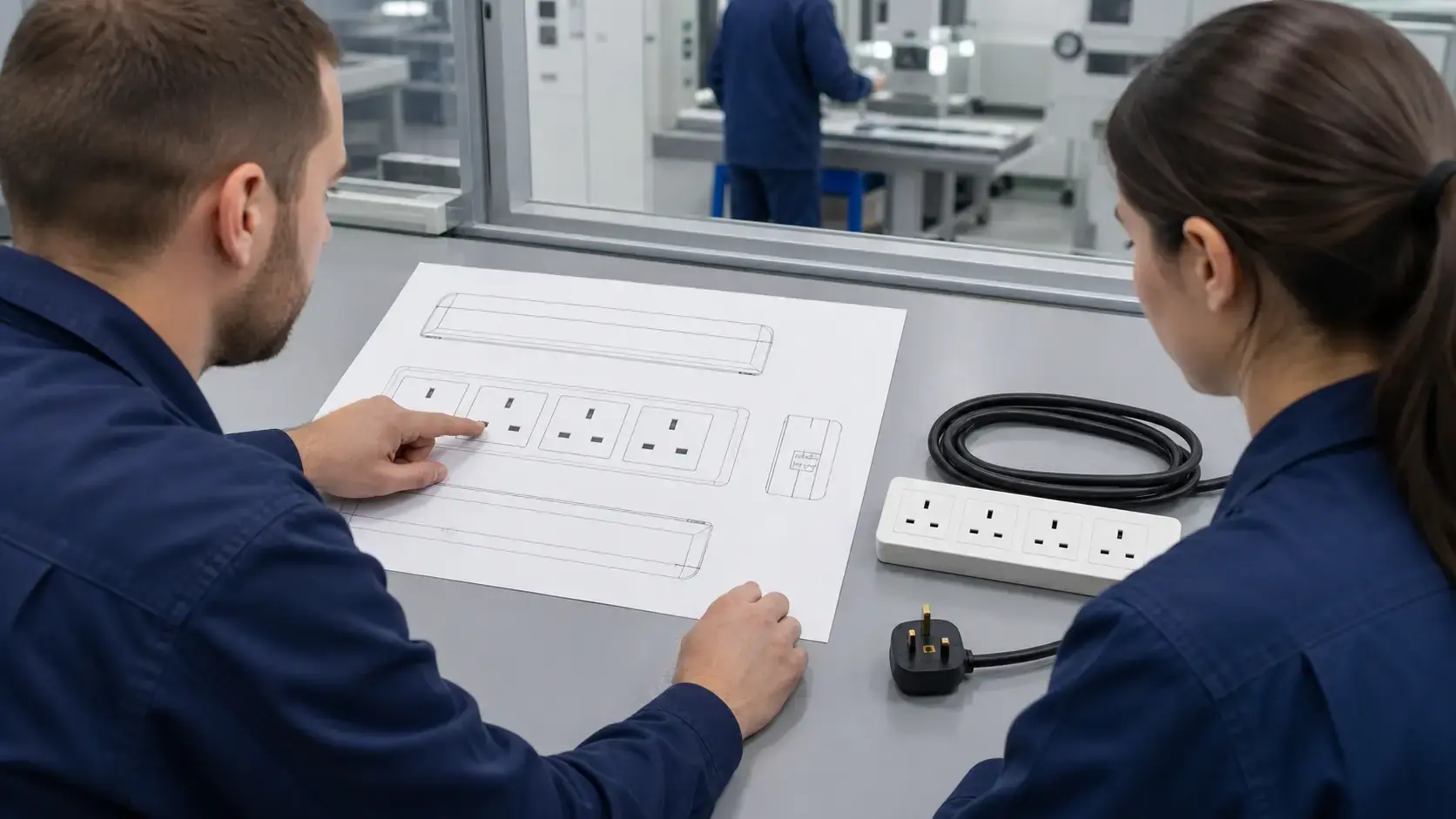
For private-label and OEM extension leads, the RFQ should identify more than socket quantity, cable length and colour. It should lock the internal wiring diagram, conductor specification, joint process, cord anchorage, plug construction, enclosure material and required production tests.
Ask for test reports that identify the tested model and construction. Then compare the approved sample with production units. A report for a visually similar extension lead does not prove that another internal build is safe.
Takeaway
The August 19 UK action is a practical reminder that extension-lead safety depends on hidden construction. Secure terminations, effective strain relief, controlled materials and traceable production evidence should be verified before shipment, not inferred from the outer enclosure or conformity mark.