A Manufacturer’s Guide to Switch Materials: Why High-Grade PC Is the Smart Choice
Choosing the right wall switch material is an engineering decision, not just a design preference. This manufacturer’s guide explains why high-grade V-0 polycarbonate (PC) offers superior flame resistance, impact strength, and long-term durability compared to ABS, metal, and glass. Learn how material choice affects safety, reliability, and lifecycle performance in residential and commercial projects.
A Manufacturer’s Guide to Switch Materials: Why High-Grade PC Is the Smart Choice
Introduction: Material Choice Is an Engineering Decision, Not a Trend
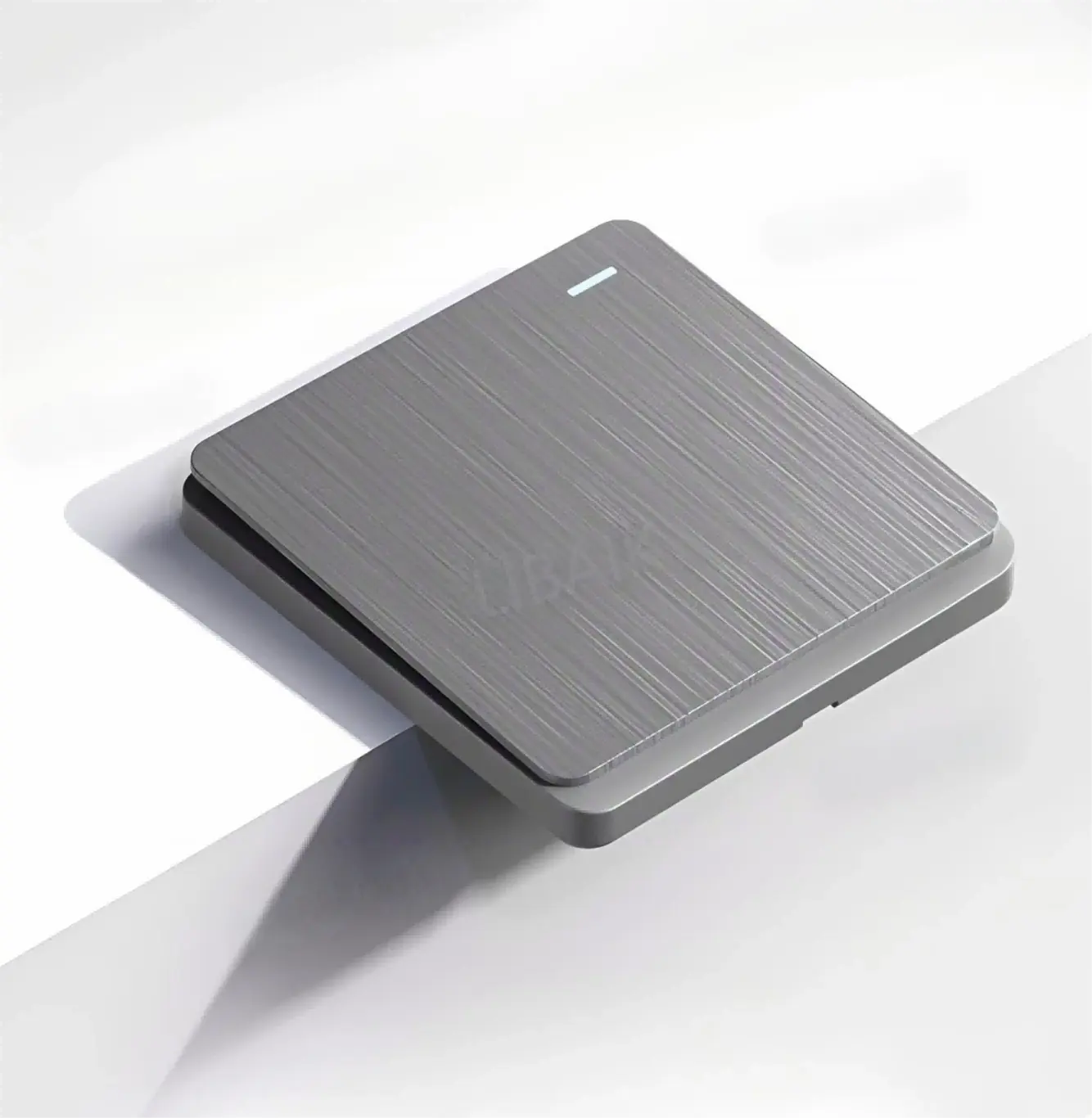
When electrical wholesalers, contractors, or developers evaluate wall switches, material choice is often framed as a design preference — glass looks premium, metal feels solid, plastic is economical.
In manufacturing reality, the decision is not that simple.
The material of a wall switch directly affects:
1. Fire safety performance
2. Structural stability under heat
3. Long-term color retention
4. Impact resistance during installation
5. Overall lifecycle cost
After decades of manufacturing experience in British-standard wiring accessories, we have chosen to specialize deeply in one material: high-performance, V-0 grade Polycarbonate (PC).
This is not because PC is the cheapest option.
It is because, when properly engineered, it provides the best balance of safety, durability, flexibility, and long-term reliability for the majority of real-world projects.
The Core of Our Craft: Mastering High-Performance Polycarbonate (PC)
Polycarbonate is often misunderstood as “just plastic.” That assumption overlooks enormous variation in material grades.
There is a fundamental difference between:
(1) Standard commercial-grade PC
(2) Recycled PC blends
(3) PC+ABS mixtures
(4) And certified V-0 grade flame-retardant PC
At LIBAIK, we use only premium V-0 grade raw materials for our main switch bodies and faceplates.
What That Means in Practical Terms
1. Impact Resistance
PC has exceptional toughness. It resists cracking during transport and installation. On construction sites, switches are often installed before painting or final finishing. Impact damage is common. A brittle material fails here. Properly molded PC does not.
2. Heat Stability
Electrical connections generate heat, especially under heavy load or improper wiring. High-grade PC maintains structural integrity at elevated temperatures far better than lower-cost alternatives.
3. UV Resistance and Anti-Yellowing
In markets with strong sunlight exposure — particularly the Middle East and Southeast Asia — low-grade plastics discolor over time. Proper UV-stabilized PC maintains color stability for years.
4. Flame Retardancy (V-0 Grade)
This is not marketing terminology. It is a safety classification under UL94 testing. We will explain why this matters in detail below.
This engineering foundation is visible in our proven L11 Series, designed for high-volume housing projects, as well as in our balanced-design V6 Series for residential and commercial applications, where structural stability and long-term durability are critical.
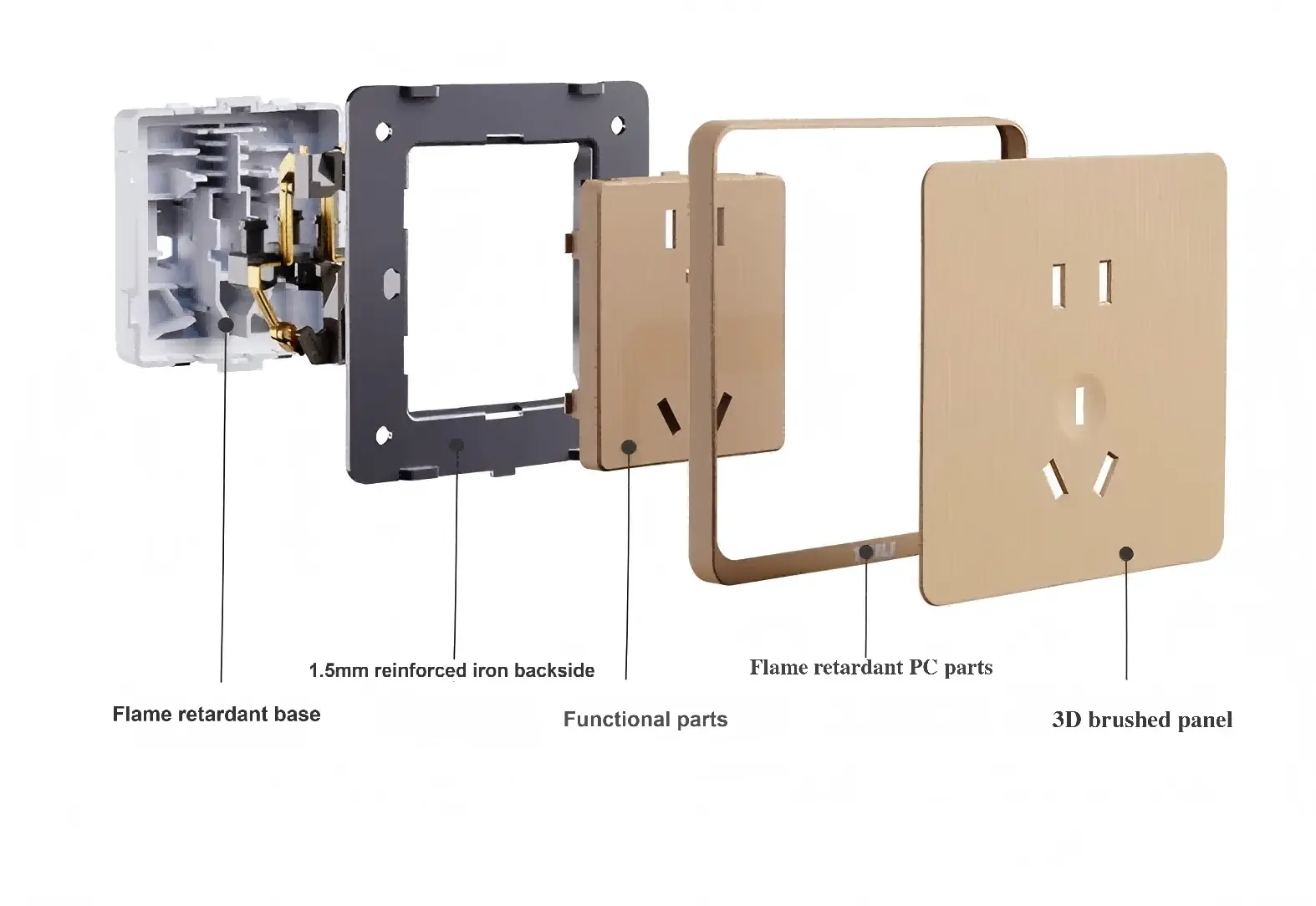
PC vs Other Common Switch Materials: A Practical Comparison
Material decisions should be made through comparison, not preference. Below is how high-grade PC performs against common alternatives.
PC vs ABS
ABS is widely used in lower-cost electrical accessories.
Softening Temperature
ABS generally has lower heat resistance than PC. Under prolonged load conditions, deformation risk increases.
Impact Strength
ABS is more brittle compared to PC. Micro-cracks may develop after years of stress.
Flame Retardancy
While flame-retardant ABS exists, achieving consistent V-0 performance is more challenging and often more expensive.
For projects where safety margins matter, PC offers superior stability.
PC vs Metal Faceplates
Metal faceplates offer a strong visual presence. However, they introduce engineering trade-offs.
Electrical Insulation
Metal conducts electricity. This requires additional internal insulation layers. Any failure in insulation design can increase risk.
Installation Sensitivity
Metal panels can deform if over-tightened.
Cost Structure
Material and processing costs are significantly higher.
For certain luxury applications, metal aesthetics may be desired. However, from a safety and insulation standpoint, PC offers inherent advantages.
PC vs Glass Panels
Tempered glass panels are popular in smart switch designs.
Scratch Resistance
Glass performs well in scratch resistance.
Impact Risk
While tempered glass is strong, it is not unbreakable. Transportation damage and job-site impact remain risks.
Structural Foundation
In most smart glass switches, the internal body is still PC. The glass is primarily a decorative interface layer.
In our smart product line, we use tempered glass selectively — but the core structure remains PC-based for mechanical reliability.
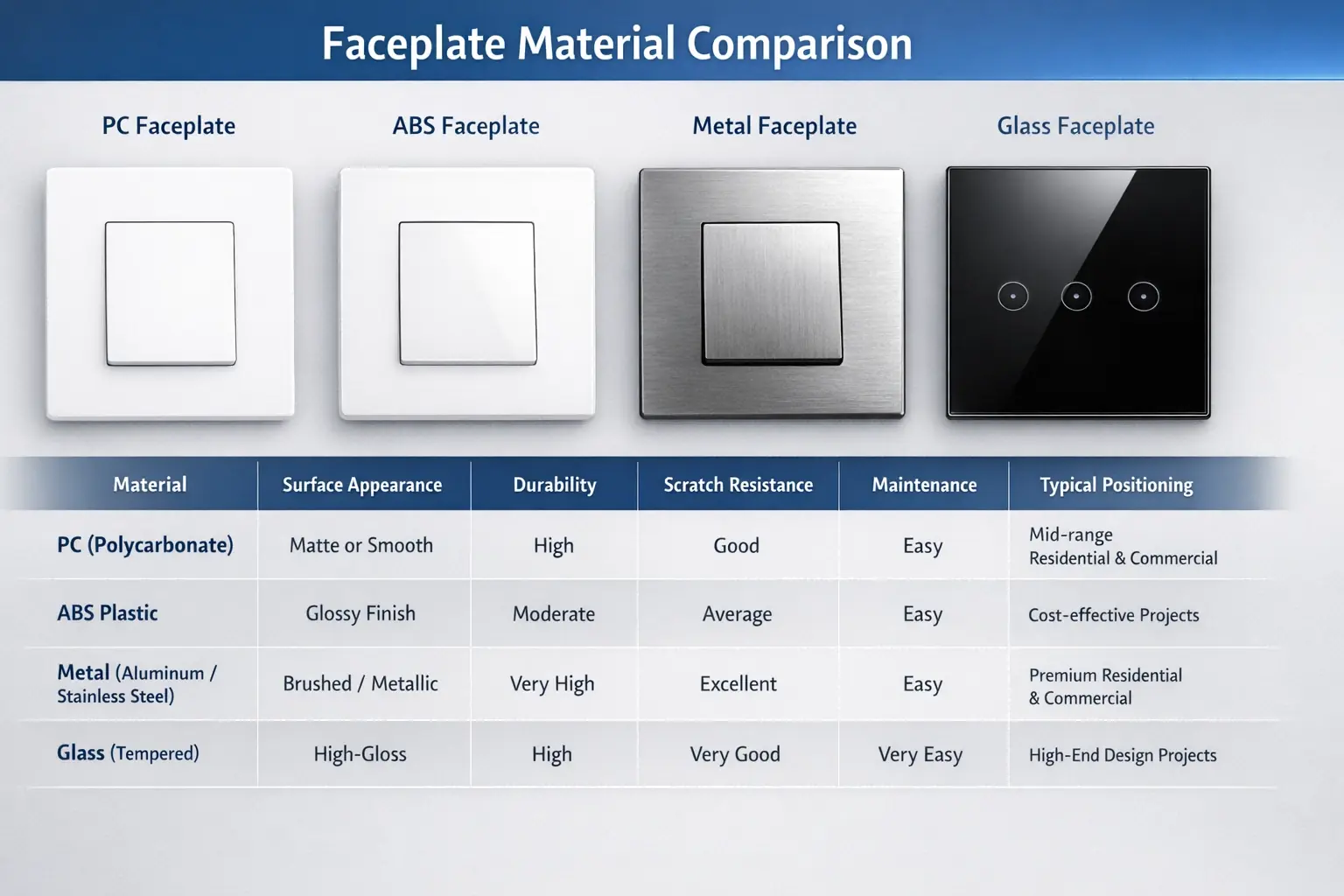
Why Flame Retardant Rating Matters: Understanding V-0
One of the most misunderstood specifications in electrical accessories is the flame-retardant rating.
Under the internationally recognized UL94 flammability standard, materials are classified based on how they behave when exposed to flame exposure and ignition sources.
V-0 Rating Means:
① Flame extinguishes within 10 seconds after removal
② No flaming drips
③ No ignition of cotton indicator below
This is critical.
In real-world electrical faults, small sparks or short circuits may occur. A non-rated plastic may:
1.Continue burning
2.Drip molten material
3.Contribute to fire spread
4.V-0 grade PC significantly reduces this risk.
For wholesalers supplying high-density housing, hotels, or public buildings, this rating is not a marketing feature. It is a liability shield.
Achieving Premium Aesthetics Through Intelligent PC Engineering
One common misconception is that PC limits design.
In reality, mastery of PC molding allows more design freedom than many other materials.
The Look of Metal, The Advantage of PC
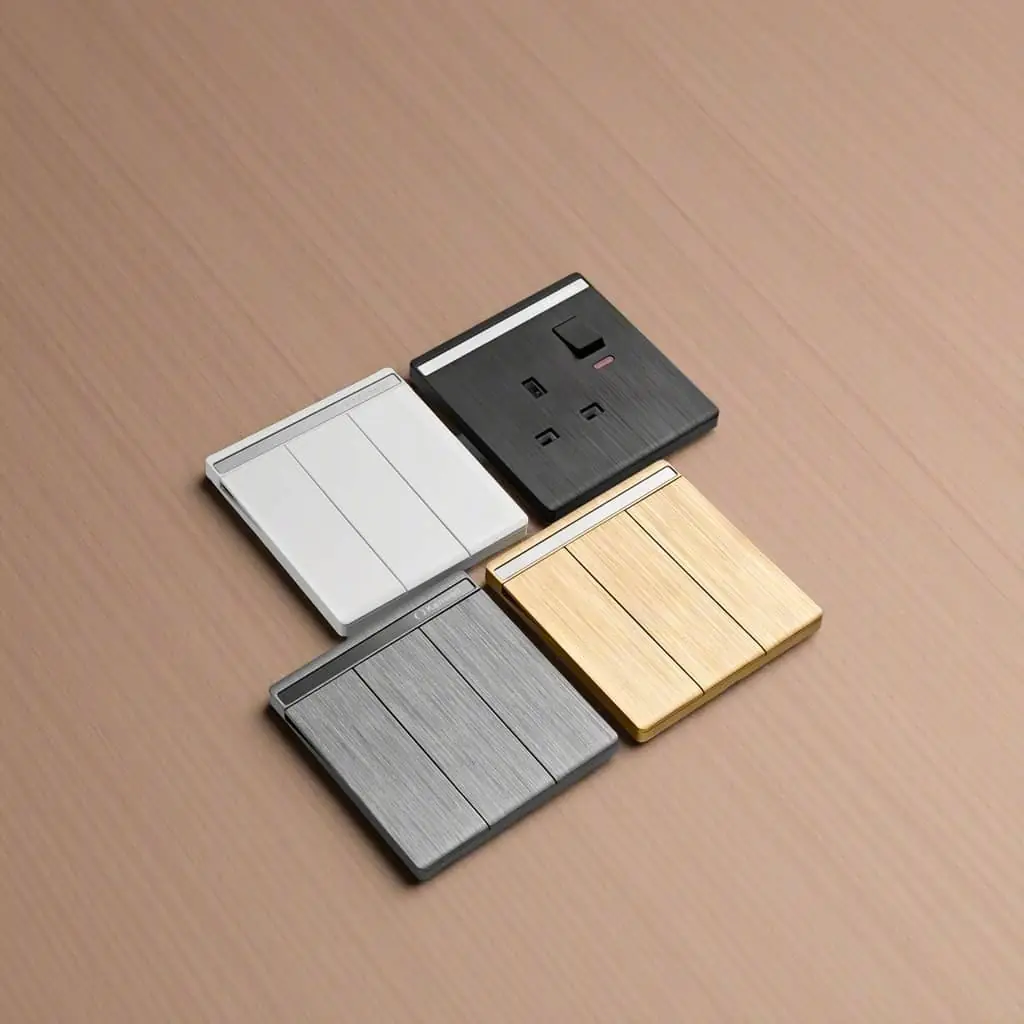
Our V12 Series demonstrates how high-density PC can be electroplated to achieve a metallic visual depth.
This provides:
1) Premium visual effect
2) Electrical insulation
3) Lower weight
4) Better structural consistency
Instead of replacing PC, we enhance it.
The Purity of Glass, Supported by PC Structure
In our smart series, glass panels create a sleek user interface. However, the internal structural frame remains PC.
This ensures:
1.Mechanical durability
2.Stable mounting
3.Impact absorption
Design without engineering discipline leads to fragility. We avoid that mistake.
Purposeful Engineering: Where Material and Design Meet
Material expertise directly influences design capability.
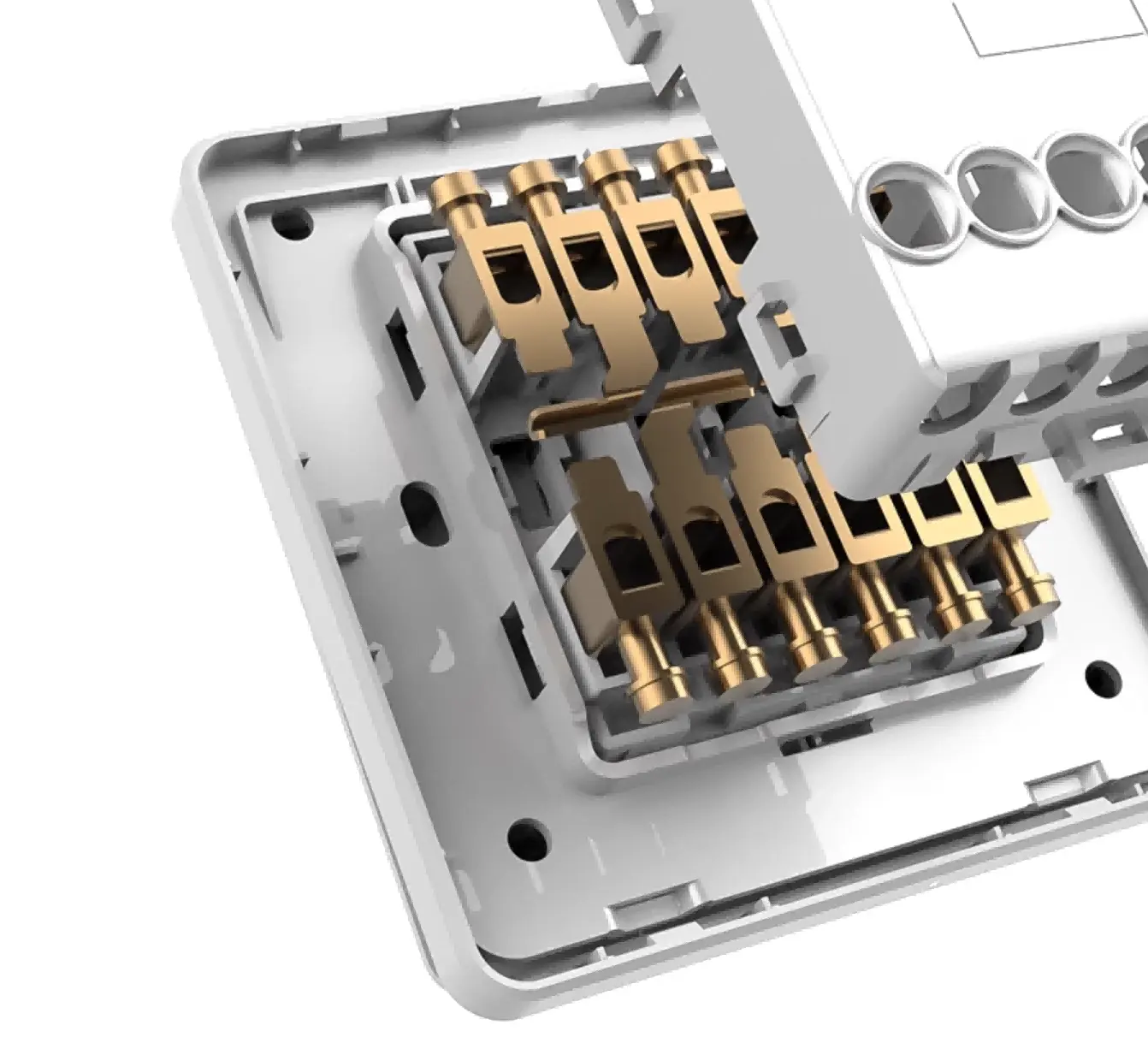
Ultra-Thin Structural Strength
Our V7 Series achieves a 5–6mm ultra-thin profile.
This is only possible because:
a. High-grade PC allows precise molding
b. Structural ribs can be engineered internally
c. Thickness reduction does not compromise integrity
Thin design without proper material quality results in warping. With controlled PC engineering, structural stability remains intact.
Screwless Faceplate Systems
Across V6, V7, and V12, screwless PC faceplates provide:
A. Cleaner aesthetics
B. Faster installation
C. Reduced surface damage
Because PC allows accurate snap-fit tolerances, these systems remain stable over time.
Long-Term Reliability: The Hidden Cost of Poor Material Choice
Material selection affects more than appearance.
In large projects, replacement cost matters.
Low-grade plastics may lead to:
- Discoloration within 2–3 years
- Surface cracking
- Deformation under load
- Higher maintenance complaints
For wholesalers and contractors, callbacks are expensive.
High-grade PC minimizes lifecycle risk.
Why Specialization Matters More Than Material Variety
Some manufacturers promote multi-material capability as strength.
Our philosophy is different.
Instead of spreading engineering focus across metal stamping, glass bonding, nylon molding, and PC processing simultaneously, we concentrate deeply on high-performance PC systems.
This allows:
Ø Better process control
Ø More consistent molding quality
Ø Stable raw material sourcing
Ø Long-term quality predictability
Mastery of one core material often produces better outcomes than superficial use of many. To understand how different switch series apply in real-world projects, see our complete switch selection guide.
Conclusion: Engineering Discipline Over Trend
Material trends change. Safety requirements do not.
For the majority of residential and commercial projects, high-grade V-0 Polycarbonate remains the most balanced, reliable, and intelligently engineered choice.
At LIBAIK, our expertise in PC-based wiring accessories is not accidental. It is the result of long-term manufacturing focus, market feedback, and structural optimization.
From the dependable L11 series to the refined V6 and V12 designs, and the ultra-thin V7 profile, each product demonstrates what disciplined material engineering can achieve.
When safety, durability, and long-term stability matter more than surface trends, high-grade PC is not the compromise.
It is the smart choice.