The V7 series is built for projects where the wall switch should almost disappear into the architecture. It is an ultra-thin, large-panel, borderless series for designers and buyers who want visual calm, cleaner wall surfaces, and stronger architectural continuity rather than a product that announces itself.
Within LIBAIK's broader series logic, V7 is the minimalist choice. It is best suited to projects that prioritize architectural restraint, reduced visual interruption, and a more refined wall plane. If you are comparing different series directions first, start with our guide on how to choose the right wall switch series for residential and commercial projects.
That positioning matters. V7 is not meant to replace every other wall switch series. It is meant for the specific type of project where slim proportion, low visual weight, and surface continuity are more valuable than tactile emphasis or a more forgiving installation profile.
Contents
- Why V7 Fits Minimalist Architecture
- What Ultra-Thin 5-6 mm Really Means in Project Use
- How the Large Borderless Panel Supports Spatial Continuity
- PC vs Glass: Two Material Expressions With One Design Language
- Where V7 Works Best and Where a Less Extreme Option May Fit Better
- How V7 Connects to Broader Buyer and Manufacturer Decisions
- Conclusion
Why V7 Fits Minimalist Architecture
Minimalist spaces depend on proportion, light, and material continuity. In those environments, the wall switch stops being a small accessory and becomes part of the wall composition itself. Heavy outlines, segmented faceplates, and thicker forms can interrupt a carefully controlled surface even when the product is technically sound.
V7 was developed for that type of design context. Its ultra-thin construction, large panel, and frameless appearance help the switch recede visually so that the wall, not the accessory, remains dominant. This is why V7 is often specified in show apartments, design-led residences, refined hospitality interiors, and architectural spaces where restraint is intentional rather than incidental.
| Project Priority | Why V7 Fits |
|---|---|
| Architectural minimalism | Ultra-thin profile and borderless panel reduce visual interruption on the wall |
| Large-format material and seamless wall finishes | Broader surface and softer edge transition support cleaner integration |
| Design-led residential and hospitality spaces | Low visual weight helps functional hardware recede into the background |
| Projects needing one restrained design language | PC and glass options preserve the same structural identity across different rooms |
What Ultra-Thin 5-6 mm Really Means in Project Use
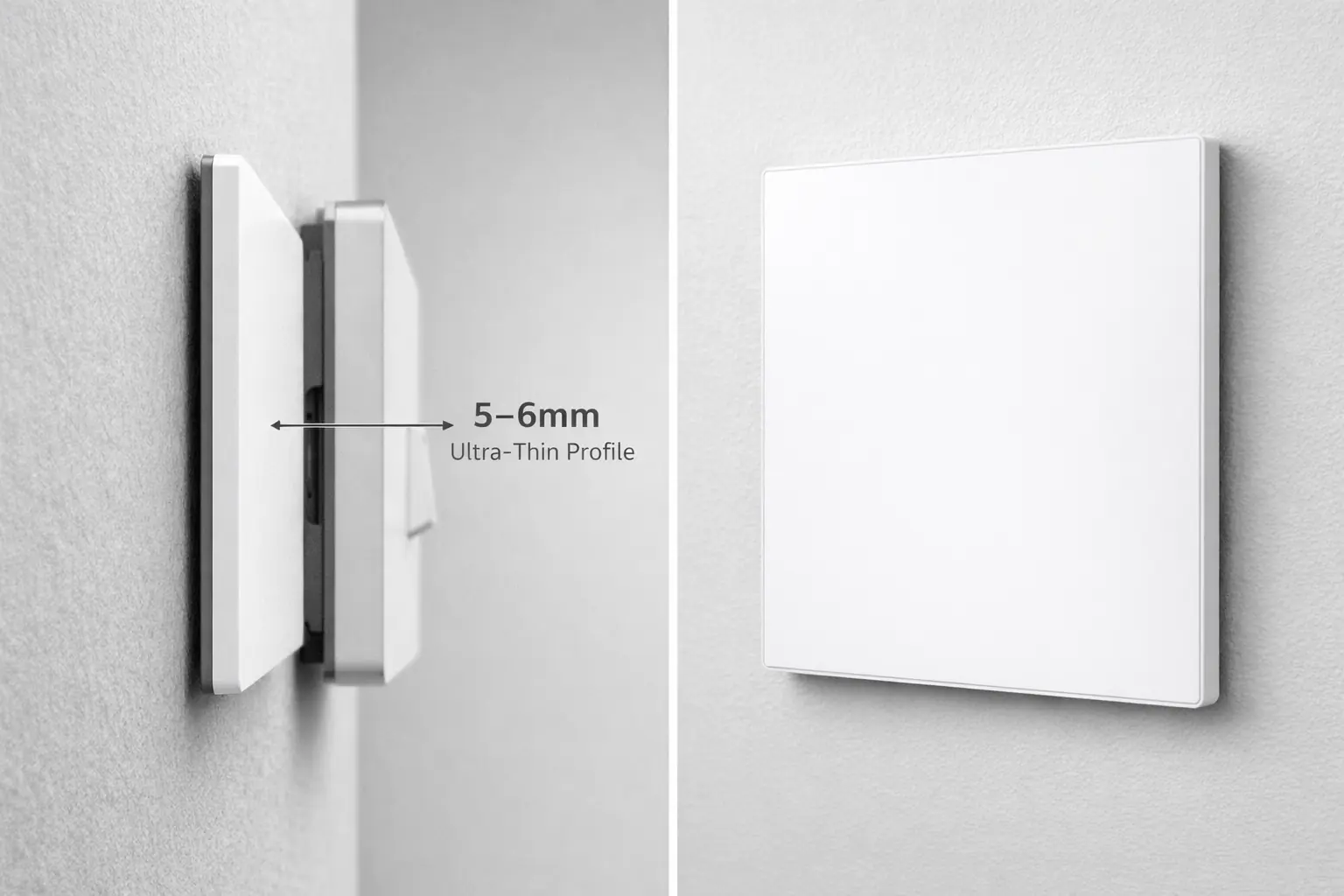
A thickness of 5-6 mm changes the way a wall switch reads in a finished interior. The reduced profile lowers the apparent depth of the product, softens shadow lines, and lets the faceplate sit closer to the wall plane. The visual effect is subtle, but in tightly designed interiors it noticeably changes the perceived quality of the finish.
Why thinness improves the finished look
Less thickness means less visual projection. That makes the switch feel calmer on the wall and more consistent with architectural surfaces that are meant to read as continuous planes rather than layered objects.
Why thinness also increases project sensitivity
Ultra-thin products demand better control. Uneven walls, inconsistent installation, and alignment problems become more visible as the profile gets slimmer. That is why V7 should be understood as a refined option, not simply a fashionable one. The design reward is real, but it comes with a higher expectation for execution.
How the Large Borderless Panel Supports Spatial Continuity
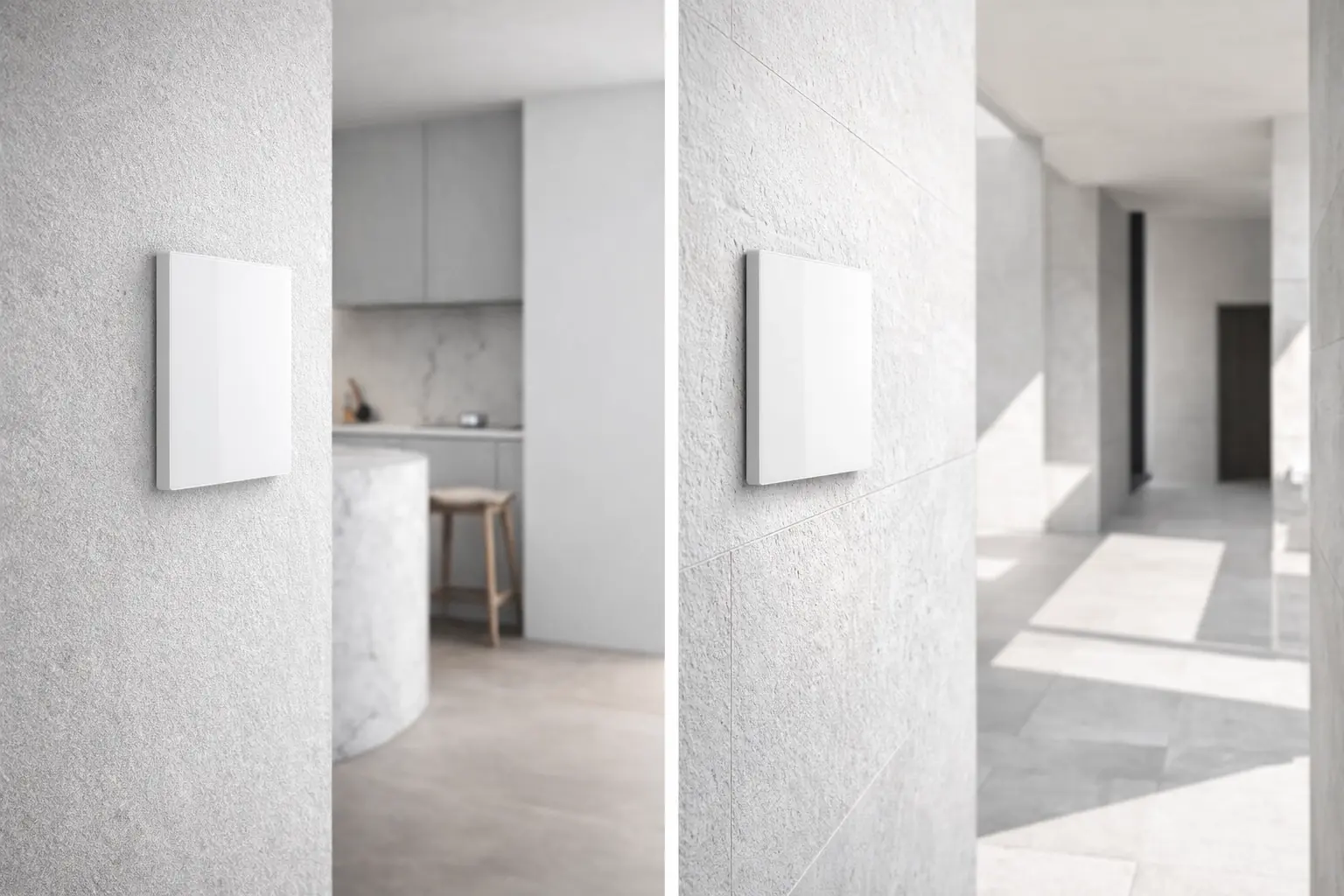
The large panel is not there to dominate the wall. Its purpose is to stabilize the installation area visually and reduce the sense of interruption around the switch point. In minimalist interiors, that matters more than decorative complexity.
The borderless edge works in the same direction. Without a hard frame line, the panel transitions more softly into the wall finish, which helps the switch appear less like a separate object. This is especially effective when the surrounding surface is finished in smooth plaster, seamless paint, or other continuous architectural materials.
PC vs Glass: Two Material Expressions With One Design Language
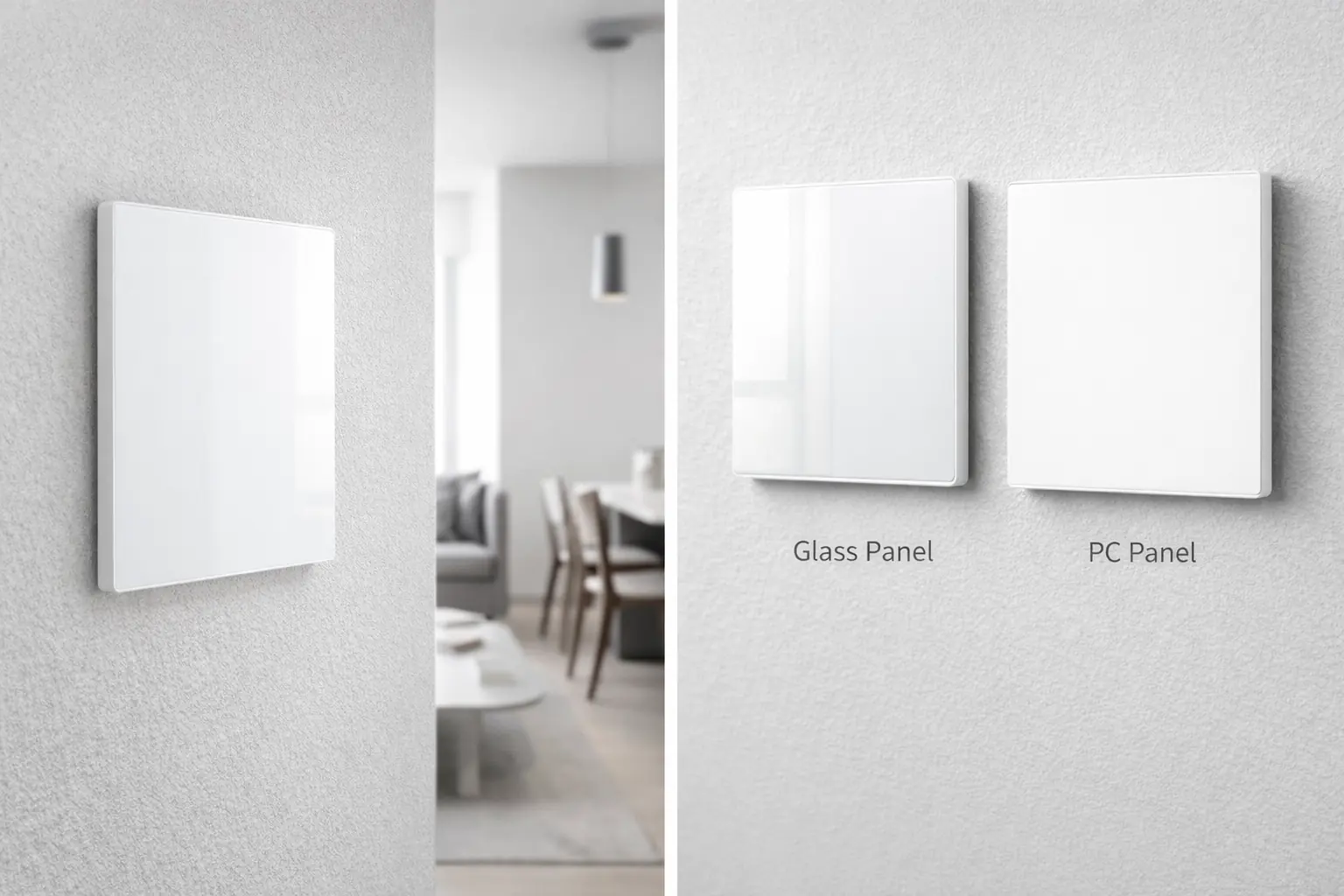
V7 keeps the same minimalist structure while offering two different material expressions. That lets buyers maintain one design language across projects while adjusting the material feeling to suit the space.
PC panel version
The PC option feels softer and less reflective. It is usually the more forgiving choice for residential projects, apartment developments, and larger-volume installations where durability, consistency, and long-term surface stability matter as much as first impression.
Glass panel version
The glass option creates a sharper, more architectural impression. It reflects light more actively and suits spaces where material precision is part of the interior story. It is not a higher tier in principle; it is simply a different expression of the same restrained design language.
Where V7 Works Best and Where a Less Extreme Option May Fit Better
Best-fit applications
- architectural homes and design-led apartments
- show units, boutique hospitality spaces, and refined commercial interiors
- projects using cleaner wall finishes and tighter design control
- buyers who want the switch to disappear visually rather than create tactile presence
When another series may be the better fit
If the project still wants a modern appearance but needs a more forgiving balance between design and installation practicality, the modern European wall switch V6 series is often the safer choice. If the interior is meant to express more tactile richness or visible premium presence, the luxury wall switch design V12 series may be more suitable. V7 is strongest when architectural continuity is the leading design decision.
How V7 Connects to Broader Buyer and Manufacturer Decisions
Choosing V7 is not only a style decision. It also depends on installation tolerance, finishing quality, supply consistency, and confidence in the manufacturer behind the series. If you are still comparing overall switch directions, return to the full wall switch series selection guide. If the next question is whether the supplier can support long-term quality and project consistency, continue with our guide on how to choose a reliable electrical wall switch and socket manufacturer.
For buyers who need a broader view of OEM capability, manufacturing support, and product-system supply, our overview of electrical wall switch and socket manufacturing is the next logical step. If you want to review the live module range and product details for this series itself, you can also visit the LIBAIK V7 Series product page.
Conclusion
V7 is the right choice when a project wants the wall switch to become part of the architecture rather than an object on top of it. Its ultra-thin profile, borderless panel, and controlled material options make it especially suitable for minimalist interiors where visual continuity matters more than overt presence. If you want to review specifications, request samples, or discuss fit for a specific project, you can continue through the project inquiry page.