Why Soft-Touch (Baby Skin) Switches May Underperform in High-Temperature Markets — A Technical Evaluation
Soft-touch (baby skin) wall switches offer premium tactile appeal, but in high-temperature markets such as the Middle East, long-term durability can be affected by heat, UV exposure, and thermal cycling. This article evaluates the material behavior of soft-touch coatings and compares them with heat-resistant alternatives such as flame-retardant polycarbonate and brushed surface finishes.
Why Soft-Touch (Baby Skin) Switches May Underperform in High-Temperature Markets — A Technical Evaluation
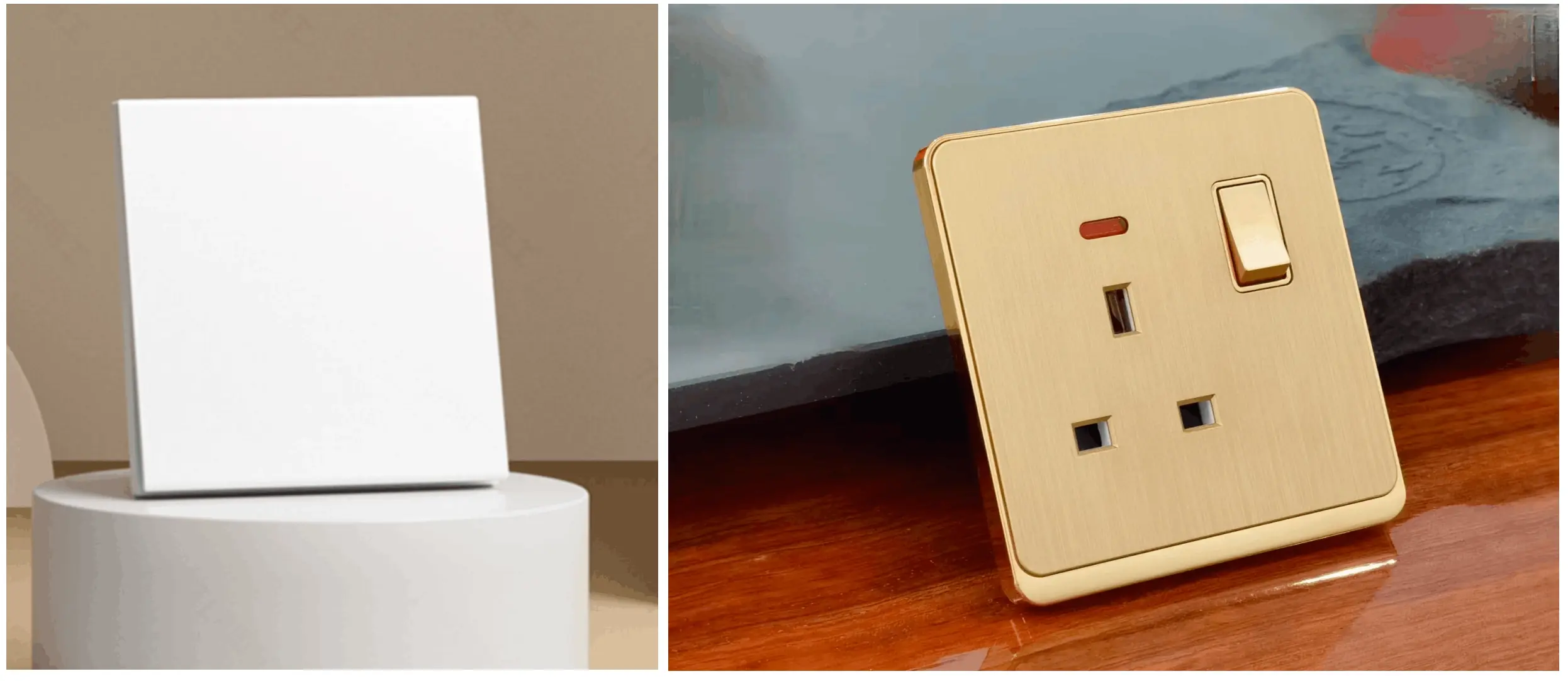
Soft-touch wall switches — commonly referred to in markets such as Iraq and parts of the Gulf region as “baby skin” finishes — have become increasingly popular over the past decade. The appeal is understandable. The surface feels smooth, warm, and refined. In retail displays and residential showrooms, the tactile experience creates a strong perception of quality.
From a market standpoint, soft-touch finishes respond well to contemporary interior trends.As discussed in our guide to Electrical Wall Switch & Socket Manufacturing, material selection plays a critical role in long-term performance.
From a technical standpoint, however, surface behavior must be evaluated in relation to environmental conditions — particularly in high-temperature regions.
This article does not argue that soft-touch technology is inferior. Instead, it examines how material properties interact with heat, UV exposure, and long-term aging in climates where ambient temperatures regularly exceed 45°C and wall surface temperatures may approach or exceed 60°C.
Material performance is not absolute. It is environmental.
Understanding What “Soft-Touch” Actually Means
Soft-touch is not a base material. It is a surface treatment.
In most electrical wall switch applications, the structure consists of:
Ø A rigid thermoplastic substrate (typically ABS or polycarbonate)
Ø A sprayed elastomer-modified polyurethane coating
Ø A thin rubberized surface layer (generally between 20–50 microns)
The tactile softness comes from the elastomeric nature of the top coating. Compared to rigid thermoplastics, this surface layer has:
ü Lower surface hardness
ü Higher friction coefficient
ü Greater elasticity
These characteristics create the familiar “baby skin” sensation. However, softness and elasticity are inherently temperature-sensitive properties.
When evaluating durability, the behavior of the coating under sustained heat must be considered separately from the structural base.
Environmental Conditions in High-Temperature Markets
In moderate climates, laboratory assumptions often hold true. But in high-temperature regions, installed products experience significantly different stress conditions.
In markets such as Iraq, Saudi Arabia, the UAE, and certain parts of Africa:
- Outdoor ambient temperatures frequently exceed 45–50°C during summer.
- Sun-exposed exterior walls may reach 60–75°C.
- Electrical back boxes can trap additional heat, increasing localized temperature.
- Daily temperature fluctuation creates repeated thermal cycling.
Unlike a stable indoor environment maintained at 22–25°C, these regions expose wall switches to sustained thermal stress for months each year.
This difference is critical.
Most surface coatings are technically rated for operation at elevated temperatures. However, rating does not necessarily equate to long-term aesthetic stability under continuous exposure.
Material Behavior Under Elevated Temperature
Elastomer-modified polyurethane coatings — the basis of most soft-touch finishes — rely on controlled flexibility. Their mechanical properties are optimized for feel, not structural rigidity. Surface durability is also influenced by coating process control and curing standards during production.
When temperature increases:
- Elastic modulus decreases.
- Surface hardness drops.
- Molecular mobility increases.
- Internal stress relaxation occurs.
In practical terms, the coating becomes softer under heat.
Repeated exposure to temperatures near or above 60°C accelerates:
- Surface oxidation
- Plasticizer migration (where applicable)
- Loss of initial tactile uniformity
- Changes in surface sheen
These changes are gradual and cumulative. They do not represent electrical failure. They represent surface aging. For distributors focused on long-term product perception, surface aging can become more problematic than mechanical malfunction.
The Effect of Thermal Cycling
One factor often underestimated in surface durability discussions is thermal cycling.
High-temperature regions typically experience:
- Intense daytime heat
- Cooler nighttime conditions
- Repeated expansion and contraction cycles
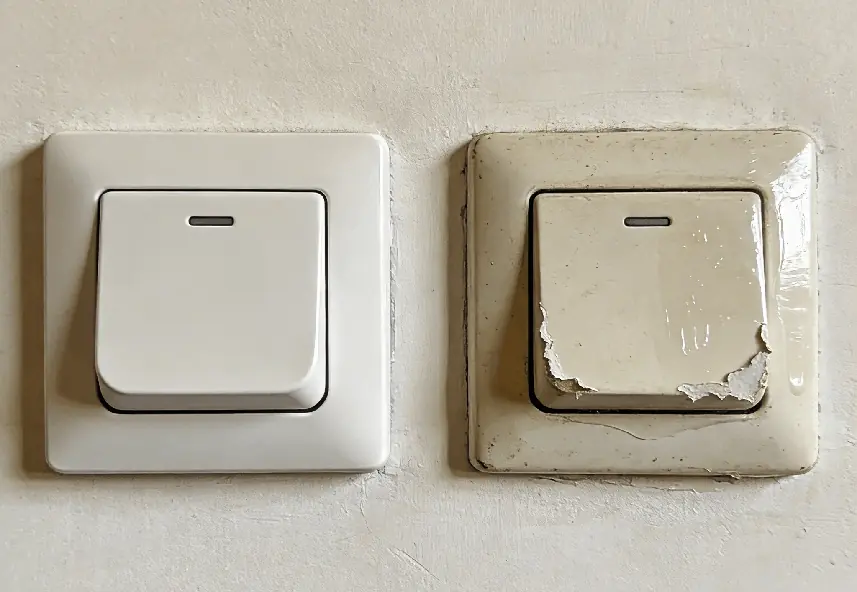
When two bonded materials — such as a rigid plastic substrate and an elastomeric coating — expand and contract at different rates, stress develops at the interface.
Over time, this repeated mechanical stress may lead to:
1. Micro-level adhesion fatigue
2. Edge lifting
3. Minor surface separation at corners
4. Increased susceptibility to peeling
The coating itself may remain intact in many areas, but stress concentrates at edges and high-contact zones.
This phenomenon is not specific to any one manufacturer. It is inherent to multi-layer material systems exposed to sustained thermal cycling.
UV Exposure and Surface Aging
Heat is not the only stress factor in hot climates.
UV radiation significantly accelerates polymer aging.
In regions with strong solar intensity:
(1) UV exposure can break polymer chains.
(2) Surface oxidation increases.
(3) Original matte appearance may shift.
(4) Tactile softness may gradually change.
Rubberized coatings are generally more sensitive to UV aging compared to solid, UV-stabilized polycarbonate substrates. While many soft-touch coatings include UV stabilizers, long-term exposure at high temperature increases the rate of degradation.
The result is not catastrophic failure. It is progressive aesthetic change.
Observed Performance Patterns in Hot Regions
Based on long-term field observations in high-temperature markets, common patterns after 18–36 months of exposure include:
1) Slightly sticky surface feel during peak summer
2) Loss of original velvety texture
3) Localized gloss development in high-contact areas
4) Minor peeling at sharp edges or corners
Importantly:
- Electrical functionality remains unaffected.
- The issue is visual and tactile.
For distributors building brand reputation, however, surface stability is part of perceived product quality.
Where Soft-Touch Performs Well
To remain technically objective, soft-touch finishes offer real advantages when environmental stress is moderate.
In stable indoor conditions:
A. Surface remains consistent.
B. Tactile feel is preserved.
C. Anti-fingerprint properties perform effectively.
D. Visual appeal remains strong.
In temperate climates or fully air-conditioned spaces, soft-touch finishes can perform satisfactorily for extended periods.
Material suitability depends on application environment.
Structural Alternatives for High-Temperature Markets
When designing products specifically for hot climates, many manufacturers prioritize structural material stability over surface softness.
Two technical approaches are commonly adopted.
1. Flame-Retardant Polycarbonate (V0 Grade) with Integrated Texture
Polycarbonate, particularly flame-retardant V0 grade PC, offers:
1. High heat resistance
2. Structural rigidity
3. Improved dimensional stability under heat
4. Stronger UV performance when compounded correctly
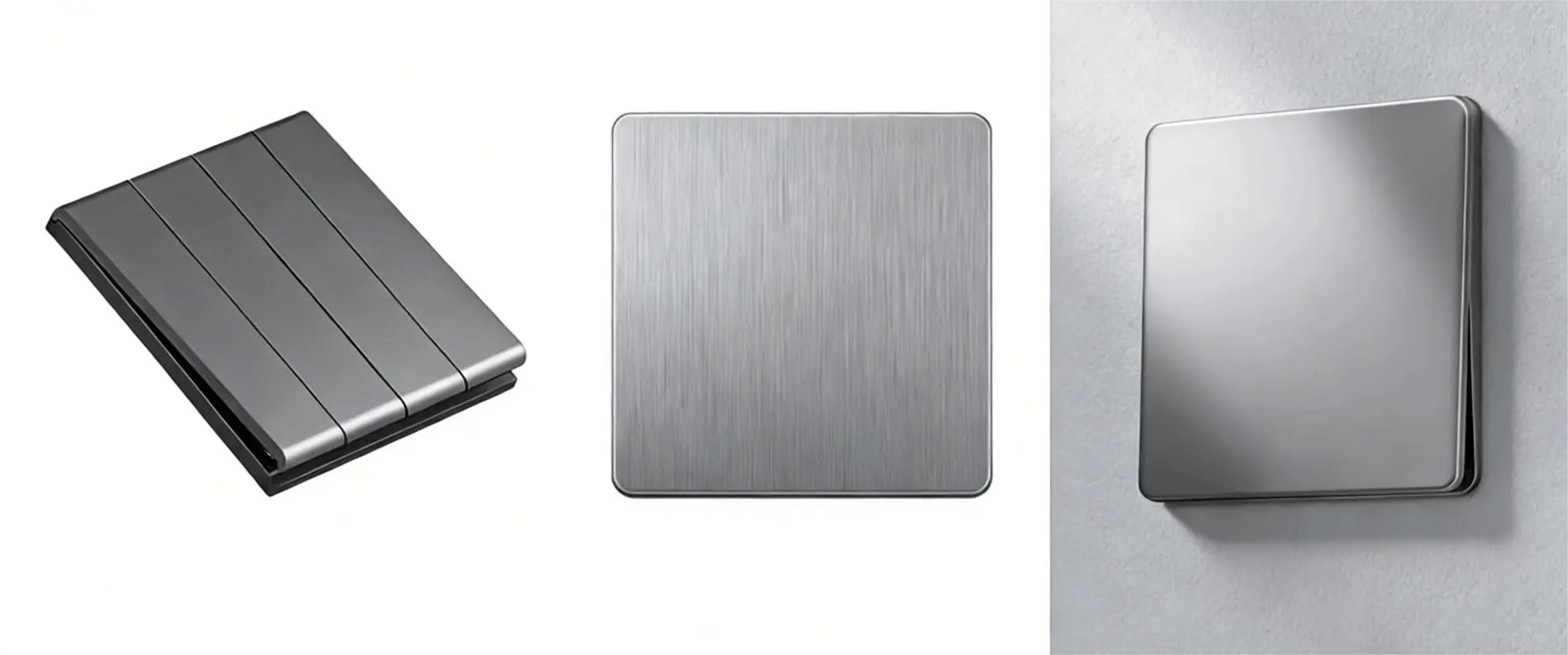
Injection-molded matte textures eliminate the need for an additional coating layer.
Because the surface finish is part of the molded structure:
1) There is no interface to fatigue.
2) No coating layer to delaminate.
3) Long-term stability improves under thermal cycling.
While the tactile feel differs from rubberized softness, durability increases significantly in extreme climates. Many flame-retardant PC wall switches are designed specifically for projects requiring higher thermal stability.
2. Standard Spray Coating with Brushed Surface Treatment
Another technically balanced approach combines:
Ø Non-elastomer spray paint
Ø Brushed or micro-textured surface finishing
This method achieves:
Ø Refined matte aesthetics
Ø Visual depth comparable to brushed metal
Ø Controlled surface hardness
Ø Reduced temperature sensitivity compared to rubberized coatings
The tactile experience remains smooth, though less elastic.
In high-temperature markets, many distributors prefer this compromise between aesthetics and structural durability.
Technical Decision-Making for B2B Buyers
When evaluating surface finishes for hot climates, procurement decisions should consider:
(1) Expected installation temperature range
(2) Degree of UV exposure
(3) Ventilation conditions
(4) Lifecycle expectation (3–5 years minimum)
(5) Surface aging tolerance
Surface finish selection should align with climate conditions rather than short-term showroom appeal. Buyers evaluating high temperature wall switch applications should also understand how to assess supplier capability and production standards.
Engineering Perspective: Climate as a Design Variable
Every material has a comfort zone.
Soft-touch coatings are optimized for tactile softness and aesthetic enhancement. Rigid polycarbonate surfaces are optimized for structural stability. In high-temperature regions, environmental stress shifts the balance toward durability.
A surface finish that performs beautifully in a 22°C indoor showroom may behave differently when exposed to 60°C external wall conditions for months each year.
This is not a question of quality. It is a question of compatibility.
Conclusion: Technical Compatibility Over Trend
Soft-touch (baby skin) finishes remain a valid and attractive option in many markets.
However, in regions characterized by sustained high temperatures and strong UV exposure, long-term surface behavior must be evaluated carefully. For high-temperature applications, structural stability and thermal resilience often outweigh tactile softness. The optimal surface solution is not determined by trend alone.
It is determined by environment, lifecycle expectation, and engineering compatibility. Material selection is ultimately climate-driven. And climate defines durability.
Frequently Asked Questions About Soft Touch Wall Switches in Hot Climates
Is a soft touch wall switch suitable for high temperature climates?
A soft touch wall switch can function electrically in high temperature climates, but its long-term surface stability depends heavily on environmental exposure. In regions where wall temperatures frequently exceed 60°C and UV intensity is strong, the rubberized coating may gradually soften, lose its original texture, or experience minor edge lifting over time.
These changes usually do not affect electrical safety, but they may influence appearance and tactile consistency after several years of use. For installations exposed to sustained heat and sunlight, many distributors evaluate more heat resistant wall switch materials such as solid polycarbonate structures.
What is “baby skin” finish in wall switches?
“Baby skin” finish is a market term commonly used in regions such as Iraq and parts of the Middle East to describe soft touch wall switch surfaces. Technically, it refers to a rubberized or polyurethane-based coating applied over a rigid plastic substrate to create a smooth, matte, velvety texture.
The structural body of the switch remains ABS or polycarbonate. The soft tactile effect comes from the thin elastomer coating layer, not from the base material itself.
What material is better for a heat resistant wall switch?
For high temperature applications, flame-retardant polycarbonate (V0 grade) is widely regarded as a more thermally stable option. When combined with integrated matte injection textures or non-rubberized spray finishes, polycarbonate surfaces offer improved resistance to thermal cycling and UV exposure.
The best material choice depends on installation conditions, climate intensity, and expected lifecycle. In hot climates, structural stability is often prioritized over surface softness.
Does soft touch coating affect electrical safety?
Soft touch coating primarily influences surface appearance and tactile feel. It does not directly determine electrical safety performance. Electrical safety depends on internal conductive components, terminal design, flame retardancy, and compliance with standards such as IEC standards and BS.
However, in extreme climates, surface degradation may affect perceived product quality, which is an important consideration for distributors and project contractors.
Can manufacturers still produce soft touch wall switches for hot markets?
Yes. Most experienced manufacturers are capable of producing soft touch finishes. The decision is usually based on market positioning and environmental conditions. Some distributors choose soft touch for indoor, climate-controlled installations, while selecting more heat resistant wall switch solutions for projects exposed to sustained high temperatures.
Material selection should align with climate conditions rather than trend preference alone.