Wall switch and socket quality is not created at the end of production. It is created step by step through materials, molding, assembly, inspection, and testing. For buyers, that matters because many field failures do not start with one big mistake. They start with small process weaknesses that repeat quietly across a batch.
This page is the process-and-quality support layer inside the current manufacturer line. It explains what controlled production actually looks like. If you want the broader factory-capability view first, start with our guide to an electrical switch and socket manufacturer in China.
This page is not mainly about how to shortlist factories. It is about what buyers should look for after they start asking how a factory keeps one approved product stable from sample to bulk order. Once that question becomes important, process control matters much more than catalogue language.
For buyers who want to turn that process-control idea into a shipment-side inspection tool, our sample-to-bulk consistency checklist for wall switch and socket buyers explains how to compare the approved sample with bulk goods through golden sample records, CDF/BOM lock, first-article inspection, AQL, packaging, labels, and finish consistency.
Contents
- Why Process Quality Matters to Buyers
- Key Materials Used in Wall Switch and Socket Manufacturing
- Manufacturing Process Overview: From Molding to Assembly
- Multi-Stage Quality Control System
- Safety and Durability Testing
- How This Process Page Connects to Buyer Decisions
- FAQ: Wall Switch and Socket Manufacturing Process and Quality Control
Why Process Quality Matters to Buyers
Wall switches and sockets are installed inside walls and expected to stay there for years. If the product becomes unstable later, the real cost is rarely just one replacement unit. It can mean labor, reinstallation, project delays, after-sales disputes, and local reputation damage. That is why process quality matters so much. A stable product usually comes from a stable system, not from luck at final inspection.
This also explains why this page and a manufacturer-screening page should not be treated as the same thing. If you want the broader checklist for judging whether a factory is reliable to work with in the first place, our guide on how to choose a reliable electrical wall switch and socket manufacturer covers that decision from the buyer side.
Key Materials Used in Wall Switch and Socket Manufacturing
Material selection is the first layer of long-term reliability. Once a switch or socket is installed, replacement is disruptive and expensive. That is why material choice should be conservative and functional, not cosmetic. For buyers who need to compare contact metals, silver-contact wording, housing plastics, and version-control risk across quotation, sample, and repeat orders, our materials used in electrical outlets guide breaks that review process down more directly.
Flame-retardant PC for housings
Switch and socket housings are commonly made from flame-retardant PC materials. Buyers care about this because the housing affects heat resistance, flame behavior in abnormal electrical conditions, and structural stability over long use. In hot climates or higher-load environments, weak housing material is often one of the earliest failure points.
Brass and red copper components
Electrical performance and mechanical stability depend heavily on metal parts. Brass components are often used where stable contact pressure and mechanical strength matter. Red copper components are used where higher conductivity and lower resistance are more important. Good manufacturers do not choose these materials only by cost. They choose them by function inside the product.
Silver contacts for switching reliability
Silver contacts are commonly used at switching points to help maintain stable electrical contact, reduce arcing, and support longer electrical and mechanical life. For buyers worried about returns and product life after installation, contact material often matters much more than visible design.
| Material or component | Main role | Why buyers should care |
|---|---|---|
| Flame-retardant PC | Housing stability and heat resistance | Weak housings can deform, age faster, or perform badly in hot environments |
| Brass parts | Mechanical strength and contact pressure | Important where structure and stable fastening matter |
| Red copper parts | Higher conductivity and lower resistance | Important where current flow and lower heat rise matter more |
| Silver contacts | Switching reliability and arc resistance | Directly affects lifecycle performance and return risk |
Manufacturing Process Overview: From Molding to Assembly
A reliable switch or socket is the result of a controlled sequence, not one final inspection step. The main production stages should make it easier to keep dimensions, structure, and assembly behavior stable from batch to batch.
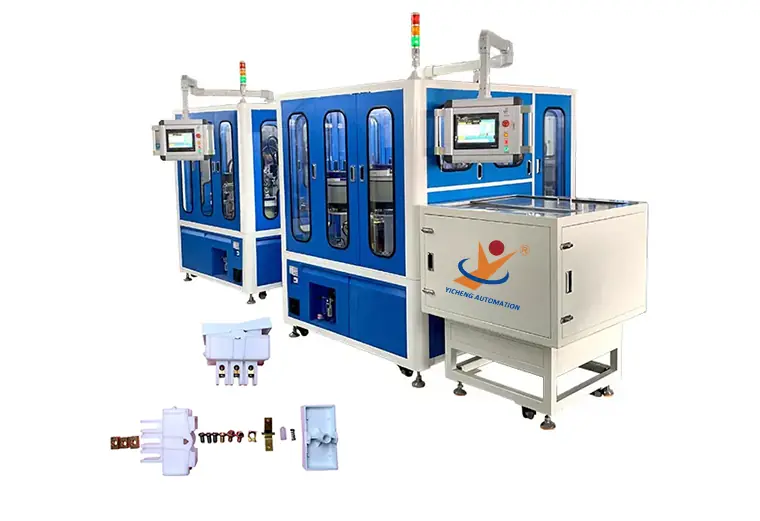
Injection molding of plastic components
Injection molding controls the consistency of housings, frames, and visible plastic parts. Buyers who want to know whether a supplier is really a manufacturer often look first at whether molding is controlled in-house, because that affects material consistency, mold condition, and dimensional stability.
Assembly and modular configuration
After molding, parts move into modular assembly. This stage focuses on correct market configuration, secure terminal fastening, mechanical alignment, and stable tactile performance. Modular systems are valuable because they allow different combinations to be produced while keeping the core structure more stable. When buyers also need to judge how far customization should go without weakening a mature platform, the next step is our OEM and ODM manufacturing guide.
- molding affects dimensions and basic structural consistency
- assembly affects fit, alignment, terminal stability, and user feel
- process drift in either stage can create later field problems
Multi-Stage Quality Control System
Quality control should be a process, not a slogan. Strong factories do not wait until the end to discover that something is wrong. They reduce risk by checking materials, outsourced parts, assembly flow, and final finished products at several points.
Incoming material inspection
Raw materials should be checked before they enter warehouse stock. The goal is to verify material specification, appearance, and structural condition before anything is released to production.
Inspection of outsourced components
Some parts, such as USB PCB modules, may be sourced externally. These parts should go through separate inspection before warehouse release to confirm function, assembly compatibility, and visible condition.
Warehouse check and routine sampling before production
Before materials reach the production line, warehouse checks should confirm correct batching and identification. Routine sampling helps reduce the chance that one systematic mistake spreads through the whole batch.
Assembly self-inspection and QC inspection
During assembly, operators should perform self-inspection at their stations, and QC staff should inspect finished products systematically. This combination helps catch both process drift and individual assembly problems.
Pre-shipment inspection
Before shipment, finished goods should be sampled again from bulk orders to verify packaging, labeling, and key functional performance. Shipment should happen only after these stages are confirmed.
| QC stage | Main purpose | What risk it reduces |
|---|---|---|
| Incoming material inspection | Stop weak materials before production | Early batch-level quality problems |
| Outsourced component inspection | Confirm function and compatibility | Imported defects from external suppliers |
| Warehouse check and routine sampling | Confirm correct batching and ongoing consistency | Systematic mass-production errors |
| Assembly self-inspection and QC inspection | Catch process drift and unit-level mistakes | Assembly defects and unstable fit |
| Pre-shipment inspection | Confirm order-level readiness | Shipment mismatch and late-stage defects |
Safety and Durability Testing
Testing matters because products have to survive real use, not only look acceptable in the factory. Good testing gives buyers a more realistic view of how products may behave over time.
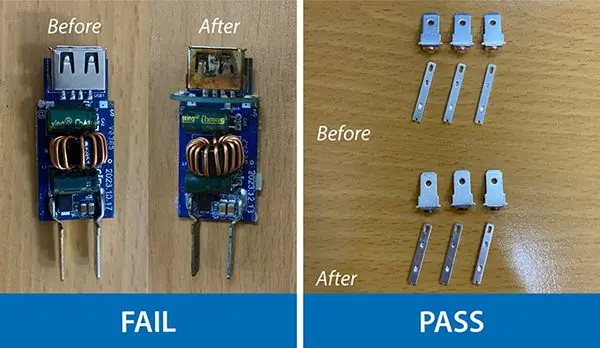
Heat resistance and flame retardancy
Common tests include high-temperature resistance, flame-retardant performance, and needle flame testing. These are especially relevant in hotter markets where thermal margin matters more in real operation. If you want to connect those test points to the actual field complaints buyers most often see later, our common switch and socket problems prevention guide explains how overheating, dead units, installation difficulty, and early aging usually develop from the same weak control points.
Mechanical and environmental durability
Additional testing may include drop tests, abrasion resistance, aging tests, lifecycle testing, and salt spray testing. Together, these tests help buyers judge whether the product is likely to stay stable in real installation environments instead of only passing a basic visual check.
How This Process Page Connects to Buyer Decisions
This process page does not replace supplier screening. It is the support layer that explains why process discipline matters once buyers start comparing how different factories hold quality stable. In practice, process control reduces batch inconsistency, unexpected field failures, after-sales disputes, and local market reputation risk.
That is why many sourcing teams first screen suppliers commercially and then ask deeper production questions. If you want the front-end supplier workflow around quotation comparison, sample review, factory verification, and red-flag checks, continue to our commercial wiring accessories supplier guide.
FAQ: Wall Switch and Socket Manufacturing Process and Quality Control
Why is one final inspection not enough?
Because many product problems start much earlier. If materials, outsourced parts, or assembly steps are already unstable, one last inspection may catch some defects but not the process weakness behind them.
Why do buyers care whether injection molding is controlled in-house?
Because molding affects material consistency, dimensions, and structural stability. Buyers often use this as one sign of whether the supplier has real manufacturing control rather than only assembly capability.
What is the value of checking outsourced parts separately?
Externally sourced parts can bring hidden quality risk into an otherwise controlled factory. Separate inspection helps stop that risk before it enters the production line.
What does a multi-stage QC system tell a buyer?
It tells the buyer that the factory is trying to control risk at several points instead of hoping the final inspection will rescue the batch. That usually means stronger consistency in later orders.
How is this page different from a manufacturer guide?
This page focuses on how production and quality control work day to day. A manufacturer guide looks more broadly at factory identity, cooperation risk, communication, and long-term supplier reliability.
Conclusion
In wall switch and socket manufacturing, quality is rarely accidental. It is the result of repeated, controlled decisions made during material selection, molding, assembly, inspection, and testing. Buyers who understand that process usually make stronger sourcing decisions than buyers who judge quality only from one sample or one promise.