OEM and ODM cooperation in the wall switch and socket industry is often discussed in simple terms. In reality, it involves technical responsibility, compliance boundaries, and long-term risk control. Many OEM-related issues arise not from intent, but from misunderstanding early-stage risks. Several common OEM sourcing mistakes are worth noting.
Many problems in OEM projects do not come from price or lead time. They come from unclear expectations about what can be customized, which standards actually apply, and who carries responsibility once products enter a local market. This is especially important for buyers evaluating a custom wall socket manufacturer or a wall socket ODM manufacturer China supplier.
This page explains how OEM and ODM cooperation works in practice, from a factory perspective. For importers, distributors, and project buyers, the point is not only to understand the terminology. The point is to decide whether the requested project scope is commercially realistic and technically safe before the discussion goes too far.
Many OEM problems do not begin in production. They begin when customization scope, destination market, and compliance basis are still being discussed as if they were separate issues. In practice, they are linked from the very beginning.
Contents
- Why Buyers Need a Clear OEM and ODM Decision Framework
- How Buyers Should Evaluate OEM and ODM Suitability
- OEM vs ODM in Wall Switch and Socket Manufacturing
- Customization Scope and Practical Limits
- Standards and Compliance: What We Support and What We Don’t
- Is CE Certification Enough? A Practical Explanation
- Markets We Serve by Product Category
- A Practical Approval Order for Buyers
- FAQ: OEM and ODM Wall Switch and Socket Manufacturing
- Closing Note
Why Buyers Need a Clear OEM and ODM Decision Framework
In buyer-side review, OEM and ODM are not just cooperation labels. They are early project decisions that affect sample approval, standard claims, documentation alignment, risk ownership, and the amount of product change that is still realistic later. If those points are not defined clearly enough, the same project can look commercially attractive in quotation form and become much weaker once compliance, technical files, and bulk production are discussed in detail.
That is why this topic matters to procurement teams, importers, distributors, and private-label buyers. The real question is not simply whether a factory says it supports OEM or ODM. The real question is whether the requested project can stay coherent across structure, standard, customization scope, and production control.
How Buyers Should Evaluate OEM and ODM Suitability
Buyer Review Checklist
- Before discussing branding, packaging, or product changes, buyers should first confirm whether the supplier has a stable product platform, clear production control, and enough export experience to support the intended market. For teams still at the earlier supplier-comparison stage, our commercial wiring accessories supplier guide shows how buyers screen suppliers before moving into deeper OEM or ODM discussion.
- separate appearance-level customization from safety-critical structural change
- check whether sample, marking, specification wording, and compliance scope can stay aligned
- review whether the supplier explains project limits clearly instead of simply agreeing to every request
- treat vague certification language or undefined standard claims as a sourcing risk signal
Experienced buyers often evaluate OEM partners based on structural maturity of the product, transparency about standards and limitations, stability of materials and components, and willingness to clarify risks instead of avoiding them. In electrical products, a supplier who clearly explains what should not be done is often more reliable than one who agrees to everything. Buyers who want a broader screening framework can also review our guide on how to choose a reliable electrical wall switch and socket manufacturer.
| Buyer Question | What It Actually Checks |
|---|---|
| Which market and standard is this project for? | Whether the platform and compliance logic are being defined early enough |
| What can be customized safely? | Whether appearance changes are being separated from structural risk |
| Can documentation stay aligned with the final sample? | Whether the project is controllable beyond quotation stage |
| What is outside the current production scope? | Whether the supplier is honest about project boundaries |
OEM vs ODM in Wall Switch and Socket Manufacturing
Although OEM and ODM are commonly used terms, their meaning changes depending on the product category. In wiring accessories, the difference is not only about branding ownership. It is also about how much of the product logic is already fixed, how much structural change is realistic, and how clearly the compliance boundary can be defined before production begins. For a broader industry overview, see our guide to wall switch and socket manufacturing.
OEM: Manufacturing Based on Customer-Defined Specifications
In OEM projects, the buyer typically defines:
- Target market and standard
- Electrical configuration and ratings
- Branding and packaging requirements
The manufacturer’s responsibility is to produce according to confirmed specifications, not to redesign the product concept.
OEM works best when:
- The buyer already understands local regulations
- Product structure is mature
- Long-term supply stability matters more than novelty
In electrical wiring devices, OEM projects usually favor proven structures rather than experimental designs.
ODM: Using Factory-Proven Structures with Customization
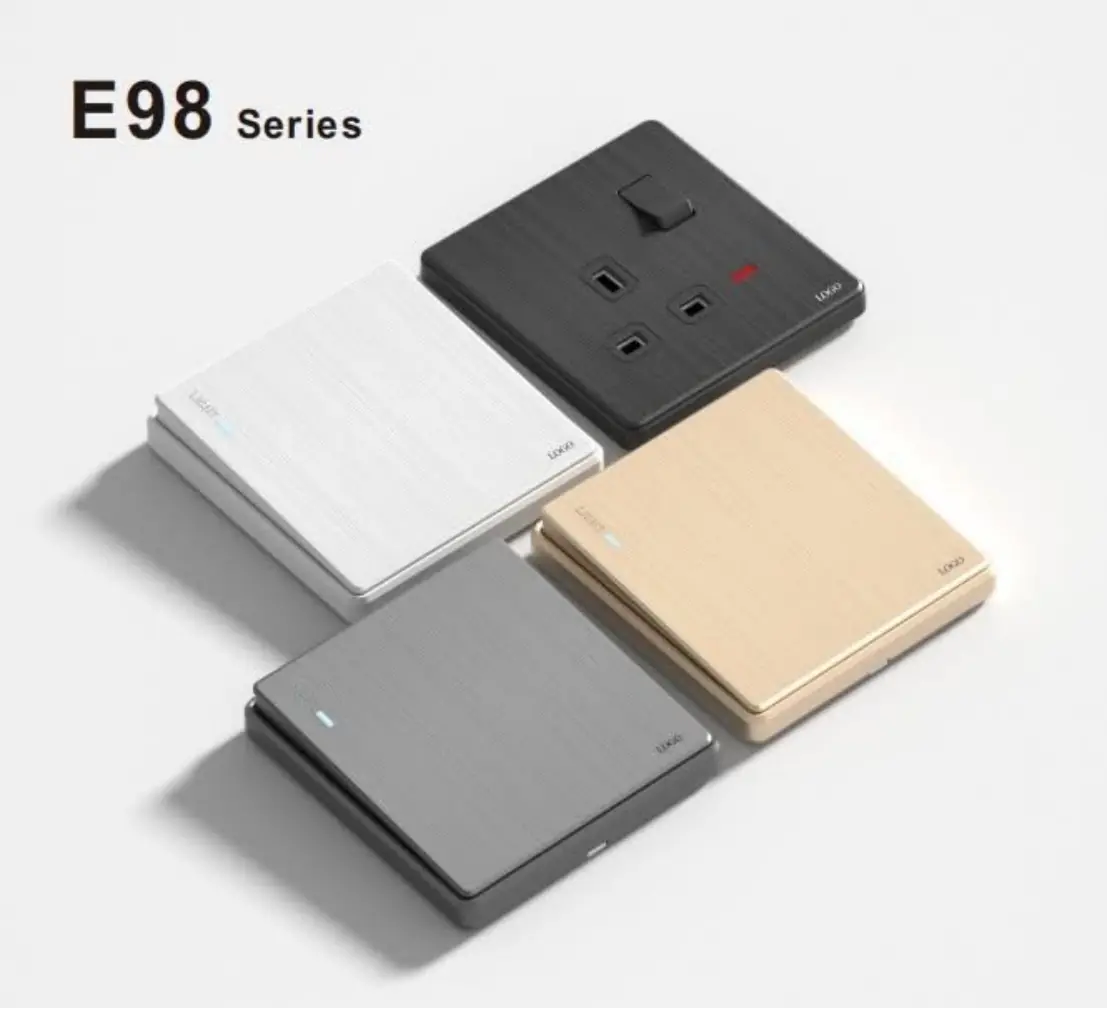
ODM cooperation starts from existing, validated product platforms.
In this model:
- The factory provides a structurally mature product
- The buyer focuses on branding, positioning, and distribution
- Customization is applied within safe and tested limits
For many distributors and new brands, ODM is often the lower-risk option, especially when entering new markets or managing multiple SKUs. This is one reason buyers often start by looking for an ODM wall socket manufacturer rather than a fully open-ended development project.
For many private-label buyers, the practical attraction of ODM is speed with lower uncertainty. The practical risk is assuming that all customization requests stay equally safe just because the project starts from an existing platform.
Customization Scope and Practical Limits
In practice, the biggest risks in OEM and ODM projects usually do not come from logo printing or packaging changes. They appear when customization starts affecting model definition, structure, materials, approval scope, or long-term consistency. For buyers who need a more practical decision framework before approving that kind of OEM work, our wall socket OEM manufacturer checklist breaks the control points down more directly.

Common Customization Areas
Typically supported customization usually includes:
- Faceplate appearance and finish
- Module combinations and layout
- Branding such as logos and markings
- Packaging formats
These changes do not affect the core electrical structure and can usually be controlled without increasing failure risk. This is the area where a custom wall socket manufacturer is usually evaluated most directly.
What Should Not Be Over-Customized
Certain elements are intentionally kept stable:
- Core internal structure
- Terminal design and contact system
- Safety-critical dimensions
Excessive structural customization may look attractive on paper, but it often increases:
- Certification complexity
- Production instability
- Long-term quality risk
Experienced buyers usually prioritize consistency over uniqueness in wiring accessories.
Why Buyers Ask for a Wall Socket ODM Manufacturer in China
In practice, buyers often use phrases such as wall socket ODM manufacturer China when they want a middle path: enough customization to support branding and market positioning, but not so much structural change that the project turns into a new product-development risk. That search usually signals a desire for faster market entry and lower development uncertainty, not a desire to remove all project constraints.
Standards and Compliance: What We Support and What We Don’t
Clear communication about standards is essential in OEM cooperation. In practice, many disputes do not begin because the wrong standard was chosen on purpose. They begin because the project scope sounded broader than the actual production basis, while the manufacturing process and quality control behind the approved sample were not being reviewed closely enough.
Supported Standards
Our wall switches and sockets are primarily developed for BS standard markets, which are widely used in:
- Southeast Asia
- The Middle East
- Selected European countries
Products are manufactured with CE compliance as part of the conformity process where applicable. That does not mean the full range is positioned as a general solution for all EU country-specific installation standards. For buyers comparing British and IEC-based requirements, our overview of IEC 60884 vs BS 1363 helps clarify how standard logic changes across markets.
About EU Standards
EU country-specific installation standards are not currently part of our standard production scope.
They are treated as:
- A future development direction
- A project-based evaluation topic
- Not an assumed or implied capability
This distinction is important, as unclear standard claims are a common source of disputes in international trade.
Why This Matters in Buyer Review
For buyers, this is not a wording issue only. It affects which samples are requested, how documents are read, how the project is described internally, and whether the final product is still being assessed against the same standard basis that was discussed at the beginning.
Is CE Certification Enough? A Practical Explanation
CE certification is often misunderstood.
From a factory perspective:
- CE indicates conformity to certain EU directives
- CE does not automatically cover all national installation requirements
- CE does not replace local approvals where required
Many issues arise not from missing certificates, but from misinterpreting what CE actually represents.
For OEM buyers, the key is matching product standard, application environment, and local regulation, rather than relying on a single label.
For reference on international electrical frameworks, see:
https://iec.ch/homepage
Markets We Serve by Product Category
Market coverage is defined by product type, not by generic geography. This matters because different product categories face different regulatory and installation expectations, even when the same buyer is sourcing them from one supplier.
Wall Switches and Wall Sockets
- These products are supplied mainly to BS standard markets
- They also serve regions with similar wiring practices and requirements
This focus allows structural consistency and quality stability across shipments.
Power Track Systems
Power track systems are developed for global applications, with configurations available for multiple international standards.
The regulatory environment for power track systems differs from traditional wall wiring devices, which is why they are managed as a separate category.
A Practical Approval Order for Buyers
- Clarify the target market and standard before discussing broad customization.
- Confirm whether the project should start from an OEM route or an ODM route.
- Separate appearance, branding, and packaging adjustments from safety-related structural changes.
- Check whether sample, marking, specification wording, and compliance basis still match.
- Only then move forward with larger-volume planning, project scheduling, or private-label rollout.
This order may seem basic, but it reduces many of the disputes that later get blamed on production, timing, or certification.
FAQ: OEM and ODM Wall Switch and Socket Manufacturing
What is the main practical difference between OEM and ODM?
OEM follows buyer-defined requirements more directly, while ODM starts from a factory-proven platform and adds controlled customization. In wiring accessories, that difference affects risk from the beginning because structural maturity and compliance scope are part of the decision.
Why do many buyers prefer ODM for newer projects?
Many buyers prefer ODM because it lowers early development uncertainty. The factory starts from an existing validated structure, which usually makes branding and configuration changes easier to control than a project that tries to change too many structural elements at once.
What does a custom wall socket manufacturer usually customize first?
The first customization areas are usually appearance, finish, logo marking, module combinations, and packaging. These are generally easier to control than changes that affect internal structure or safety-critical dimensions.
How should buyers evaluate an ODM wall socket supplier for the China sourcing model?
Buyers should review platform maturity, customization limits, standards clarity, documentation consistency, and whether the supplier can keep the same logic from sample approval to mass production.
Closing Note
OEM and ODM cooperation in wall switch and socket manufacturing is not about offering unlimited options. It is about controlling risk, maintaining compliance, and delivering consistency over time.
This page is intended to support informed decision-making, not assumptions. For buyers planning private-label projects, understanding manufacturing capability and engineering standards is essential. Our full guide on evaluating an electrical switch and socket manufacturer in China provides a structured approach for importers and distributors, including buyers comparing a custom wall socket manufacturer or a wall socket ODM manufacturer China option.