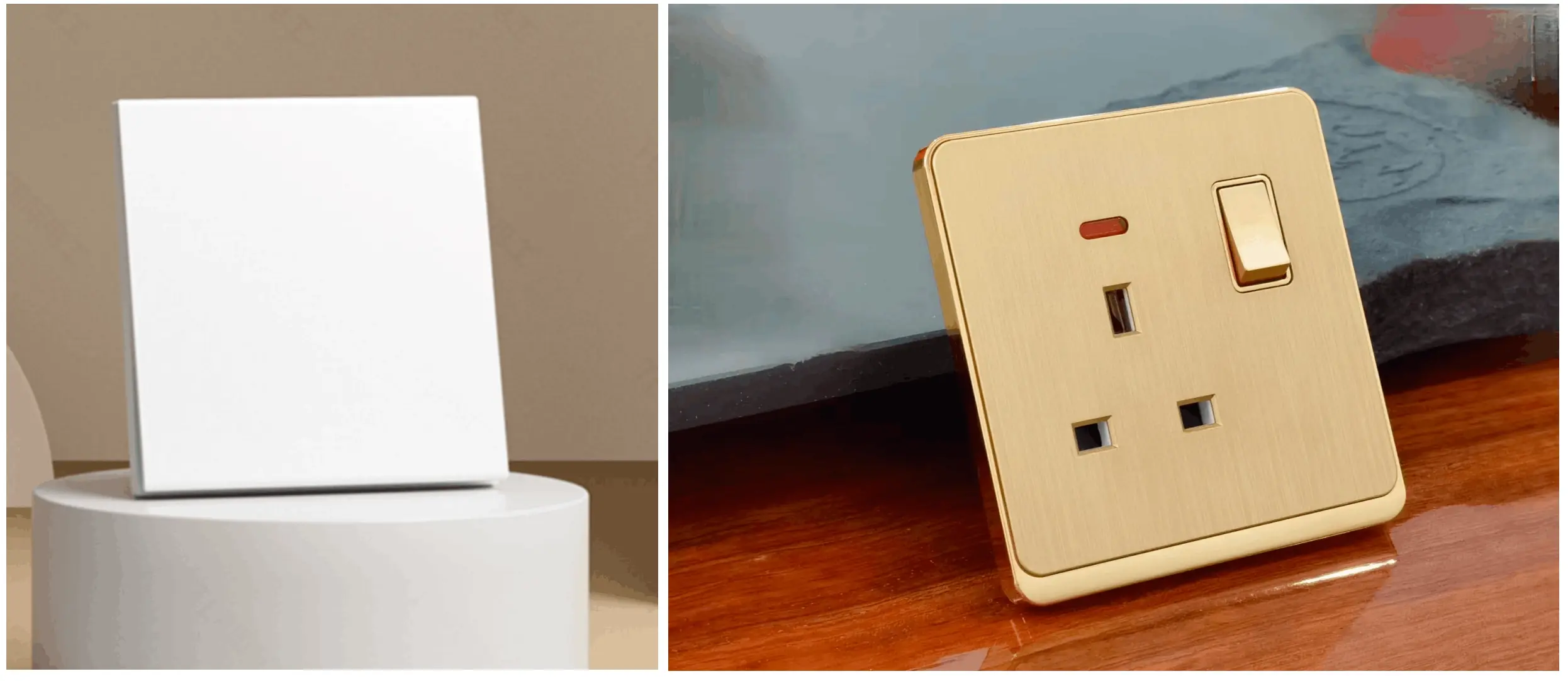
Soft-touch wall switches, often described in parts of the Middle East as a "baby skin" finish, can create a strong showroom impression. The surface feels warmer, softer, and more refined than a standard rigid plastic panel. That appeal is real. The risk is that tactile appeal and climate suitability are not the same thing.
This page is not arguing that soft-touch finishes are low grade. It explains when they work well, where they become harder to control, and why high-temperature markets change the durability discussion. If you want the broader factory-capability view behind material decisions, start with our guide to an electrical switch and socket manufacturer in China.
Based on material review, finish-comparison work, field feedback from hotter export markets, and buyer-side troubleshooting of surface complaints, the real question is not whether soft-touch looks premium on day one. It is whether the finish remains visually and tactically stable after prolonged heat, UV exposure, and thermal cycling.
There is also a market-history point buyers often miss. Around five to ten years ago, soft-touch wall switches had a brief popularity wave in China because the feel was new and commercially attractive. The finish drew attention quickly, but the market later saw enough process-related complaints that these products largely faded from mainstream supply, and far fewer factories continued producing them seriously. In other words, the issue is not theoretical. The category has already gone through a rise-and-correction cycle once.
Contents
- What Soft-Touch Finish Actually Is
- Why High-Temperature Markets Change the Judgment
- How Heat, UV, and Thermal Cycling Affect the Surface
- What Buyers Usually See After Longer Exposure
- Where Soft-Touch Finishes Still Perform Well
- What Structural Alternatives Work Better in Hotter Markets
- How Buyers Should Evaluate Soft-Touch for Hot-Climate Projects
- FAQ
What Soft-Touch Finish Actually Is
Soft-touch is not the structural body of the switch. It is a surface treatment system. In most wall switch applications, the product still relies on a rigid substrate such as ABS or polycarbonate, with a sprayed or coated layer added to create the rubberized, velvety feel.
| Layer or property | What buyers should understand |
|---|---|
| Base structure | Usually a rigid plastic substrate such as ABS or PC |
| Soft-touch effect | Usually comes from a coated or sprayed top layer, not from the structural body itself |
| Main advantage | Premium tactile feel, matte appearance, softer hand perception |
| Main risk | Surface behavior can change faster than the structural body under heat and UV stress |
That difference matters because the coating and the structural body do not always age at the same rate. Buyers should judge the finish separately from the underlying housing material.
Why High-Temperature Markets Change the Judgment
In cooler indoor environments, a soft-touch finish may remain stable for a long time. In hotter regions, the product often faces a completely different stress pattern. In markets such as Iraq, Saudi Arabia, Kuwait, the UAE, and other hot-climate regions, external wall temperatures can rise far above normal indoor assumptions, and electrical back boxes may trap additional heat close to the installed product.
- ambient summer temperatures can stay very high for long periods
- sun-exposed wall surfaces may run much hotter than room temperature
- daily heat build-up and nighttime cooling create repeated thermal cycling
- UV exposure can accelerate surface aging even when electrical performance remains normal
That is why this topic belongs in the same conversation as housing grade and structural stability. Our switch materials guide on high-grade polycarbonate explains why the substrate and outer finish should be judged together rather than as separate sales features.
The regional contrast matters. In Europe, especially in cooler areas such as the Nordic markets, the long-term penalty is often smaller because the finish is not exposed to the same sustained heat load. In the Middle East, the judgment is much harsher. When summer temperatures move beyond 50°C and switch operation adds its own heat on top of wall temperature, the same finish system can age much faster. This is exactly where some factories still keep quiet because the soft-touch look helps sales at quotation stage even when the long-term complaint risk is already visible.
How Heat, UV, and Thermal Cycling Affect the Surface
Soft-touch coatings are designed for feel, not for maximum rigidity. As temperature rises, the coating may lose hardness, soften slightly, and change in friction or sheen. Repeated thermal cycling also creates stress between the softer top layer and the more rigid substrate underneath. Over time, that interface can become one of the weak points.
- higher temperature can reduce surface hardness and change tactile feel
- UV exposure can speed up oxidation and visible appearance shift
- different expansion rates between coating and substrate can increase edge stress
- the result is usually surface aging, not immediate electrical failure
In that sense, the main risk is often commercial rather than electrical. The product may still function, but the finish may no longer look or feel like the premium version the buyer originally approved.
What Buyers Usually See After Longer Exposure
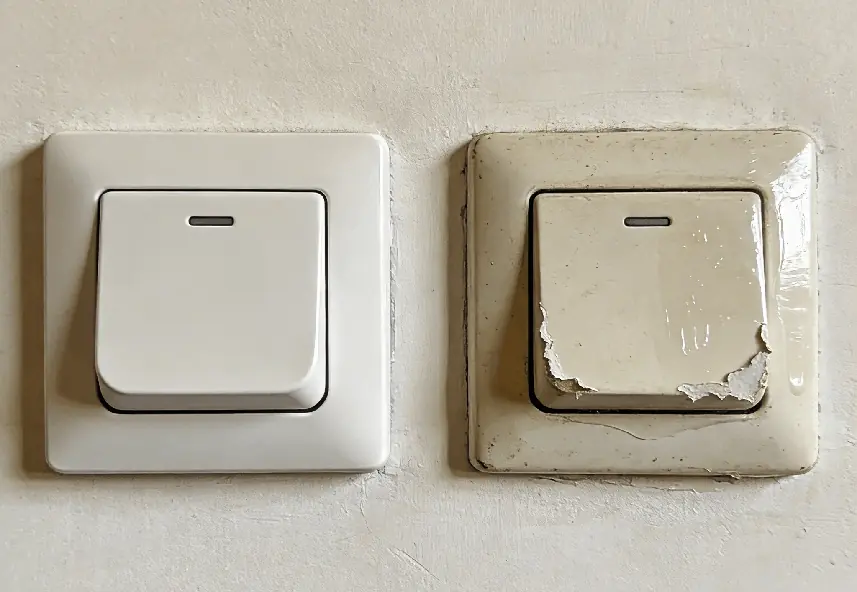
In hotter markets, surface complaints often appear gradually rather than as one obvious defect. Typical patterns include a slightly sticky feel during peak summer, loss of the original velvety texture, localized gloss in high-contact areas, or edge lifting and minor peeling where stress concentrates.
In the more severe complaint pattern, buyers start reporting after roughly one to three years, and sometimes after only one to two summers, that the sprayed soft-touch layer appears to soften, smear, or partially melt visually. The electrical function usually remains normal, but the finish no longer looks premium. That is enough to trigger heavy distributor and end-customer complaints because the product still works while the appearance now signals deterioration.
This point is important: these are usually not the same as conductor failure, terminal overheating, or mechanical breakdown. They are surface-aging signals. But from a commercial perspective, surface-aging complaints can be just as damaging because distributors are still forced to answer for visible product deterioration in the market. If you want the broader field-failure view for switches and sockets generally, our common switch and socket problems prevention guide shows how visual complaints and structural complaints often sit alongside electrical issues in the same product line.
Where Soft-Touch Finishes Still Perform Well
Soft-touch is not automatically the wrong choice. In climate-controlled interiors, moderate-temperature markets, and applications where direct sunlight and extreme thermal cycling are limited, the finish can perform well and maintain its appearance for a long time.
| Environment | Soft-touch suitability |
|---|---|
| Stable indoor temperature and limited UV | Usually suitable when the coating system is well controlled |
| Air-conditioned interiors with limited wall heat build-up | Often acceptable for premium tactile positioning |
| Harsh heat, strong sunlight, repeated thermal cycling | Needs much more careful evaluation before approval |
The point is not that soft-touch is bad. The point is that performance is environmental, not absolute.
What Structural Alternatives Work Better in Hotter Markets
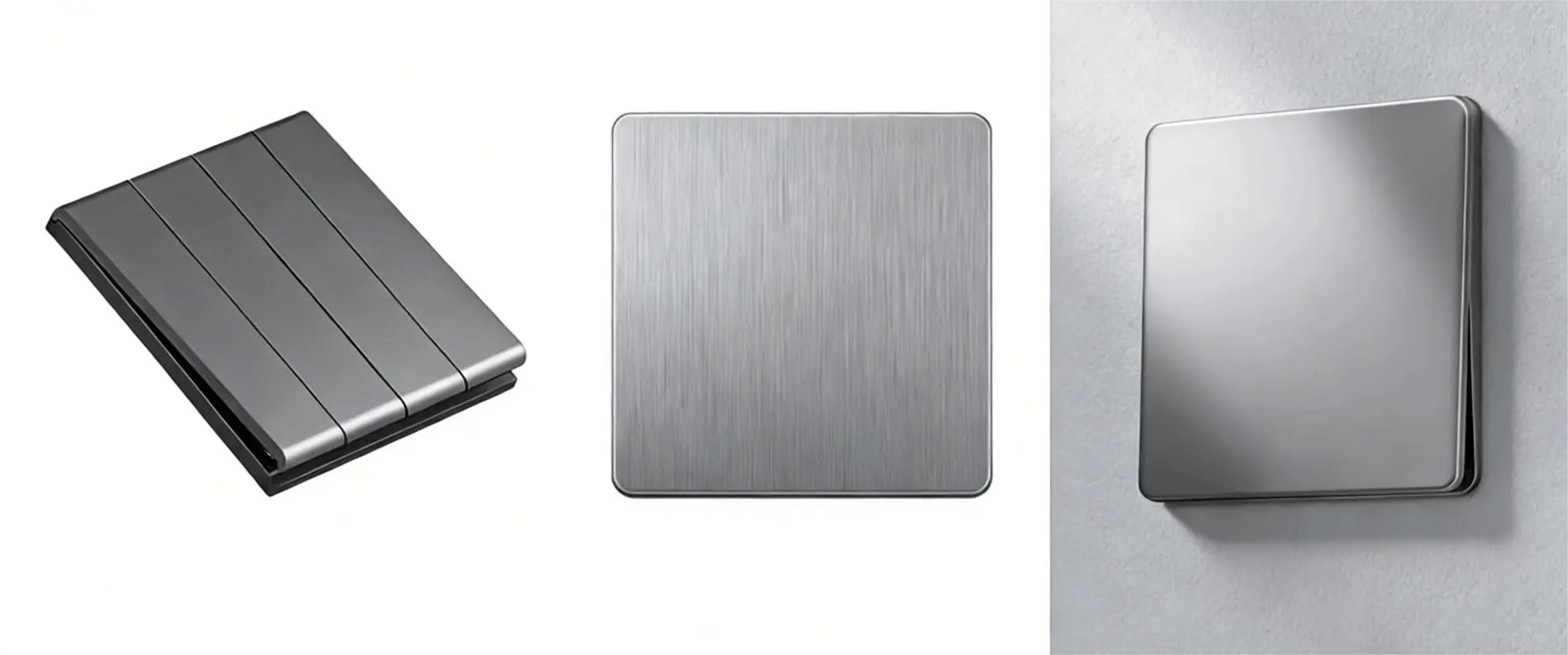
For hotter markets, many buyers move toward finish systems that reduce the number of temperature-sensitive interfaces. One common approach is flame-retardant polycarbonate with integrated matte or textured molding rather than a separate rubberized coating layer. Another is a more standard sprayed matte finish with controlled hardness and a brushed or micro-textured appearance.
These options may feel less soft, but they often keep their appearance more consistently under heat and UV stress. For the underlying production-control side of that decision, our wall switch and socket manufacturing process and quality guide explains why coating process discipline, curing control, and material consistency matter so much.
How Buyers Should Evaluate Soft-Touch for Hot-Climate Projects
When buyers compare a soft-touch version with a more rigid high-temperature alternative, the decision should not be based only on showroom feel. It should be based on installation temperature, UV exposure, expected product life, tolerance for visible aging, and whether the market will treat a cosmetic shift as a quality complaint.
- confirm whether the product will face sustained wall heat or strong sunlight
- ask what the structural substrate is, not only what the finish feels like
- check whether the coating system and curing process are stable across repeat orders
- treat climate compatibility as part of product definition, not a later afterthought
If the supplier-evaluation question becomes broader than this one finish choice, our guide on how to assess supplier capability and production standards is the cleaner next step.
Review basis used in this page: finish comparison, material review, field feedback from hot-climate export markets, buyer-side troubleshooting of surface-aging complaints, and technical review of substrate, coating, UV exposure, and thermal-cycling behavior in wall switch products. This page supports buyer evaluation and material-fit decisions. It does not replace market-specific legal, certification, or installation advice.
FAQ
Is a soft-touch wall switch suitable for hot climates?
It can still function electrically, but its long-term surface stability depends heavily on heat, UV exposure, and thermal cycling. In very hot markets, the main risk is usually aesthetic and tactile aging rather than immediate electrical failure, yet that can still create serious complaints after one to three years of use.
What does "baby skin" finish mean in wall switches?
It is a market term for a soft-touch, rubberized-feel surface coating applied over a rigid switch body. The softness comes from the coating layer, not from the structural plastic itself.
What is usually more stable for high-temperature markets?
Rigid, well-controlled systems such as flame-retardant polycarbonate with integrated texture or harder matte finishes usually provide stronger long-term surface stability in hotter climates.
Does soft-touch coating affect electrical safety directly?
Not directly. Electrical safety depends more on internal conductive parts, flame-retardant structure, terminal design, and compliance scope. The soft-touch issue is mainly about long-term surface durability and perceived quality.
Why do some buyers still choose soft-touch finishes for hot markets?
Because the finish still sells well at showroom stage. It feels premium, photographs well, and can match current design trends in both Europe and the Middle East. The problem is that some suppliers do not explain clearly that cooler European climates and hotter Middle East climates do not put the same long-term stress on the coating.
Conclusion
Soft-touch wall switches can still be the right choice in the right environment. But in high-temperature markets, the real question is not whether the finish feels premium at first contact. It is whether that same finish remains visually and tactically stable after long exposure to heat, UV, and repeated thermal cycling. In those markets, climate compatibility matters more than trend value alone.