When buyers compare wall switch materials, the discussion often starts in the wrong place. Glass looks premium, metal feels solid, and plastic sounds economical. But in real electrical products, the material decision is not mainly about appearance. It is about heat stability, flame behavior, dimensional control, impact resistance, and long-term reliability after installation.
This page focuses on one question: why high-grade flame-retardant polycarbonate remains the most practical structural material for many wall switch and socket applications. If you want the broader factory-capability view behind those material decisions, start with our guide to an electrical switch and socket manufacturer in China.
Material choice affects fire safety, shape stability under heat, color retention, installation durability, and replacement cost later. That is why buyers should treat it as an engineering and sourcing decision, not just a finish preference. For the broader socket-side construction context, our standard electrical outlet guide explains how housing materials, conductors, and structure work together in outlet design.
Contents
- Why Switch Material Choice Matters
- What High-Grade Polycarbonate Actually Means
- PC vs Other Common Switch Materials
- Why V-0 Flame-Retardant Rating Matters
- How Material Choice Affects Design and Installation
- Long-Term Reliability and Lifecycle Cost
- How This Material Guide Connects to Buyer Decisions
- FAQ: Switch Materials Polycarbonate Guide
Why Switch Material Choice Matters
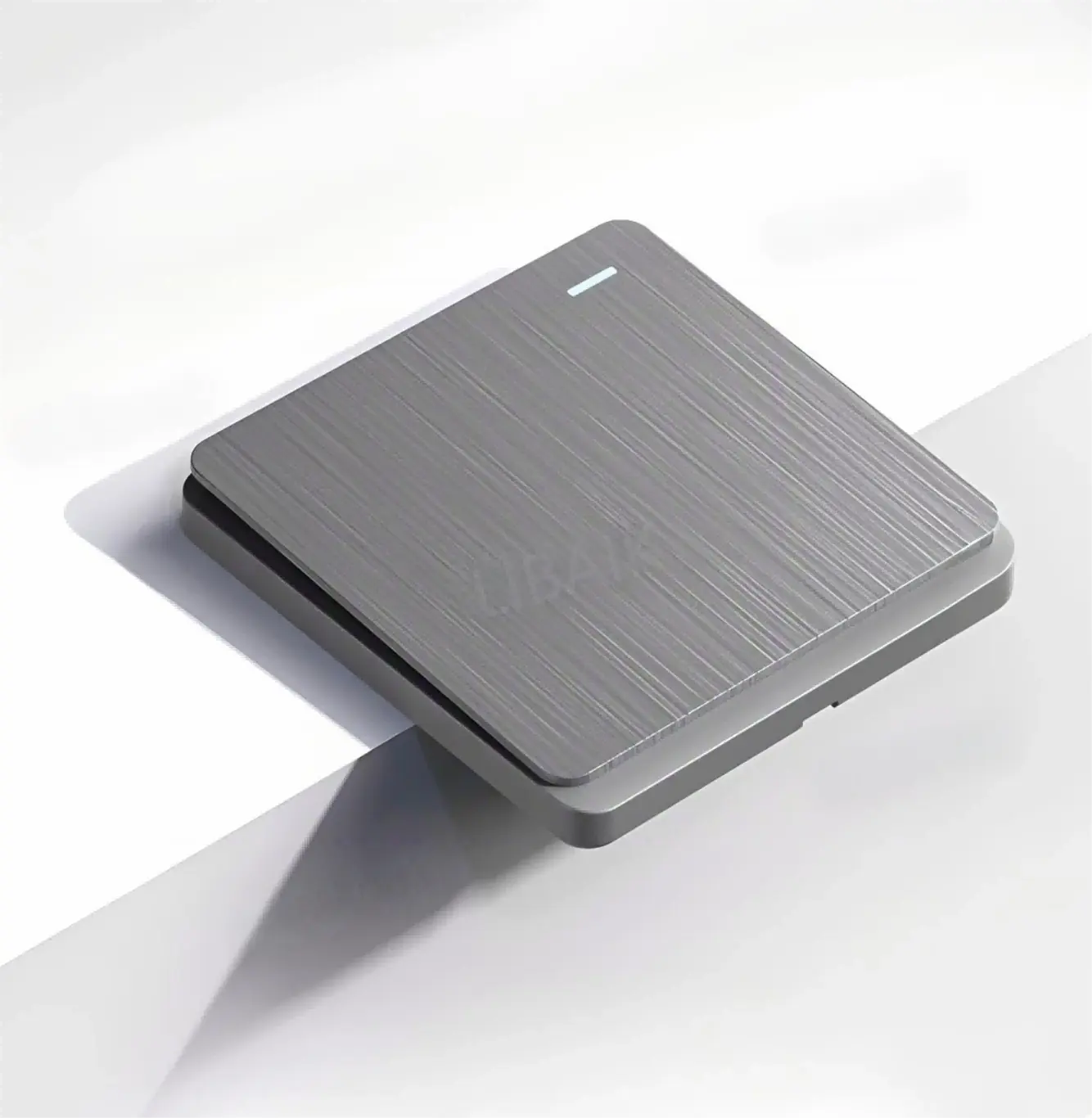
Wall switch material influences more than surface feel. In real use, the housing needs to keep shape under temperature rise, protect internal alignment, resist impact during installation, and avoid becoming part of a larger fire problem if an electrical fault occurs. A material that looks fine at delivery can still become expensive later if it yellows, cracks, deforms, or weakens contact stability through dimensional drift.
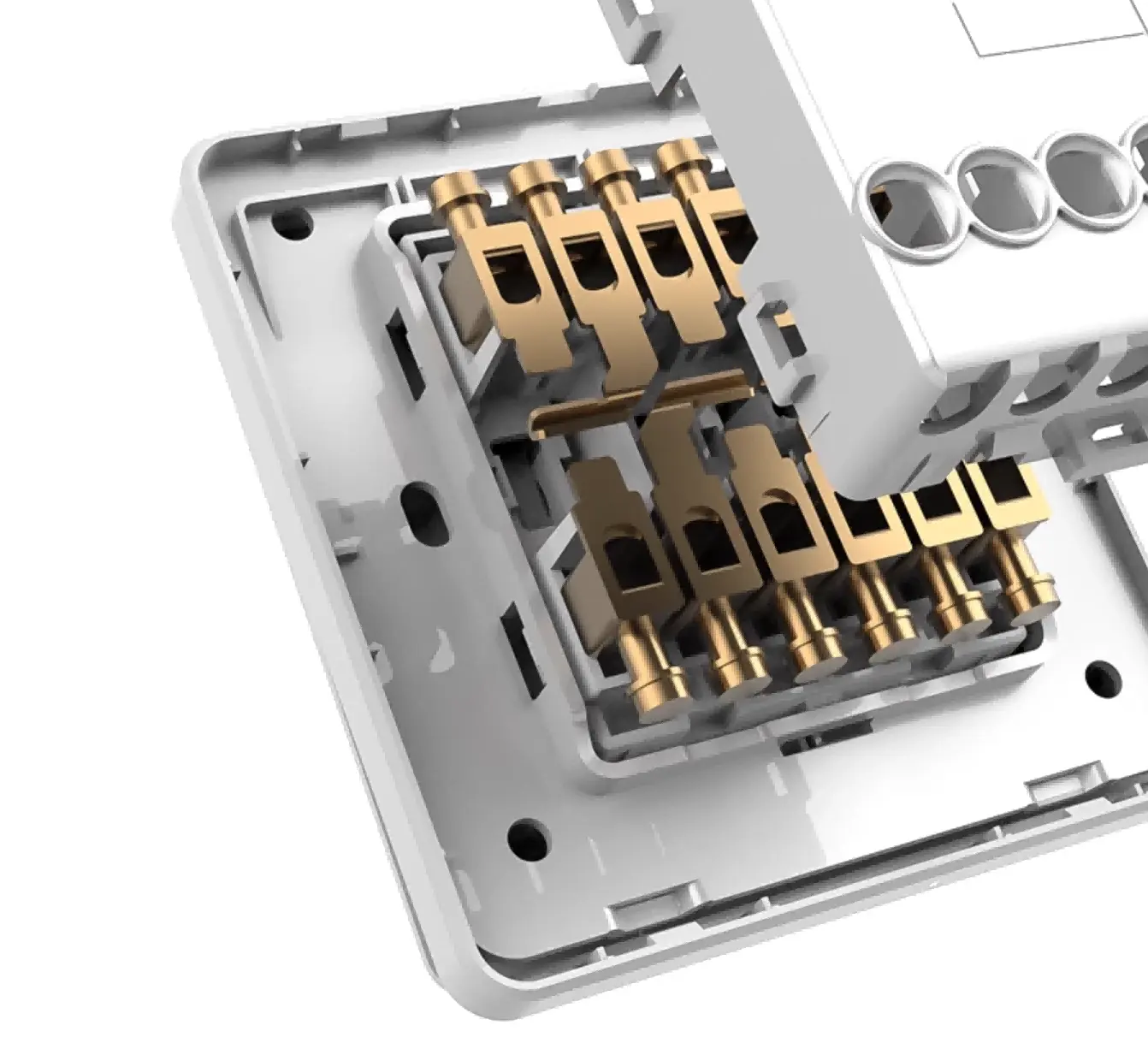
That is why material choice should be judged as part of the whole product system. Buyers concerned about heat rise and conductor behavior should also compare the internal side, not just the outer housing. Our guide on why wall switches overheat: copper vs brass conductors helps connect housing decisions to internal thermal performance. If the finish choice itself becomes the main concern in hot-climate markets, our soft-touch wall switch guide for high-temperature markets explains why coating behavior and climate suitability should be judged separately from base housing strength.
What High-Grade Polycarbonate Actually Means
Polycarbonate is often reduced to the word “plastic,” but that hides major differences in grade and performance. There is a real gap between standard commercial-grade plastic, recycled blends, PC+ABS mixes, and certified V-0 flame-retardant polycarbonate. Buyers should not assume they behave the same just because they look similar after molding.
| Material point | What buyers should ask | Why it matters |
|---|---|---|
| Material grade | Is it certified flame-retardant PC, a blend, or a lower commercial grade? | Different grades behave very differently under heat and impact |
| Flame behavior | Is the housing material really V-0 rated? | Weak flame performance raises fire-spread risk during faults |
| UV stability | Is the PC stabilized for strong-light markets? | Helps reduce yellowing and visible aging in hot or bright regions |
| Dimensional stability | Does the material hold shape under load and temperature rise? | Shape drift can affect internal alignment and long-term fit |
High-grade PC remains attractive because it balances impact resistance, heat stability, insulation, surface consistency, and long-term structural control better than many lower-cost alternatives. In export markets with strong sunlight, high ambient temperature, or rough installation conditions, those differences become much more visible over time.
PC vs Other Common Switch Materials
Material choice becomes clearer when buyers compare trade-offs directly instead of relying on design preference alone.
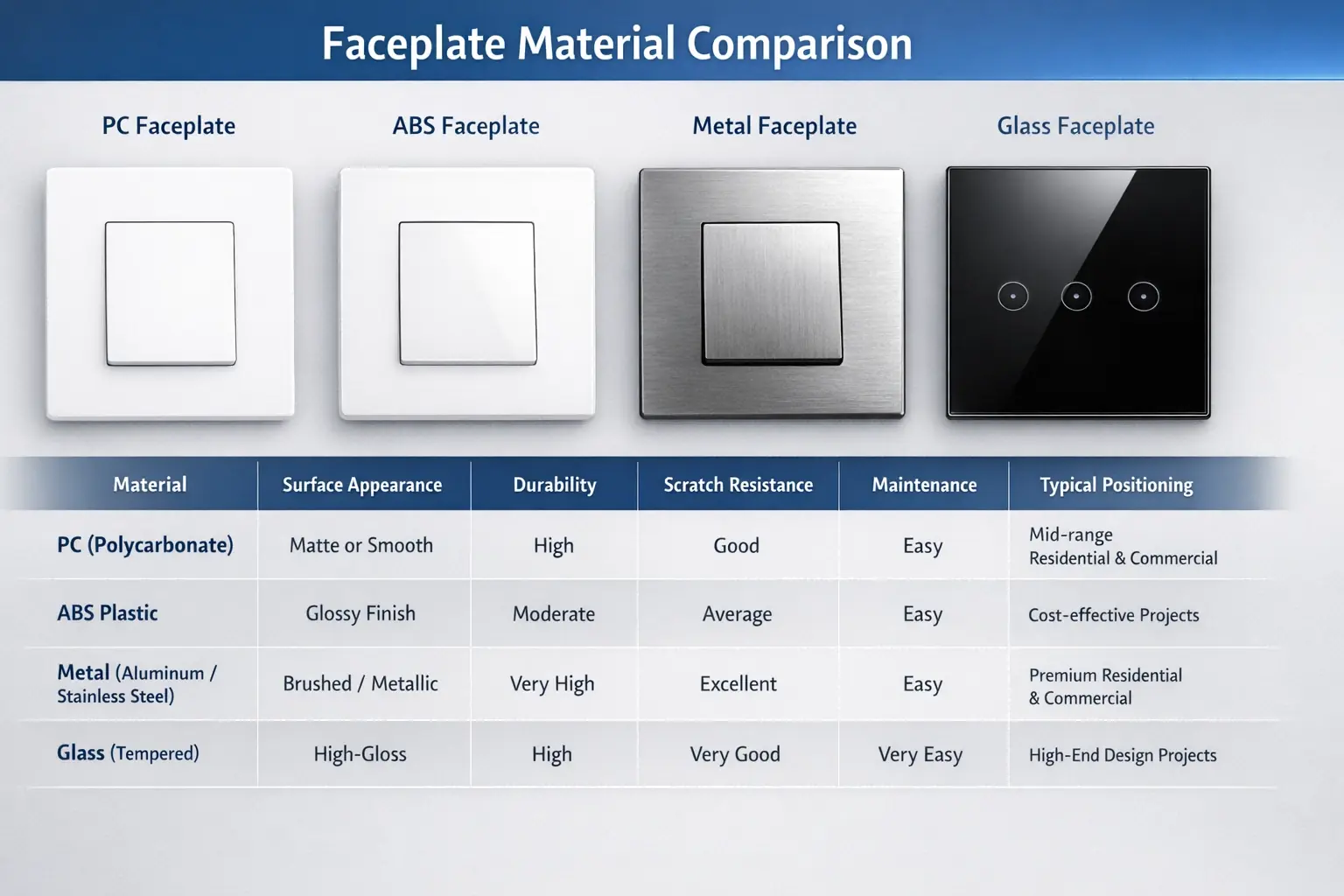
| Material | Main strength | Main limitation | Buyer takeaway |
|---|---|---|---|
| High-grade PC | Balanced heat stability, impact resistance, insulation, and molding control | Needs good raw-material discipline to perform at the claimed level | Best all-round structural choice for many residential and commercial switch lines |
| ABS | Lower cost and easier use in lower-end accessories | Lower heat resistance and weaker long-term structural stability | Less attractive where safety margin and long service life matter more |
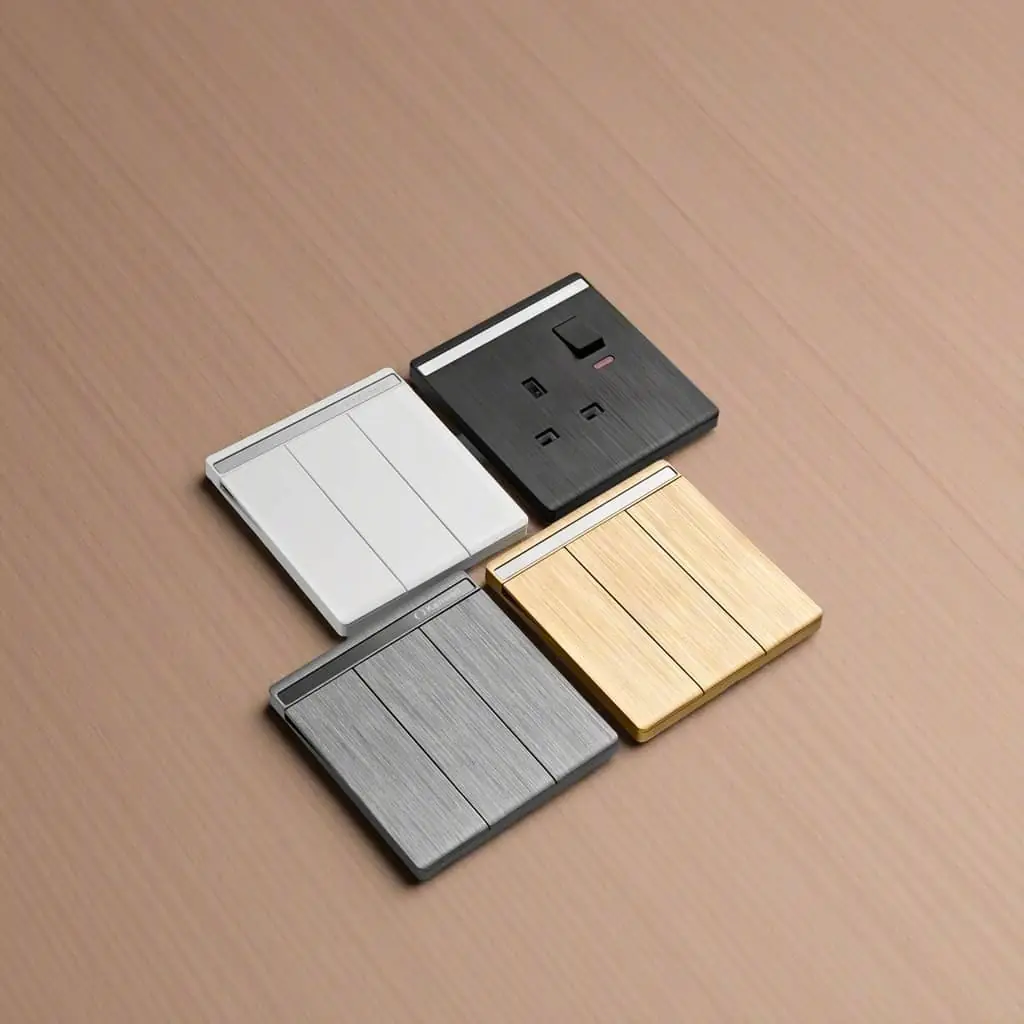
| Metal faceplates | Premium visual weight and strong perceived solidity | Requires added insulation logic and raises cost/installation sensitivity | Useful in selected aesthetic applications, but not automatically better structurally |
| Glass panels | Strong scratch resistance and a sleek decorative finish | Usually decorative only, while the real structure still depends on another material | Good for interface design, but often still relies on PC beneath for mechanical reliability |
That is why “premium-looking” should not be confused with “better engineered.” In many switch designs, the outer decorative layer and the structural material play very different roles.
Why V-0 Flame-Retardant Rating Matters
One of the most misunderstood points in switch materials is flame-retardant classification. A flame-retardant claim should not be treated like general marketing language. It should connect to a real test basis and clear behavior under ignition.
Under the widely used UL94 flammability standard, a V-0 rating means the material is designed to self-extinguish quickly and avoid flaming drips that can ignite material below. For buyers, the practical meaning is simple: the housing is less likely to worsen a fault event once heat or flame is present.
- flame extinguishes quickly after the ignition source is removed
- no flaming drips should continue the fire path downward
- the housing is less likely to contribute to broader fire spread
For project buyers, housing, hotel, public buildings, and export channels with stronger safety expectations, that is not a cosmetic feature. It is part of the real liability and durability discussion. Buyers who want the wider approval and compliance context can continue to our electrical outlet safety standards guide.
How Material Choice Affects Design and Installation
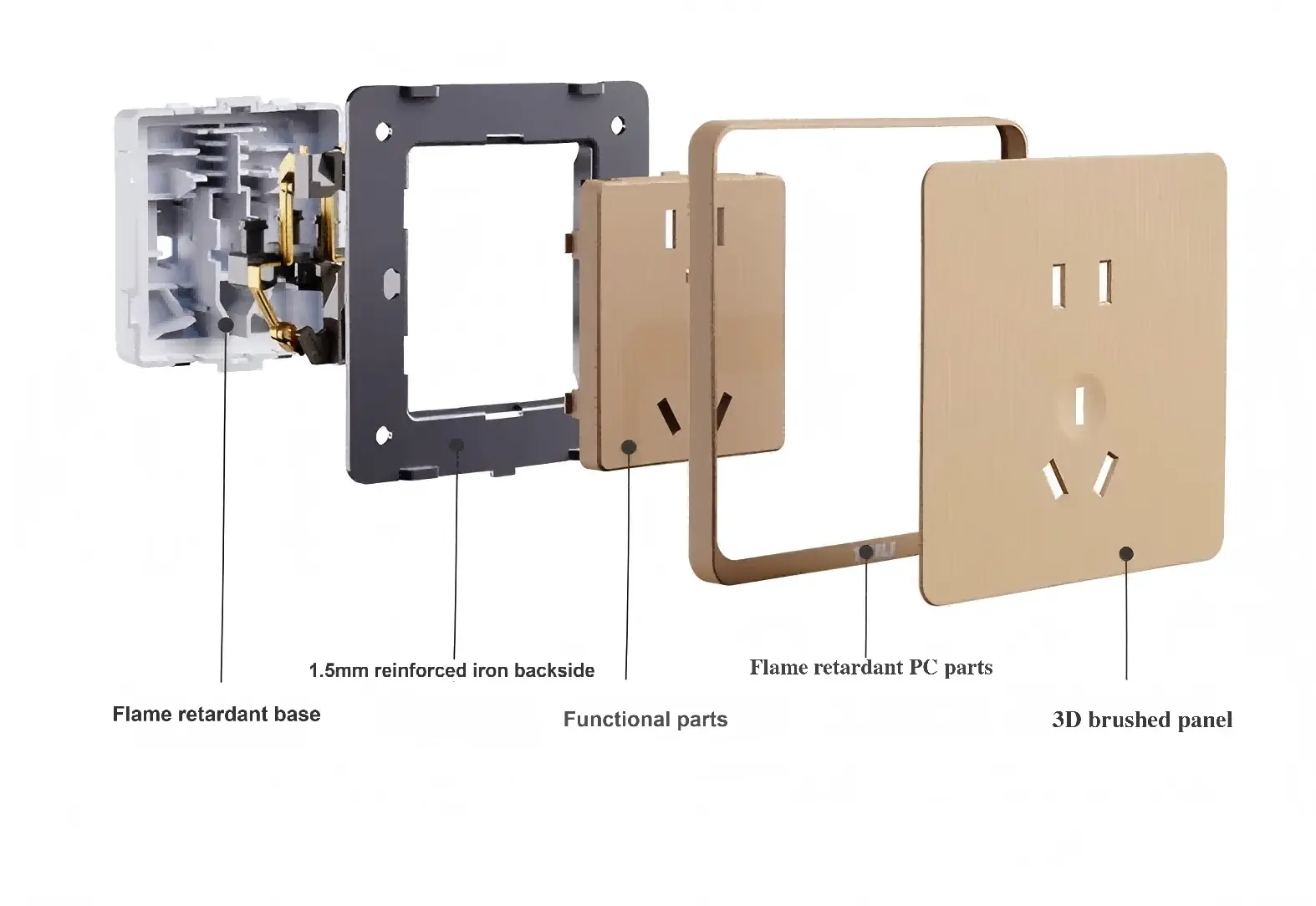
Good material selection does not limit design. In practice, it often makes better design possible. High-grade PC supports tighter molding control, more reliable snap-fit systems, and thinner structural solutions without giving away too much mechanical margin.
That is one reason ultra-thin profiles and screwless faceplate systems depend on material discipline as much as styling. A thin or borderless design looks clean on the wall, but without enough dimensional stability it becomes easier to warp, crack, or lose fit over time. Buyers comparing different visual series can see how material discipline affects the final product in our wall switch series selection guide.
Long-Term Reliability and Lifecycle Cost
Material decisions show their real value later, not just at the sample stage. Low-grade plastics may still pass an early visual check and later lead to discoloration, surface cracking, heat deformation, or higher complaint rates after installation. For wholesalers, contractors, and developers, that turns into replacement cost, callbacks, and reputation damage.
High-grade PC helps reduce that lifecycle risk because it keeps structure, appearance, and heat behavior more stable over time. That is also why specialization matters. A manufacturer that treats PC engineering as a core competence usually controls sourcing, molding, and quality consistency better than one that advertises too many material directions without equal depth.
How This Material Guide Connects to Buyer Decisions
This page should not stand alone as an isolated materials note. It supports a wider buyer decision chain. Material quality influences how safe and durable a switch body is, how stable the design remains in production, and how the product behaves in real installation environments. That is why material review should connect to conductor review, process control, outlet construction, and manufacturer screening rather than stay in a design-only discussion.
In practice, this page sits in the materials branch of the cluster. The housing-material side is here; the conductor and heat-rise side is in the copper-versus-brass page; the wider outlet structure context is in the outlet guide; and the production-discipline side is in the manufacturing process page. That makes this article useful not only as a ranking page, but also as a distribution node for related technical buyer questions.
FAQ: Switch Materials Polycarbonate Guide
Why is polycarbonate preferred over ordinary plastics in wall switches?
Because high-grade polycarbonate offers a better balance of heat stability, impact resistance, insulation, and long-term structural control than many lower-cost alternatives.
Is PC always better than ABS?
Not in every low-cost accessory application, but for safety margin, heat resistance, and long-term reliability in wall switches, high-grade PC is usually the stronger engineering choice.
Why does a V-0 flame-retardant rating matter to buyers?
Because it reduces the chance that the housing material will continue burning or spread flame during an electrical fault. For many commercial and project buyers, that is part of the real risk discussion, not a decorative feature.
Do premium-looking materials automatically mean better switch quality?
No. Metal and glass may look more premium, but they still involve trade-offs. In many products, the hidden structural material and the manufacturing discipline behind it matter more than surface appearance alone.
How should buyers judge switch material quality in practice?
Buyers should check material grade, flame-retardant basis, dimensional stability, impact resistance, UV behavior where relevant, and whether the factory can keep that same material logic stable in later production.
Conclusion
For many residential and commercial switch applications, high-grade flame-retardant polycarbonate remains the most balanced material choice. It supports safety, structural control, installation durability, and long-term reliability better than many lower-cost or more decorative alternatives. Buyers who understand that material logic usually make stronger sourcing decisions than buyers who judge a switch mainly by surface finish.