Electrical outlet safety standards are not just a technical reference for laboratories or engineers. For procurement teams, importers, distributors, and project buyers, they are part of product approval. The real question is not whether a socket looks familiar or whether a supplier mentions a known standard. The real question is whether the product's safety design, technical files, and compliance wording are strong enough for the intended market and sales channel.
- first, confirm whether the claimed safety basis is clear enough for the target market
- second, confirm whether the quoted model actually shows the stated safety features and marking logic
- third, confirm whether datasheet, product marking, and supplier file all describe the same approval-ready product
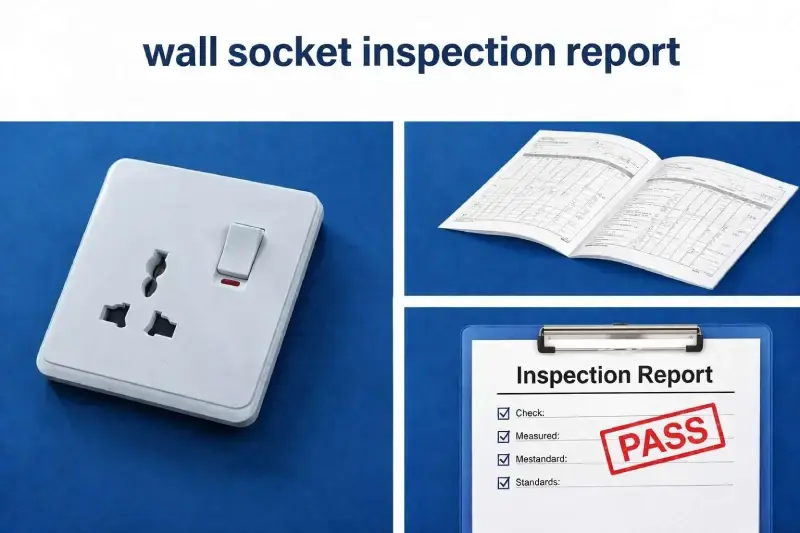
Contents
- Why Electrical Outlet Safety Standards Matter in B2B Sourcing
- What Buyers Usually Mean When They Search for Electrical Outlet Safety Standards
- What IEC 60884 and BS1363 Safety Review Actually Tell Buyers
- The Safety Features Buyers Should Verify First
- How Regional Standard Variations Affect Safety Review
- How to Read Safety Claims in Datasheets and Supplier Documents
- Buyer Checklist for Reviewing Electrical Outlet Safety Standards
- FAQ: Electrical Outlet Safety Standards for Buyers and Importers
- Conclusion
Why Electrical Outlet Safety Standards Matter in B2B Sourcing
Why visual similarity does not prove outlet safety
In B2B sourcing, visual similarity does not prove outlet safety. Shape, pin pattern, color, and front-plate design may suggest compatibility, but they do not confirm shutter protection, earthing continuity, insulation quality, or long-term contact reliability. Buyers need to verify whether the quoted product is designed and documented to meet the claimed safety expectation rather than relying on appearance.
How weak safety review creates import, resale, and project risk
Weak safety review creates commercial risk long before any laboratory dispute appears. It can lead to document mismatch, unclear approval decisions, customer rejection, returns, project-site objections, or a product line that looks acceptable in a quotation but becomes difficult to defend in procurement review. For buyers, safety review is part of purchasing control, not an optional technical detail.
What Buyers Usually Mean When They Search for Electrical Outlet Safety Standards
The difference between outlet type, product standard, and safety requirement
When buyers search for electrical outlet safety standards, they usually combine three different questions into one phrase. One question is about outlet type, which identifies the socket system used in the target market. Another is about product standard, which frames the product technically or commercially. The third is about safety requirement, which covers the actual protection, performance, and document points that should be reviewed before approval. If the reader needs a broader standards context first, the standard electrical outlet guide is the best starting point.
What this page covers and what it does not cover
- this page covers buyer review logic, safety features, document consistency, and approval risk
- it does not try to list every outlet type used in every market
- it is written for sourcing, import, distribution, and project-side review rather than DIY installation
What IEC 60884 and BS1363 Safety Review Actually Tell Buyers
Why IEC 60884 appears in buyer discussions about outlet safety
IEC 60884 often appears in quotations, datasheets, and supplier files, so it is commonly one of the first standards references buyers see during product review. This makes it useful in early screening because it gives procurement teams a technical framework for asking whether the product's construction, insulation, operating reliability, and protection claims are described in a credible way.
Why IEC 60884 should not be treated as a shortcut to every market requirement
IEC 60884 is useful, but it should not be treated as proof of full market suitability. In buyer review, it is best understood as an early technical screening framework rather than a final approval shortcut for every destination market. A product may be described under that framework and still require more specific review for a British-style socket program or another destination-specific market. If the approval question is really about broad framework versus UK-specific system fit, the most direct comparison is in IEC 60884 vs BS1363.
Where BS1363 safety review becomes more specific
BS1363 matters because British-style socket safety review is not only about general protection claims. It is also about product-system fit, marking clarity, construction expectations, and whether the technical file truly matches the quoted product. A UK-style appearance alone does not prove shutter function, earthing arrangement, rating clarity, or market-aligned documentation. Buyers who need the product-level details should continue to the BS1363 wall socket specification page.
The Safety Features Buyers Should Verify First
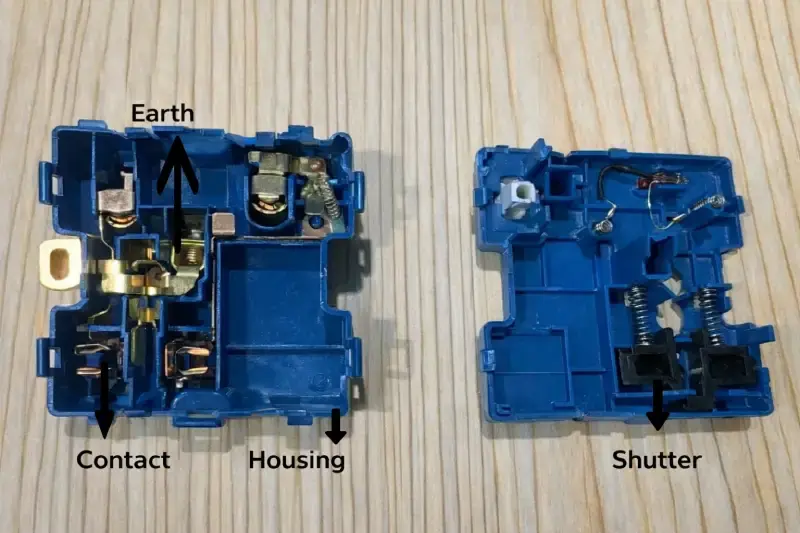
Shuttered design and protection against access to live parts
Buyers should first check whether the socket is clearly described as shuttered and whether that claim is part of the actual specification rather than something implied only by product photos. If the file is vague on this point, the approval basis is already weak because the buyer cannot confirm whether the product meets the expected level of user protection. In practice, weak evidence looks like front-view images without a clear model description, generic wording such as protected design, or quotations that mention safety but do not identify the exact socket construction.
Earthing continuity and contact arrangement
Buyers should verify how the socket handles earthing and whether the contact arrangement is defined clearly for the intended system. If earthing logic is vague, the product may appear acceptable from the front while still creating technical doubt during specification review, installation planning, or project approval. Warning signs include drawings that show the front layout without explaining contact logic, product files that do not distinguish system format clearly, or supplier replies that answer with sales language instead of technical confirmation.
Insulation, dielectric performance, and housing material suitability
Insulation-related claims should be supported by a credible technical description rather than broad wording such as safe material or high quality housing. This matters because insulation quality and housing suitability affect normal operating safety, heat resistance, and long-term stability, especially when the product is intended for regulated or higher-temperature markets. If the supplier cannot identify the housing material, its intended performance basis, or how the product is positioned for its market environment, the buyer should treat the safety claim as incomplete.
Temperature rise, contact stability, and long-term operating reliability
Buyers should also ask whether the product file gives enough confidence in contact stability and performance under load. Weak sockets often fail in heat buildup, unstable contact pressure, or long-term operating reliability rather than in appearance. If these points are not supported clearly, the product may pass quotation review but create complaints or returns later. In buyer review, that usually means the file says almost nothing about operating reliability beyond rating, while the supplier expects approval on the basis of appearance, broad standard wording, or price advantage alone.
| Safety area | What buyers should check | Why it matters | Typical sourcing risk |
|---|---|---|---|
| Shutter protection | Confirm that shuttered design is stated clearly in the quoted model description. | It supports protection against accidental access to live parts. | Product looks acceptable in photos but fails buyer safety expectations. |
| Earthing arrangement | Check whether grounding logic and contact arrangement are defined for the intended system. | It affects system suitability, technical confidence, and safety review quality. | System mismatch or approval uncertainty during project review. |
| Insulation and housing | Review insulation claims, housing material description, and whether wording is technically credible. | These factors affect heat resistance, electrical separation, and long-term stability. | Broad marketing language without real technical basis. |
| Load reliability | Look for confidence in contact stability, temperature-rise behavior, and operating consistency. | Long-term performance problems often appear after supply, not in appearance review. | Complaints, returns, or weak project confidence after installation. |
How Regional Standard Variations Affect Safety Review
Why one safety claim does not automatically fit all markets
A broad safety claim may be useful in early screening, but it does not automatically settle compliance across different regions. Buyers often see general wording in quotations and assume one standards-based statement covers every market. In practice, that is too broad. When the sales region changes, review priorities also change. If the buyer needs a wider country-by-country context first, the cleanest reference is electrical outlet types around the world. If the real approval question is whether a non-standard multi-function socket creates more risk than a fixed standard outlet, continue to universal socket vs standard outlet.
How regional compliance expectations change buyer priorities
Regional requirements change what buyers need to review most closely. In one market, the main concern may be general safety basis and technical consistency. In another, the review may focus more heavily on socket-system fit, product marking, supporting file alignment, or destination-market compliance logic. That is why the same product can be described with similar safety language but still require different buyer decisions.
| Review factor | IEC 60884 context | BS1363 or regional context | Buyer impact |
|---|---|---|---|
| Safety wording | Useful for broad technical screening. | Not enough by itself for destination-specific review. | Prevents buyers from approving products on generic claims alone. |
| Socket-system fit | May not define a specific national system. | Often requires closer alignment with product format and market use. | Reduces mismatch between quoted product and target channel. |
| Documentation | Supports early technical review. | Needs tighter consistency between product, marking, and file set. | Improves approval confidence for import, resale, or project supply. |
How to Read Safety Claims in Datasheets and Supplier Documents
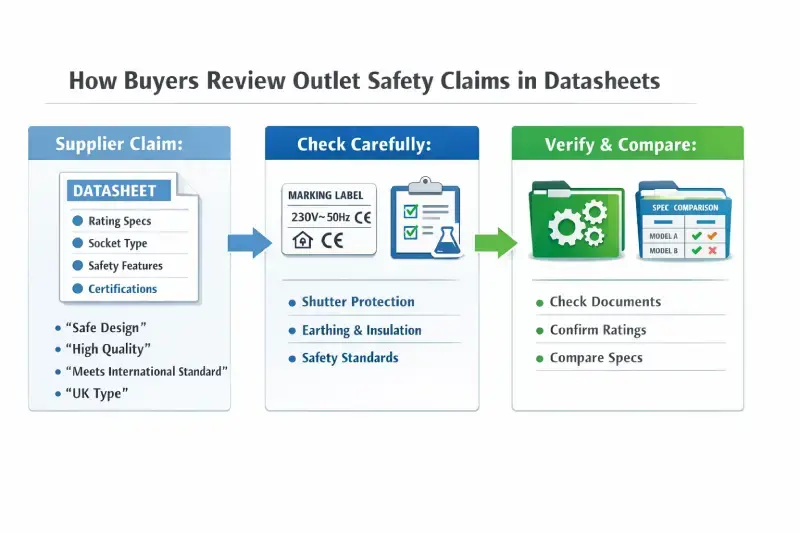
Which safety-related details should appear clearly
Buyers should expect clear information on product rating, socket type, system format, visible marking, and the specific safety features being claimed. If the file leaves these points to assumptions, image interpretation, or broad wording, it is too weak for confident approval.
What vague wording usually fails to prove
Phrases such as safe design, high quality, meets international standard, or UK type do not prove shutter protection, earthing logic, insulation quality, or market suitability. These expressions may support sales language, but they do not replace technical clarity.
How to match safety claims with ratings, marking, and technical files
Buyers should compare safety claims with ratings, product marking, socket description, model reference, and supporting technical documents for the quoted product. If those pieces do not describe the same model consistently, the approval basis is weak regardless of how reassuring the wording sounds.
Common red flags in supplier files
- the quotation uses one model reference, but the datasheet or marking image shows another
- the file mentions a standard name without explaining the actual safety features or product format
- product photos, marking details, and ratings do not align clearly with the quoted model
- the supplier answers technical questions with broad phrases instead of direct specification confirmation
What buyers most often misunderstand in safety review
Some mistakes appear repeatedly in sourcing review. A standard name in a quotation does not automatically mean the quoted model is supported well enough for approval. A familiar front appearance does not prove that the product's safety design and market fit are acceptable. A datasheet file on its own also does not prove much unless its model reference, marking details, and specification logic all match the product being quoted. These are common reasons why buyers approve too early and discover gaps later.
Buyer Checklist for Reviewing Electrical Outlet Safety Standards
- verify product rating, socket format, and visible marking before sample approval
- confirm shutter design, earth arrangement, insulation-related claims, and housing description
- check whether datasheet, model number, and technical file describe the same quoted product
- treat vague safety wording, weak traceability, or inconsistent marking as sourcing risk signals
- ask whether the socket is positioned for the actual destination market, not only described in broad sales language
Technical checks before sample approval
Before sample approval, buyers should verify rating, socket format, shutter design, earth arrangement, insulation claims, and visible marking. The product should show technically consistent safety features rather than asking the buyer to infer them from appearance.
Document checks before import or distribution
Before import or distribution, buyers should confirm that the datasheet, model reference, marking details, and supporting technical files all describe the same product consistently. If the supplier cannot maintain that consistency, the approval process is already weaker than it should be.
Commercial warning signs buyers should not ignore
Warning signs include vague safety wording, incomplete files, unclear model traceability, weak market positioning, and inconsistent marking details. These are not cosmetic problems. They often signal weak supplier control or weak product-positioning discipline.
A simple approval order for buyers
A practical approval order is straightforward. First, confirm the target market and socket-system expectation. Second, verify the quoted model's safety features and rating logic. Third, compare datasheet, marking, and supplier file for consistency. Only after those three checks are coherent should the buyer move forward with sample approval, import decision, or project recommendation. If the team needs the broader product-selection layer after safety screening, our how to choose the right electrical outlet for your market guide continues from approval logic into size, color, channel, environment, and repeat-order fit.
When to approve, when to request clarification, and when to hold
Buyers can usually move forward when the target market is clear, the quoted model's safety features are described directly, and the file set is internally consistent. Buyers should request clarification when the general safety basis sounds reasonable but model references, marking details, or feature descriptions are incomplete. Buyers should hold or delay approval when the supplier cannot align quotation, datasheet, product marking, and market claim around the same model. In practice, weak consistency is a stronger reason to pause than broad reassurance is to proceed.
FAQ: Electrical Outlet Safety Standards for Buyers and Importers
What do electrical outlet safety standards usually cover?
They usually cover protection against access to live parts, earthing logic, insulation performance, material suitability, rating clarity, and basic product marking. For buyers, the point is to support product approval before import, resale, or project use.
Does IEC 60884 define outlet safety requirements?
Yes. IEC 60884 is commonly used as a framework for reviewing socket safety at a general technical level. It can support early evaluation, but it should not be treated as automatic proof of every destination-market requirement.
Are BS1363 and IEC 60884 the same for safety review?
No. They do not serve the same role in buyer review. IEC 60884 is broader, while BS1363 is more closely tied to British-style socket expectations and market-specific review priorities.
Can a UK-style socket still fail compliance review?
Yes. A UK-style appearance does not prove compliance. A socket may look correct and still fall short in shutter design, rating clarity, earthing arrangement, marking, or technical support files.
What should importers ask suppliers before placing an order?
Importers should ask which standard is being claimed, what technical files support the claim, whether the product marking matches the datasheet, and whether the socket is positioned for the actual destination market instead of only broad export language.
Conclusion
What buyers should take from outlet safety review
In electrical outlet safety review, buyers should focus on safety features, document consistency, and market fit rather than appearance or broad wording. A familiar-looking socket or a familiar standards reference may support first screening, but approval still depends on whether the product, file set, and market claim actually align.
How to use this page next
Use this page as a safety-and-compliance screening guide before sample approval, import review, or supplier comparison. It is designed to strengthen the standards cluster by handling the buyer-review layer rather than replacing broader outlet knowledge or destination-specific specification pages.