BS1363 Wall Socket Specification: What the BS Wall Socket Standard Really Requires
This article focuses on the BS1363 wall socket specification rather than a general comparison of outlet types. It explains the actual product requirements of the BS wall socket standard, including ratings, construction, safety features, test scope, and documentation, so buyers, contractors, and distributors can verify compliance before sourcing, importing, specifying, or selling.
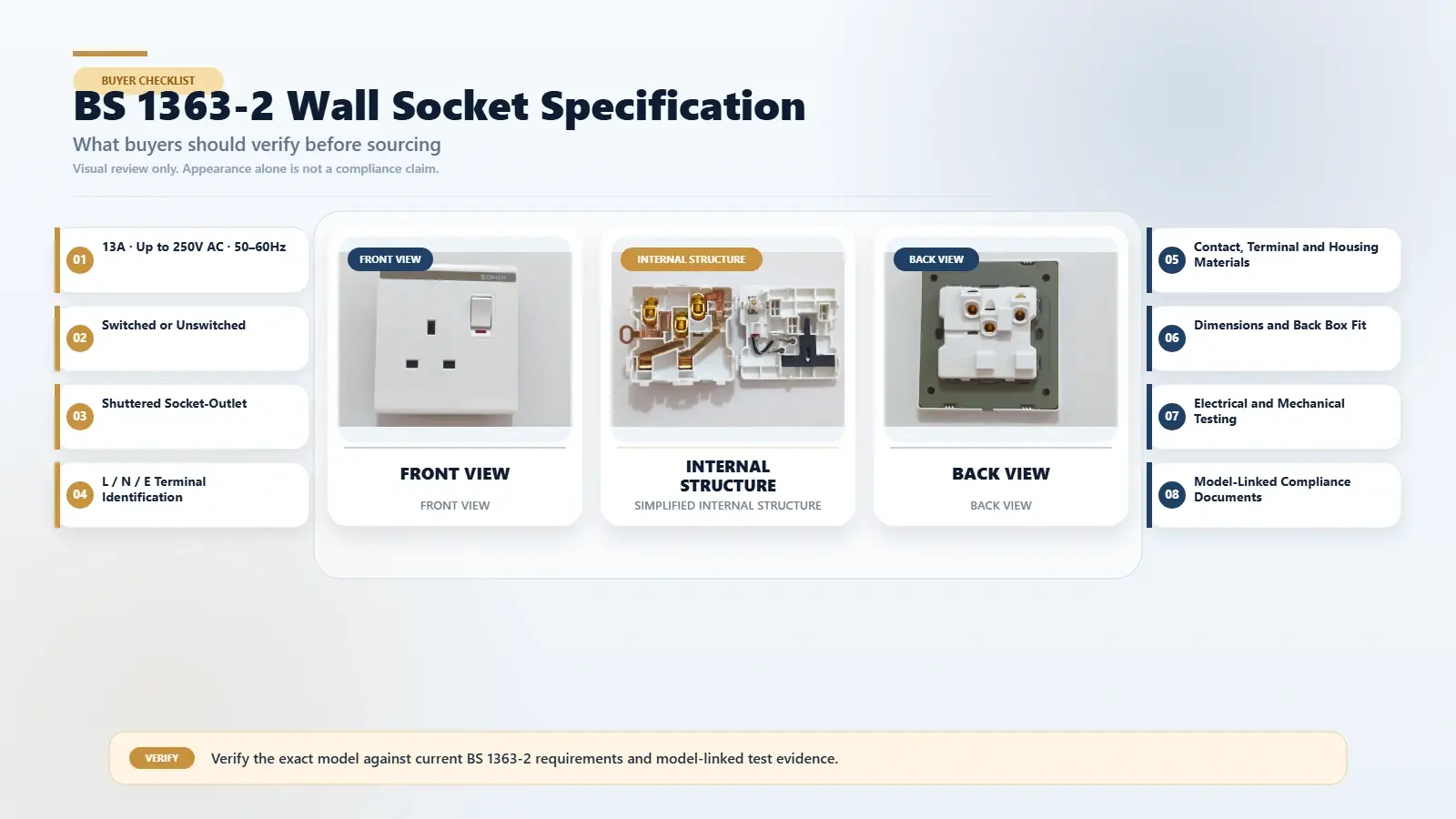
BS1363 wall socket specification overview
Contents
- What This Article Covers and How It Differs From a General Outlet Guide
- What a BS1363 Wall Socket Is
- What Is Included in a BS1363 Socket Specification
- Core Technical Parameters Buyers Should Check First
- Safety Features That Matter Under the BS Wall Socket Standard
- Common Questions About BS1363 Compliance in Real Procurement
- How to Read a BS1363 Socket Datasheet Without Missing Key Details
- Tests and Verification Points Commonly Associated With BS1363 Sockets
- How to Judge Whether a BS1363 Wall Socket Is Suitable for Your Market
- How This Specification Fits Into the Broader Outlet Standard Landscape
- Buyer Checklist for Reviewing a BS1363 Socket Specification
- Frequently Asked Questions
- Conclusion
What This Article Covers and How It Differs From a General Outlet Guide
Why BS1363 Needs a Dedicated Specification Page
A general outlet guide can identify socket types by country or appearance, but that is not enough for product evaluation. The BS1363 socket specification covers rated values, shutter design, earthing arrangement, terminal details, construction, and required marking. These factors determine whether a wall socket is suitable for sale, installation, or import.
What Readers Can Learn Here That General Outlet Guides Do Not Explain
This article focuses on the product-level requirements of the BS wall socket standard. It explains what a BS1363 specification should include, which technical details matter in sourcing and distribution, and where datasheets or compliance claims are often misunderstood. It is not intended to compare every outlet system on the market. If you need a buyer-focused comparison between a broad international framework and a UK-specific standard, see our IEC 60884 vs BS1363 comparison.
Who This Article Is For
This article is written for contractors, importers, wholesalers, and retailers who need practical specification guidance. Contractors need to confirm fit and safety expectations. Importers and wholesalers need clearer compliance review. Retailers need to distinguish between a UK-style socket and a product that actually meets BS1363 requirements.
After the BS1363 format is confirmed, project buyers often need to decide whether each position should use a 1-gang, 2-gang, or mixed socket plan. For that next step, use our single and double BS1363 socket selection guide.
What a BS1363 Wall Socket Is
Where BS1363 Sockets Are Commonly Used
A BS1363 wall socket is a fixed socket-outlet designed for the standard British three-rectangular-pin plug system. It is commonly used in the UK and in markets or projects that adopt British-style wiring accessories, especially in residential, commercial, and light-duty installations.
The Difference Between Socket Format and the Broader UK Outlet Context
The socket format refers to the outlet’s physical interface and basic function. The broader UK outlet context also includes practical site fit, mounting conditions, and BS standard wall switch and socket installation guidance, in addition to system assumptions, accessory design, and compliance requirements. Therefore, describing a product as “UK type” does not fully define the BS1363 socket specification.
Why Buyers Often Confuse Outlet Type With Compliance
In sourcing, appearance often causes confusion. A socket may match the expected pin pattern and front design but still differ in rating, shutter design, terminals, materials, or marking. For this reason, visual similarity alone does not confirm compliance with the BS wall socket standard.
What Is Included in a BS1363 Socket Specification
Rated Current and Voltage
A proper BS1363 socket specification should clearly state the electrical rating, typically 13A and 250V AC. These values define the socket’s intended operating range and are essential for product selection, marking, and comparison. If a supplier describes a product only as a “UK type socket” without a clear rating, the specification is incomplete.
Socket Configuration and Plug Compatibility
The specification should identify the BS1363 three-rectangular-pin configuration, contact arrangement, and intended plug compatibility. In sourcing, visual similarity is not enough. A BS1363 wall socket should be judged by correct fit, contact engagement, and matching with the proper plug format.
Shutter Requirements and Earthing Arrangement
Safety-related construction is a key part of the BS wall socket standard. The specification should state whether the socket is shuttered and how the earth contact is arranged. These details affect user protection and expected safety performance. For procurement teams reviewing broader approval logic, our electrical outlet safety standards guide explains how buyers check safety features, file consistency, and approval risk before confirming a socket model.
Switched or Unswitched Versions
The specification should also state whether the socket is switched or unswitched, as this affects application, layout, and purchasing decisions.
Mounting and Configuration Details
A complete specification should include mounting type, faceplate style, gang format, and common configuration options, helping buyers match the product to installation and market needs.
Core Technical Parameters Buyers Should Check First
13A and 250V Ratings
A BS1363 wall socket should clearly state its rated current and voltage, typically 13A and 250V AC. These are basic operating parameters, not just label text. If a supplier describes a product only as a UK-type socket without these values, the BS1363 socket specification is not complete.
Terminal Capacity and Conductor Acceptance
Terminal design affects installation quality and long-term reliability. The specification should show acceptable conductor sizes and the terminal connection method. Without this information, buyers cannot judge whether the socket is suitable for practical wiring or secure termination.
Dimensional Fit and Plug Compatibility
A correct front appearance does not guarantee proper performance. Buyers should check whether the socket provides consistent plug insertion, stable contact engagement, and compatibility with the intended BS1363 plug format. Poor fit often leads to field complaints.
Materials for Contacts, Terminals, and Housing
Material quality is a key indicator of product reliability. Contacts and terminals should use suitable conductive materials with stable mechanical performance. The housing should be appropriate for electrical accessory use, including relevant heat and flame-resistance properties where required. Vague claims are not enough.
Visible Marking and Product Identification
A proper review should also check product marking. Buyers should expect clear identification of rating, brand or manufacturer traceability, and other basic product information normally shown on compliant electrical accessories. Missing or inconsistent marking is a common warning sign.
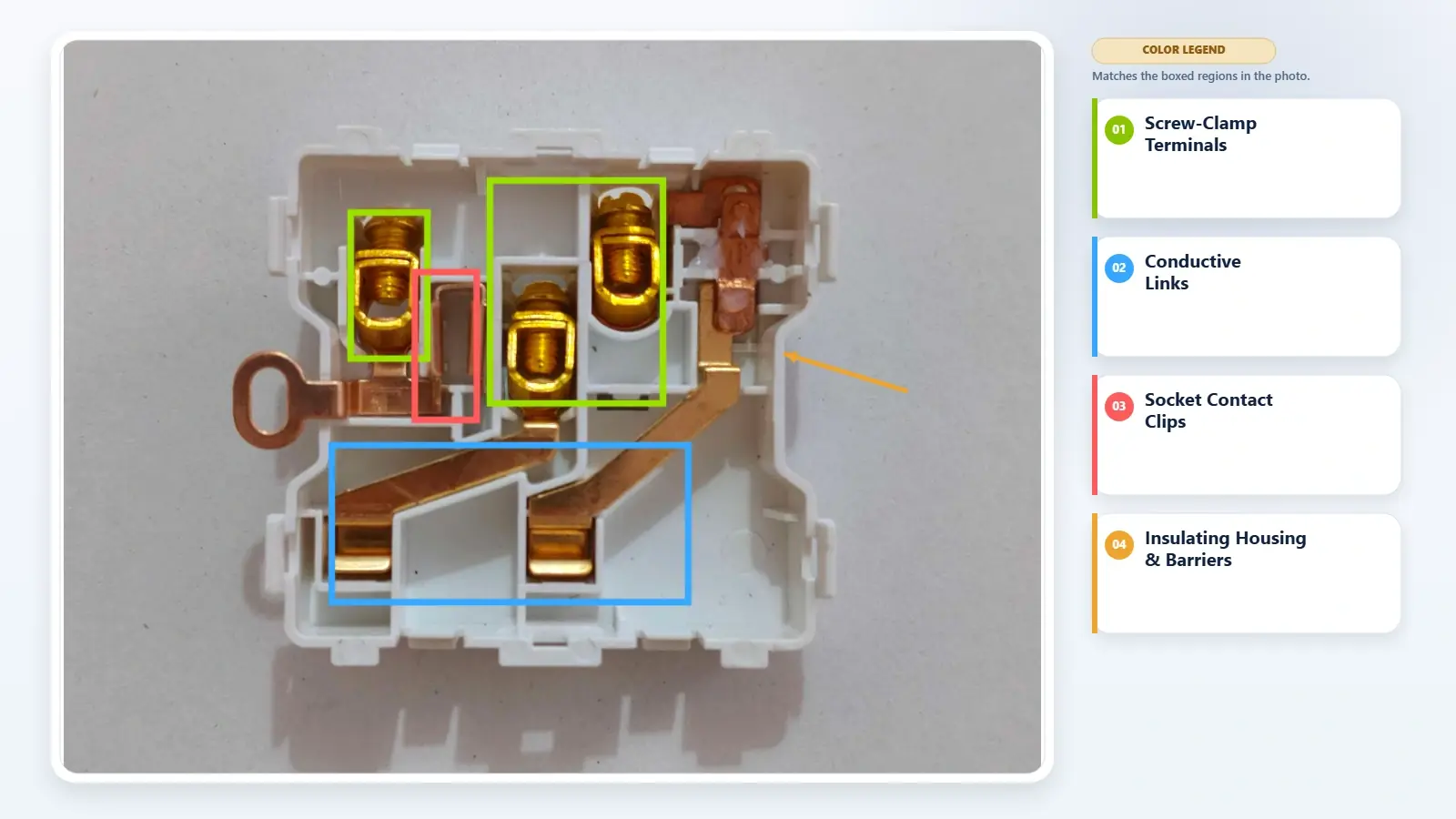
Close-up of internal contacts, conductive parts and screw terminals in a BS 1363-style wall socket
Safety Features That Matter Under the BS Wall Socket Standard
Why Shuttered Design Matters
A shuttered design is a core safety feature of a BS1363 wall socket. It helps prevent access to live parts unless the plug is inserted correctly, making it especially important in residential and public-use installations.
Earth Contact and Polarization
The earth contact supports grounding continuity and also affects normal socket operation. Correct polarization preserves the intended live, neutral, and earth positions, so these are essential design features, not optional extras.
Insulation and Housing Performance
A reliable BS1363 socket specification should also cover insulation, heat resistance, and suitable flame-retardant housing materials. Poor material quality can lead to deformation, discoloration, or reduced service life.
Why Appearance Is Not Enough
A UK-style front does not prove safety compliance. Similar-looking sockets may differ in shutter function, earthing, insulation, and material quality.
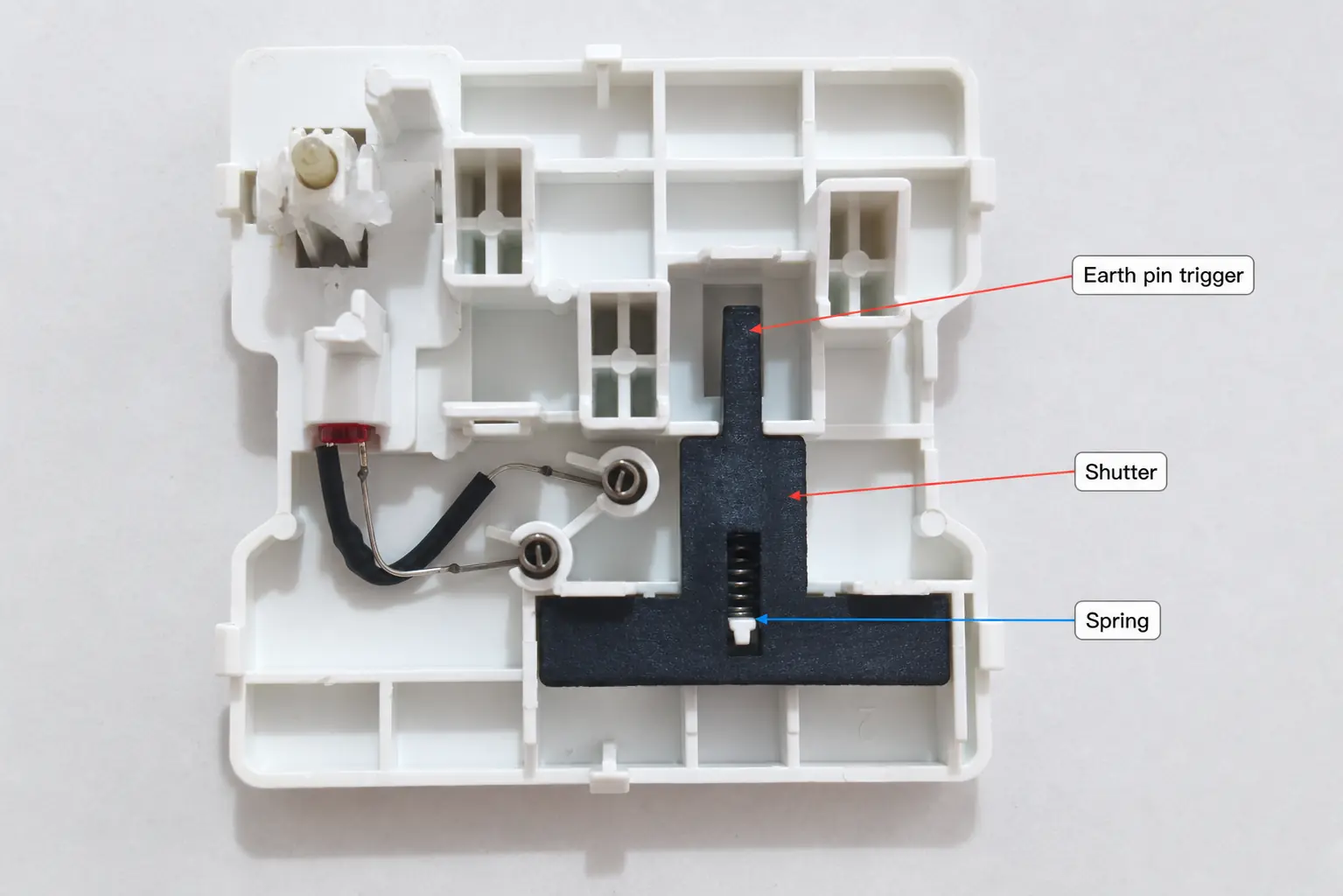
Close-up of the shutter mechanism inside a BS 1363-style socket outlet
Common Questions About BS1363 Compliance in Real Procurement
Does Every UK-Style Socket Meet BS1363 Requirements?
No. A UK-style appearance does not prove compliance with the BS1363 socket specification. Buyers should check rated values, shutter function, terminal design, materials, and marking, not just front shape or pin pattern. If the buyer first needs to clarify whether the discussion is about UK-style appearance or a real BS1363-based product claim, our UK wall outlet standard explained for buyers page is the cleaner starting point.
What Compliance Should Mean in Procurement
For importers and distributors, compliance should mean the product is designed, marked, and documented in line with the BS wall socket standard. A catalog claim alone is not enough.
Which Claims Need Verification?
Terms like “UK standard,” “British type,” or “13A wall socket” should be verified against the actual specification. Safety, fire-resistance, or certification claims also need matching technical evidence.
When a Datasheet Is Too Vague
A datasheet is unreliable if it omits rating, terminal details, shutter design, materials, or product identification. If it relies mainly on photos and broad sales language, the compliance review is incomplete.
How to Read a BS1363 Socket Datasheet Without Missing Key Details
Which Parameters Should Appear Clearly
A usable datasheet should state the BS1363 socket specification clearly, not leave key details to photos or assumptions. At minimum, it should show rated current, rated voltage, socket type, switched or unswitched version, mounting format, shuttered design, terminal capacity, and visible product marking. If this information is incomplete or scattered, the datasheet is weak.
| Specification Item | What Should Appear Clearly | Why It Matters |
|---|---|---|
| Rated Current and Voltage | 13A and 250V AC should be stated clearly. | Without clear rating values, the BS1363 socket specification is incomplete. |
| Socket Type and Configuration | The datasheet should identify the BS1363 socket format and intended plug compatibility. | Appearance alone does not confirm correct fit or contact engagement. |
| Switched or Unswitched Version | The product should be identified as switched or unswitched. | This affects application, layout, and purchasing decisions. |
| Shuttered Design and Earthing | The specification should show whether the socket is shuttered and how the earth contact is arranged. | These details directly affect user protection and safety expectations. |
| Terminal Capacity | Acceptable conductor sizes and terminal connection method should be visible. | Buyers need this to judge installation suitability and termination quality. |
| Mounting and Product Marking | The datasheet should include mounting format, product identification, and visible marking details. | Missing marking or unclear configuration is a common warning sign in sourcing review. |
Which Vague Descriptions Are Red Flags
Terms such as “high quality,” “safe design,” “UK standard type,” or “premium material” have little value without technical detail. The same applies when a supplier claims compliance with the BS wall socket standard but gives no clear rating, material information, or traceable model identification.
How to Compare Two Suppliers Offering Similar Ratings
Two suppliers may both list 13A and 250V, but that does not make the products equal. Buyers should compare terminal details, dimensions, material description, marking, and the overall depth of technical disclosure. In practice, a clearer datasheet often indicates better product control.
What Supporting Documents Should Accompany the Specification
For import, resale, or project supply, the datasheet should be supported by model-linked documentation such as product identification, relevant test records, and certification information where applicable. If the supplier cannot match the specification to real documents, the claim should be treated cautiously.
Tests and Verification Points Commonly Associated With BS1363 Sockets
Dimensional and Fit-Related Checks
Dimensional accuracy is a basic review point in any BS1363 socket specification. The socket should match the intended plug format with correct insertion geometry and stable contact engagement. Even small dimensional errors can cause loose fit, difficult insertion, or unreliable field use.
Electrical Safety Tests Such as Insulation and Dielectric Performance
Electrical safety review commonly includes insulation and dielectric checks. These help confirm that conductive parts remain properly separated under normal service conditions. For buyers, this is important because external appearance does not reveal internal insulation quality.
Temperature-Rise and Current-Carrying Verification
A proper BS wall socket standard review should also consider temperature rise under rated load. Excessive heating at contacts or terminals may indicate poor conductive materials, weak contact pressure, or inadequate terminal design.
Mechanical Durability and Insertion/Withdrawal Checks
Repeated use affects long-term performance. Insertion and withdrawal checks, and switch durability where applicable, help show whether the socket can maintain reliable operation over time.
Material and Heat-Resistance Evaluation
Material evaluation focuses on whether the housing and internal parts remain stable under heat and normal operating stress. Heat resistance and material suitability are core quality factors, not optional features.
How to Judge Whether a BS1363 Wall Socket Is Suitable for Your Market
Considerations for Retail Distribution
For retail sale, a BS1363 wall socket should have clear rating marks, reliable plug fit, consistent finish, and labeling that reduces end-user confusion. Poor fit or weak visible quality often leads to returns.
Considerations for Wholesale and Project Supply
Wholesale and project buyers should focus on specification consistency, terminal design, mounting compatibility, and batch reliability, since installation issues are harder to correct after supply. If the next decision is how GCC importers, distributors, and project teams should compare supplier discipline, shipment protection, OEM support, and repeat-order risk around BS1363 programs, see our BS1363 sourcing guide for Middle East projects.
Considerations for Import Compliance and Documentation Review
Importers should check whether the datasheet, product marking, and supporting records match the actual model offered. Any mismatch deserves closer review.
When Standard Compliance Is Enough
Basic compliance with the BS wall socket standard may be enough for routine supply. Larger projects or stricter markets often require extra verification of materials, test evidence, and supplier consistency.
How This Specification Fits Into the Broader Outlet Standard Landscape
When to Use This Page
Use this page to judge whether a product meets the practical requirements of a BS1363 socket specification, including ratings, safety features, construction details, and sourcing suitability.
How Its Scope Differs
Broader outlet guides explain where socket systems are used and how they compare across markets. This page focuses only on the BS wall socket standard at product-specification level.
Where to Go Next
For a broader technical overview, see our standard electrical outlet guide. If you also need cross-market context, compare BS1363 with other national outlet systems.
Buyer Checklist for Reviewing a BS1363 Socket Specification
Essential Specification Checklist
Check whether the BS1363 socket specification clearly states rated current, rated voltage, socket type, switched or unswitched version, shuttered design, terminal details, and mounting format.
Compliance and Documentation Checklist
Confirm that product marking, model number, datasheet, and supporting technical documents are consistent and traceable to the exact socket offered under the BS wall socket standard claim.
Commercial Review Checklist
Before ordering, compare document clarity, sample consistency, and supplier response quality. When ratings are similar, better technical disclosure is usually the safer sourcing choice.
Frequently Asked Questions
What is the standard rating of a BS1363 wall socket?
A typical BS1363 wall socket is rated at 13A and 250V AC.
Does a UK-style wall socket automatically comply with BS1363?
No. Appearance alone does not prove compliance with the BS1363 socket specification.
What is the difference between a BS1363 socket and a general UK outlet type listing?
A general outlet listing identifies format or market use. A BS wall socket standard review checks product-level requirements.
What technical parameters should appear in a BS1363 socket specification?
Key items include rating, switched or unswitched type, shuttered design, terminal details, mounting format, and marking.
How can importers verify a supplier’s BS1363 compliance claim?
They should check that the datasheet, marking, model identification, and supporting documents are consistent.
Conclusion
What Matters Most in a BS1363 Socket Specification
A BS1363 socket specification should be judged by ratings, safety design, terminals, materials, marking, and documentation, not by appearance alone.
Next Step
For wider outlet-system comparison, readers should move to a broader guide such as our standard electrical outlet guide. If the next step is supplier or factory evaluation rather than specification review alone, buyers can continue with our guide to electrical switch and socket manufacturer in China. This page focuses only on BS wall socket standard requirements at product level.