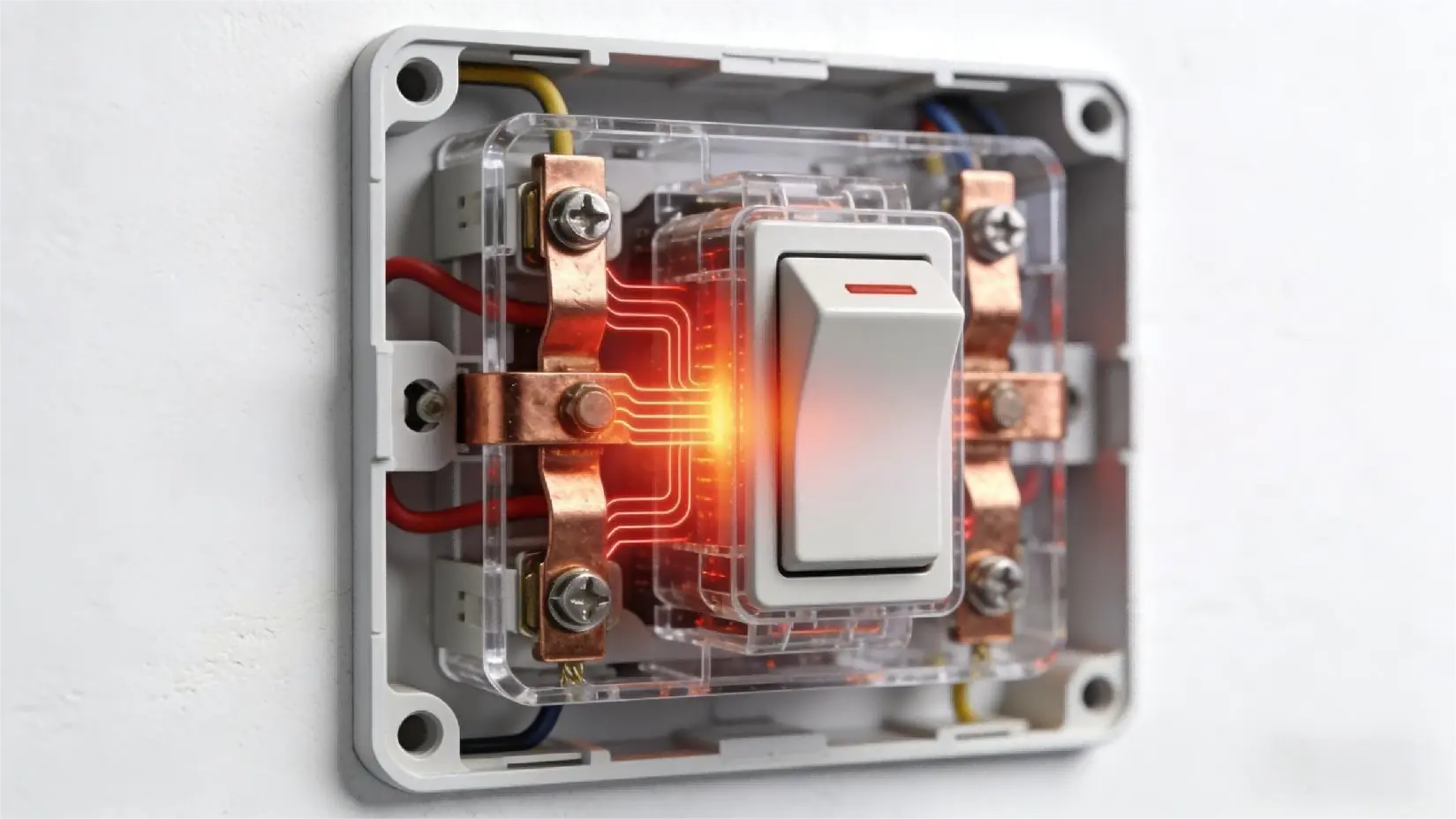
When wall switches or sockets overheat under load, the visible failure often appears late. Buyers first notice discoloration, unstable contact, or a burning smell, but the real issue usually starts much earlier inside the product. In many cases, the key problem is not external styling or even basic certification. It is the combination of conductor material, contact resistance, and long-term thermal behavior.
This page explains why overheating risk is closely tied to conductor choice, internal structure, and long-term load conditions. If you need the broader supplier-evaluation view behind those technical decisions, start with our guide to an electrical switch and socket manufacturer in China.
For buyers, the practical question is simple: which internal conductor design gives a stronger thermal margin over time? That answer depends on material conductivity, the number of contact interfaces, operating environment, and whether the product is being judged only by lab compliance or by real installation life.
Contents
- Why Wall Switches Overheat Under Load
- How Conductor Material Changes Temperature Rise
- Copper vs Brass: What Buyers Should Really Compare
- Why Conductor Structure Matters as Much as Material
- Why Lab Compliance Does Not Remove Field Risk
- Hot Markets and Continuous Load Make the Gap Wider
- What Buyers Should Check Before Approval
- How This Page Connects to Materials and Safety Review
- FAQ
Why Wall Switches Overheat Under Load
Every current-carrying switch or socket produces some heat because electrical resistance converts part of the energy into thermal loss. The basic relationship is simple: P = I²R. That means even a modest increase in resistance can create a much larger heat rise once current stays high for long periods.
In light household use, that extra heat may remain limited. In commercial use, dense installations, high-wattage appliances, or longer-duty cycles make the thermal margin more important. Overheating is rarely one dramatic event. It is usually a slow accumulation process driven by resistance, temperature cycling, and gradual contact deterioration.
- higher resistance means more energy becomes heat
- continuous or repeated load makes that heat harder to ignore
- once contact points age, resistance often rises further
How Conductor Material Changes Temperature Rise
The most direct reason conductor material matters is conductivity. High-conductivity materials allow current to pass with lower resistance, which reduces waste heat under the same load. Lower-conductivity materials operate with a narrower thermal margin from the start, so small losses in contact quality become more damaging over time.
That is why buyers should be careful with broad wording such as “copper part” or “copper-colored terminal.” The real question is not what the part looks like, but what material is actually carrying current, how conductive it is, and whether the same internal design stays stable in repeated production. A switch may look identical from the outside and still behave differently under load if the conductor material or interface quality changes.
This is also why conductor review should be read together with housing-material review. Better internal conductivity lowers heat generation, but the outer structure still needs to tolerate temperature rise and long-term stress. If you want the housing-material side of that same problem, our switch materials guide on high-grade polycarbonate explains why structural material selection and internal conductor logic should be judged together.
Copper vs Brass: What Buyers Should Really Compare
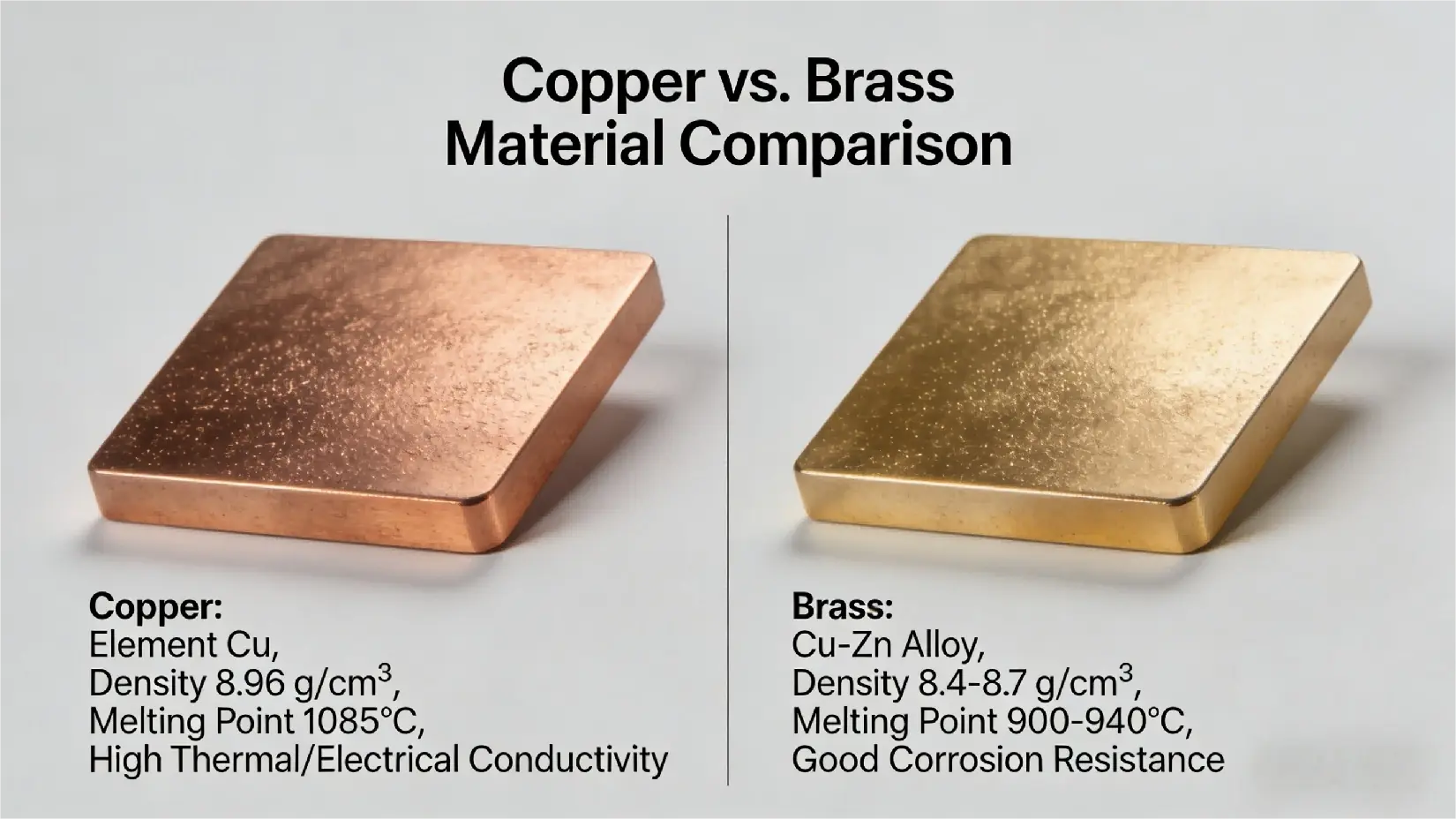
Pure copper and brass do not behave the same electrically. Brass is easier to machine and often cheaper to use, but its conductivity is significantly lower than that of pure copper. That difference may be acceptable in some lower-stress designs, yet it becomes more important when the product is expected to carry load repeatedly over years of use.
| Property | Pure copper | Brass | Buyer takeaway |
|---|---|---|---|
| Conductivity | Much higher | Lower | Higher conductivity generally means lower resistance and lower heat rise |
| Heat under sustained load | Lower thermal loss | More likely to run hotter | Load profile matters more as current and run-time increase |
| Mechanical convenience | Needs stronger process discipline | Easier to machine | Manufacturing convenience should not be confused with better thermal performance |
| Long-term margin | Usually stronger | More limited | Useful when buyers care about repeat reliability, not only first-pass compliance |
In lower-cost designs, the risk increases further when plated or ferroalloy-based substitutes are used only to imitate copper appearance. At that point, the issue is no longer cosmetic at all. It becomes a question of resistance, oxidation behavior, and heat accumulation over time.
Why Conductor Structure Matters as Much as Material
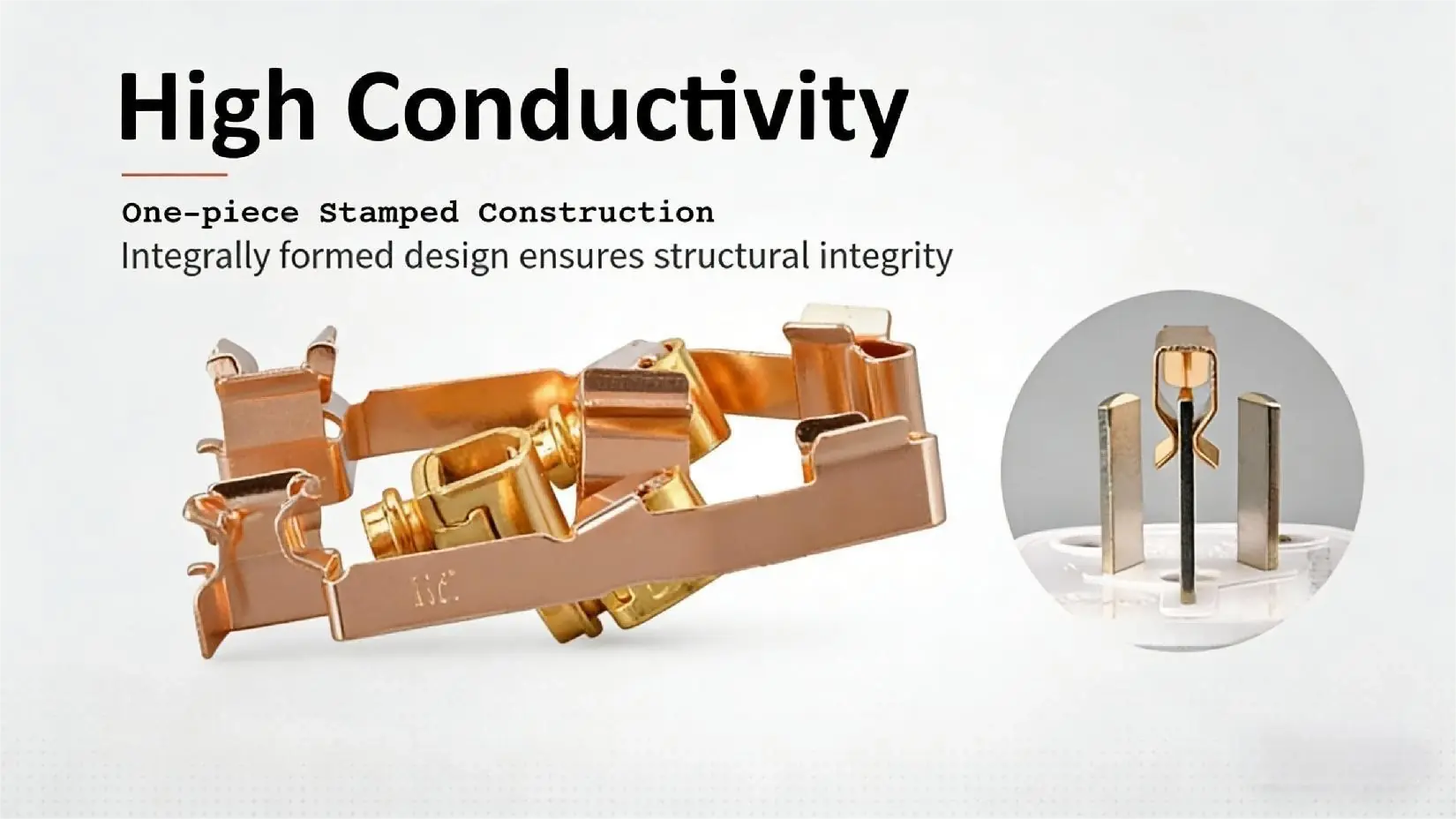
Material alone does not decide everything. Structure matters too. Many lower-cost products use multi-part conductor assemblies with riveted joints, welded links, screw-fastened bridges, or other extra interfaces inside the current path. Every added interface creates one more place for contact resistance to rise.
That is why a one-piece conductor design often performs better in long-term thermal stability than a more fragmented design built from several joined parts. Fewer interfaces usually mean fewer opportunities for loosening, oxidation, and localized heat buildup after repeated thermal cycling.
Why Lab Compliance Does Not Remove Field Risk
Many buyers assume that IEC compliance means overheating is no longer a real issue. That is too simple. Certification confirms performance under defined test conditions. It does not automatically simulate years of high-load commercial use, hot environments, installation density, or inconsistent field conditions.
A compliant product can still operate close to its thermal limits in demanding applications. That is why buyers should combine lab compliance with real questions about conductor material, heat-rise margin, structure, and long-term control. If you need the wider approval-side view, our electrical outlet safety standards guide explains what buyers should check before relying too heavily on certification language alone.
Hot Markets and Continuous Load Make the Gap Wider
Ambient conditions change the whole discussion. In hot markets, wall temperatures may already be high before the switch carries any meaningful load. That reduces heat-dissipation margin and makes conductor differences more visible. What feels acceptable in a mild environment may behave very differently in Iraq, Saudi Arabia, or other high-temperature markets.
Continuous or repetitive load makes the same gap wider again. That is why buyers working on commercial projects, hospitality sites, and hotter export markets should not evaluate conductor material in isolation from operating environment.
What Buyers Should Check Before Approval
When overheating risk matters, buyers should move from general questions to a tighter technical checklist.
| Check point | What buyers should ask | Why it matters |
|---|---|---|
| Conductor material | Is it pure copper, brass, or another substitute? | Sets the starting point for resistance and thermal margin |
| Current path structure | Is the conductor one-piece or assembled from several parts? | More interfaces usually mean more risk of contact resistance growth |
| Heat-rise control | How is temperature rise evaluated beyond basic compliance claims? | Helps separate lab pass language from real design margin |
| Process consistency | How does the factory control contact pressure, assembly, and repeat stability? | Good material can still underperform if manufacturing control is weak |
For that reason, overheating risk should never be reduced to only “copper vs brass.” Buyers also need to know how the product is assembled and how consistency is protected. If you are screening suppliers more broadly, our wall switch and socket manufacturing process and quality guide and our reliable switch manufacturer guide are the cleaner next steps.
How This Page Connects to Materials and Safety Review
If the main concern is internal heat generation, stay with conductor material, current-path structure, and contact resistance. If the next concern is whether the outer body can tolerate long-term thermal stress, move to the switch materials guide on high-grade polycarbonate. If the concern shifts to approval language and broader compliance checks, the electrical outlet safety standards guide is the better next step.
In other words, this page answers why a switch may run hotter under load. The next pages help buyers judge whether the surrounding material system, safety basis, and factory control are strong enough to support long-term use after that heat is generated. If the immediate question is which visible field failures buyers should watch for before overheating, dead units, installation difficulty, and aging complaints start connecting to the same root causes, see our common switch and socket problems prevention guide.
FAQ
Why do wall switches overheat under load?
Because electrical resistance converts part of the current into heat. If conductor conductivity is lower or contact resistance rises over time, the switch can run hotter under the same load.
Does IEC certification guarantee no overheating risk?
No. IEC testing confirms compliance under defined conditions, but real performance still depends on load profile, ambient temperature, structure, and long-term material margin.
Is pure copper always better than brass in switch conductors?
For conductivity and heat control, pure copper usually gives a stronger margin. Brass may still be used in some designs, but buyers should understand the trade-off rather than assume both perform the same.
Why does conductor structure matter as well as material?
Because every extra joint or interface can add contact resistance. A multi-part conductor path may become less stable over time even if the base material looks acceptable on paper.
What should buyers ask a supplier before approving a switch for high-load use?
Ask about conductor material, whether the current path is one-piece or assembled, how heat-rise margin is controlled, and how the factory keeps that same internal design stable across repeated production.
Conclusion
Wall switch overheating is usually not a styling problem. It is a conductor-and-structure problem that becomes more visible under load, time, and temperature stress. Buyers who compare pure copper, brass, interface count, and heat-rise control together will usually make stronger long-term decisions than buyers who rely only on surface finish or certification marks.